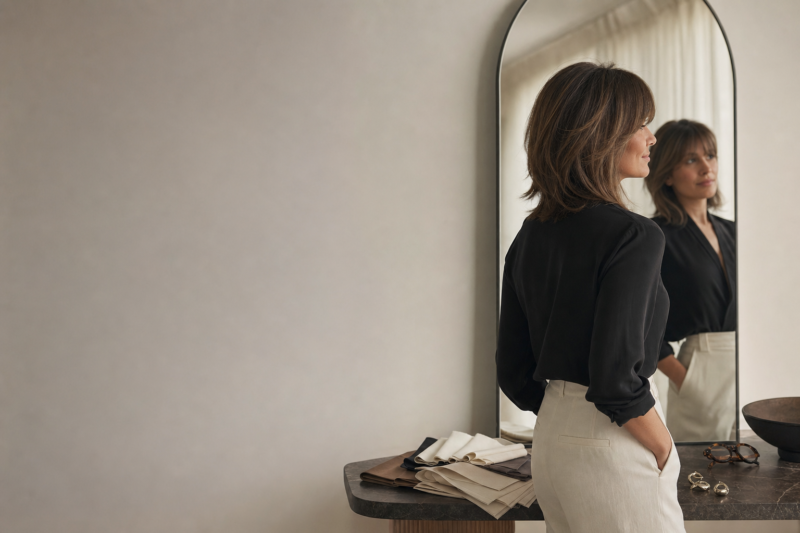
Quick answer: haircuts for heart shaped faces (wide forehead, narrow chin) add volume at chin level and soften the forehead with curtain or side-swept bangs. A triangle face (wide jaw, narrow forehead) needs the opposite: volume on top and at the temples, and a length that does not end on the jawline. In both cases, where the cut ends makes all the difference.
Heart shaped and triangle faces are opposites, but they share the same challenge: balancing the upper and lower parts of the face. One is wider at the forehead; the other, at the jaw. Choosing haircuts for heart shaped faces or triangle faces is therefore about deciding where to put volume and where the cut should end.
In this guide you will identify your shape and see the cuts, lengths and bangs that work — and what to avoid.
How do you identify a heart shaped or triangle face?
In front of the mirror, with your hair tied back, compare three widths: forehead, cheekbones and jaw.
| Shape | Widest part | Chin | Visual feeling |
|---|---|---|---|
| Heart (inverted triangle) | Forehead and cheekbones | Narrow, sometimes pointed | Delicacy, lightness |
| Triangle (pear) | Jaw | Wide | Stability, strength at the base |
If you are still unsure, follow the full step by step in how to find your face shape.
Which haircuts suit heart shaped faces?
The logic is to bring volume to the lower half and soften the forehead.
Lengths that work
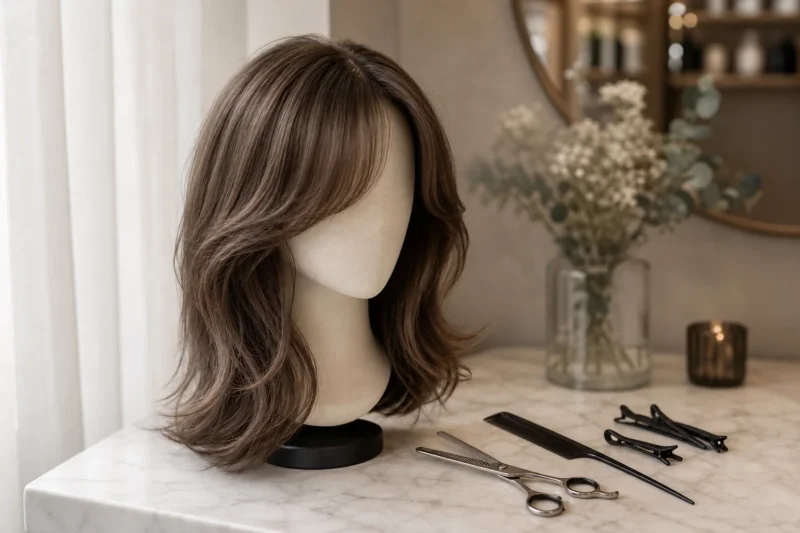
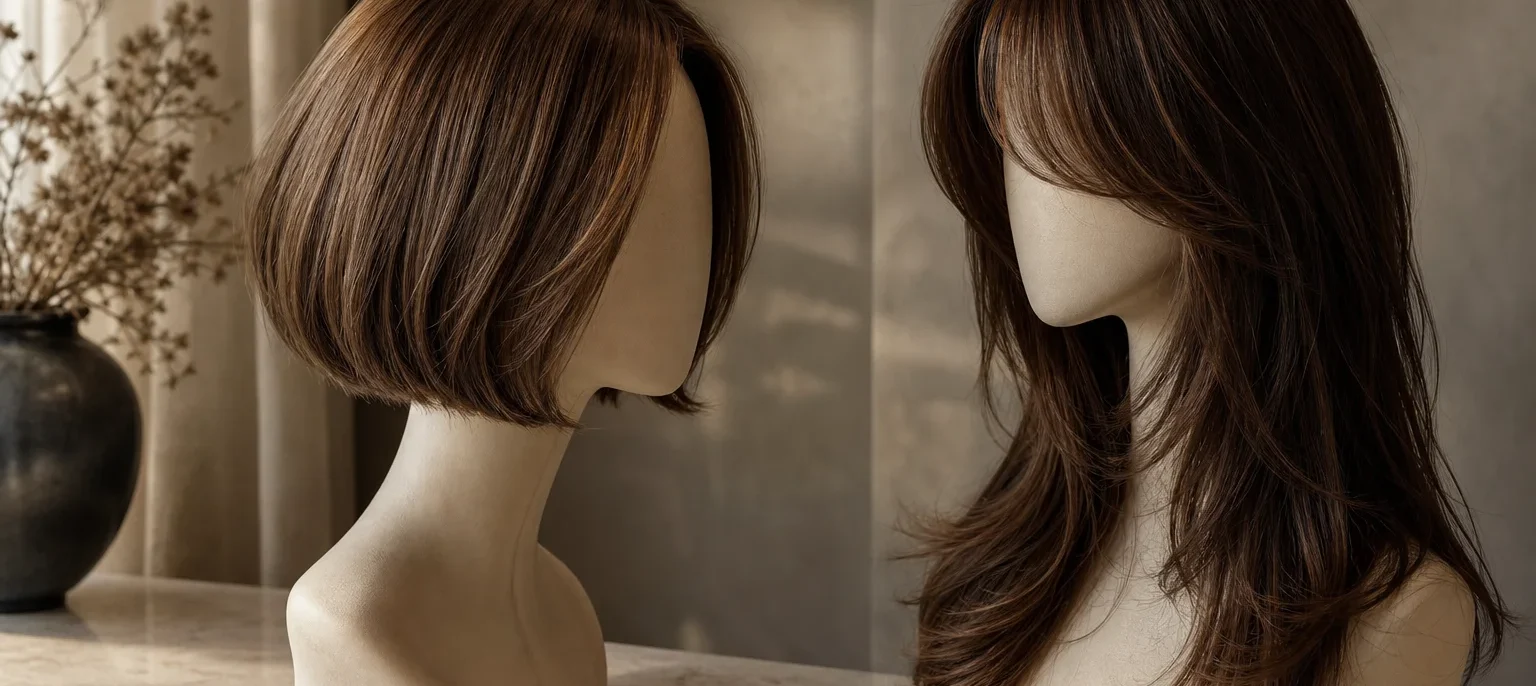
- A long bob (lob) ending between the chin and shoulders, with waves or flipped ends — it creates width where the face is narrowest;
- A bob below the chin with volume at the ends;
- Medium and long hair layered from the chin down, concentrating movement in the lower half;
- Waves and curls from the chin down.
Bangs
- Curtain bangs: part in the middle and frame the face, reducing forehead width;
- Long side-swept bangs: create a softening diagonal;
- Light, wispy bangs: cover part of the forehead without weight.
See every type in bangs for your face shape.
What to avoid with a heart shaped face
- Volume on top and at the temples, which widens the upper half even more;
- Very short, close-cropped napes, which expose the narrow chin;
- Hair scraped straight back, which spotlights the forehead — if you like updos, leave a few strands loose at the front.
Which haircuts suit triangle faces?
The logic is reversed: take volume upwards and keep weight off the jaw.
Lengths that work
- A pixie or short cut with a textured top, creating height and width in the upper half;
- A bob ending below the chin, never exactly on the jawline;
- Medium hair with layers on top and volume at cheekbone level;
- Long hair with lifted roots and movement above the chin line.
Bangs
- Full or voluminous curtain bangs add width to the forehead;
- Side-swept bangs with lifted roots also help.
What to avoid with a triangle face
- Cuts that end exactly on the jawline, such as a blunt chin-length bob;
- Volume concentrated at the ends, at chin level;
- Hair flat at the roots, with no volume on top.
Hair texture changes the cut
- Fine, straight hair: for a heart shaped face, choose a long bob with slightly flipped ends; for a triangle face, short layers on top and a root-lifting blow-dry.
- Thick, straight hair: ask your stylist to remove bulk from the inside in areas that should not look heavy (the top for heart shapes, the base for triangles).
- Wavy hair: a natural ally for heart shaped faces, with waves from the chin down.
- Curly and coily hair: the rounded shape of the cut should be planned dry and in the natural form. For heart shapes, more volume from the chin down; for triangles, a taller, fuller shape on top.
Make-up and accessories also balance
The cut is the main tool, but not the only one:
- Heart shaped face: blush on the apples, swept down towards the centre of the cheek; earrings with volume at the bottom, such as drops and medium hoops.
- Triangle face: highlighter on the temples and high on the cheekbones; narrower, elongated earrings that do not add weight at the jawline.
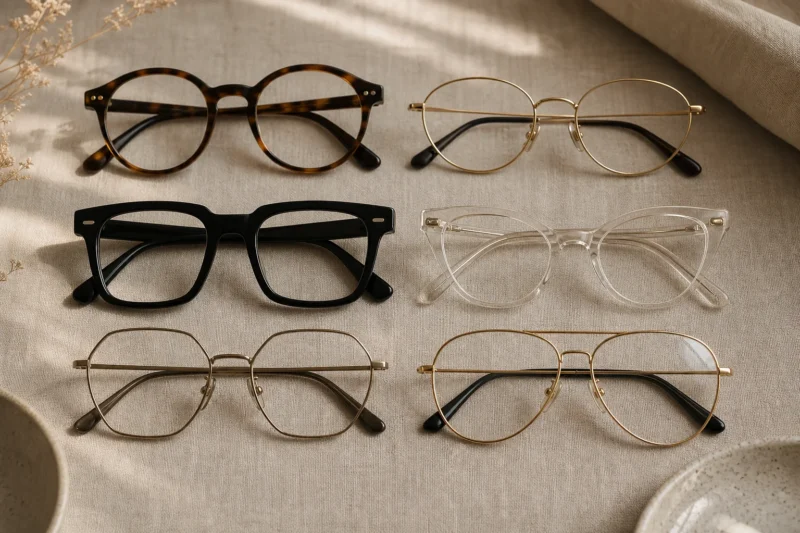
Glasses follow the same logic: frames with more weight at the bottom for heart shapes; frames with emphasis at the top (such as cat-eye) for triangles.
Why does the end point of the cut matter so much?
The human eye is drawn to edges and to volume. When a cut ends at a certain point, it draws a horizontal line there. In visagism, that means:
- ending at the narrow chin of a heart shaped face, with volume, adds width where it is missing;
- ending at the wide jaw of a triangle face adds width where there is already plenty.
A difference of 2 to 3 cm in length changes the result. That is why, in visagism, length is decided with the client in front of the mirror — not only from an inspiration photo. To go deeper into the method, the Visagismo Hallawell website gathers the theoretical base created by Philip Hallawell.
How do you ask for the cut at the salon?
Give your stylist information that helps them get the end point right:
- Say what your face shape is and what you want to balance ("I want to soften my forehead" or "I want to take weight off my jaw");
- Show photos of cuts on people with a face like yours;
- Ask for the length to be decided with you at the mirror, with your hair dry;
- Explain your routine: whether you blow-dry, tie your hair up, how much time you have for styling;
- Agree on upkeep: cuts with volume in specific places, such as the long bob, usually need a trim every 6 to 8 weeks to keep their shape.
Common mistakes
- Choosing a cut from a photo without considering your own shape;
- Cutting the nape too short on a heart shaped face, exposing the narrow chin;
- A blunt bob exactly on the jaw for a triangle face;
- Concentrating volume where the face is already widest;
- Forgetting that bangs, make-up and earrings also change proportion;
- Copying a celebrity’s cut without knowing her face shape.
What about personality?
Face shape is a starting point, not a rule imposed on the person. A heart shaped face tends to convey delicacy; a triangle face, stability. If you have a heart shaped face and want to convey more firmness, straight lines and a more structured cut may make sense, even if "the rule" says waves. Visagism looks for balance between proportion and message.
Frequently asked questions
In a heart shaped face, the forehead and cheekbones are the widest part and the chin is narrow, sometimes pointed. In a triangle face it is the opposite: the jaw is the widest part and the forehead is narrower. Compare the widths of forehead, cheekbones and jaw in the mirror or in a front-on photo.
Lengths that end at the chin or just below, with volume in that area, balance the wider forehead. A long bob and medium hair with waves at the ends work very well.
Yes, as long as the cut brings volume to the top and temples and does not end exactly on the jawline. A pixie with a textured top and a bob below the chin are good options.
Yes. Curtain and side-swept bangs reduce the apparent width of the forehead without adding weight. Very full blunt bangs can make the top even heavier relative to the chin.
Find your cut with someone who understands proportion
Heart shaped and triangle faces have different solutions, and sometimes a face shares features of both or of other shapes. In the Visagism Consultation, I analyse your face’s proportions, your hair’s texture and your personality and recommend the cut, exact length and bangs that balance the whole, explaining the reason behind each choice.
A hairdresser who wants to master end points and volume for every face shape? The Cutting Technology Course offers 16 hours of practice with visagism applied to cutting.
Nelma Faleiro holds a degree in Visagism and Hair Therapy Technology from Anhembi Morumbi University, where she taught for 10 years, and received the SINVISA 2025 Trophy at the 3rd International Visagism Seminar.