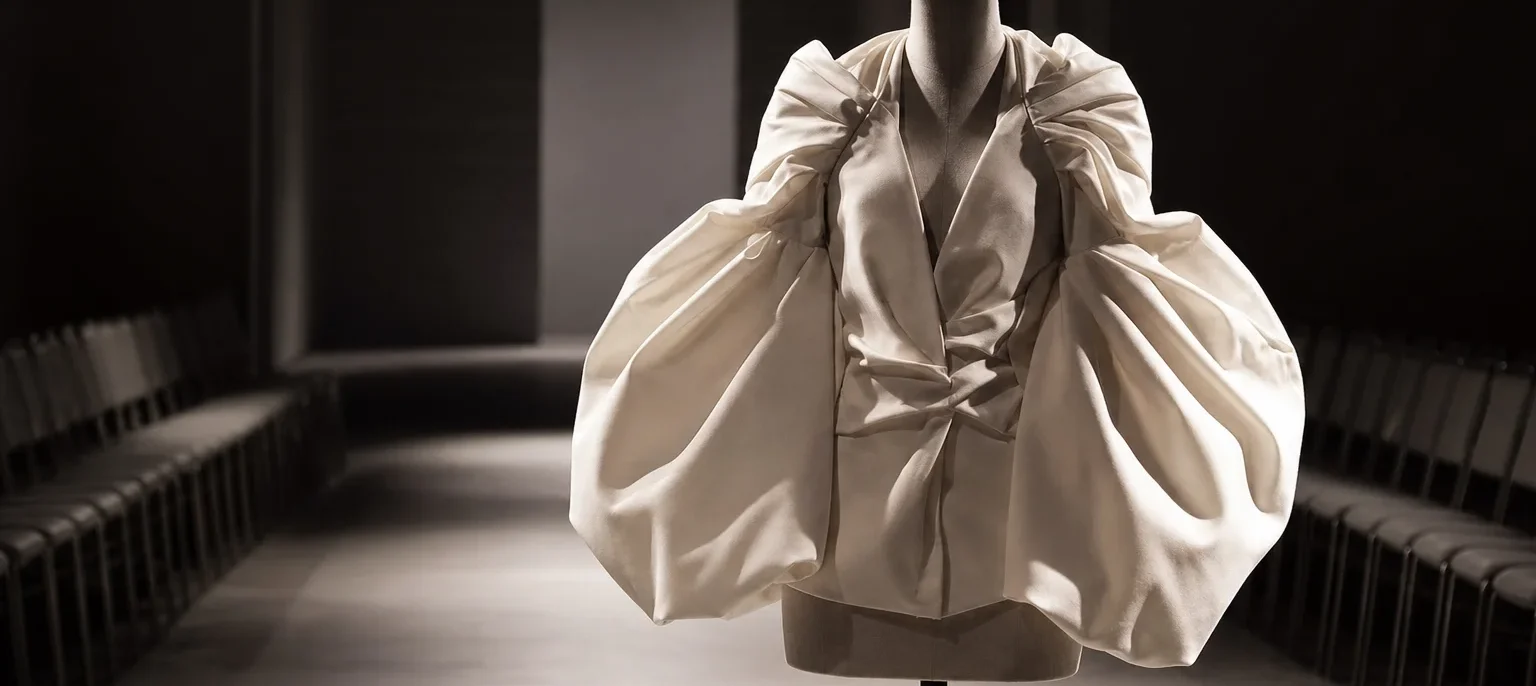
Quick answer: runway fashion is extravagant because a show is not a shop window but a laboratory and a manifesto. Exaggeration tests ideas, communicates the collection’s concept and becomes an image in photos. Then the idea is diluted: a silhouette, a colour or a detail reaches the shops simplified, in wearable, cheaper versions.
Every season the scene repeats itself. A show goes viral with giant sleeves, impossible hats or skirts that fill half a corridor. The comments ask: "who would wear that?". The short answer is: almost nobody, and that is fine. The long answer explains a lot about how fashion works.
In this article I explain why runway fashion is so extravagant, the difference between types of show and how an idea leaves the runway and reaches your shop, diluted.
A fashion show is not a shop window
The first confusion is thinking a show presents clothes to buy exactly as they are. In most cases, that is not the goal. A show has other functions:
- presenting the central idea of the collection;
- creating images for the press, social media and campaigns;
- positioning the brand: showing daring, technique or values;
- testing limits of shape, material and construction.
Think of a concept car at a motor show. Nobody expects it at the dealership the following month. It shows where the brand is heading. Runway fashion does the same.
Why the exaggeration?
1. To be seen
A model crosses the runway in a few seconds. Photographers and the audience need to grasp the idea quickly. So volumes, colours and proportions are amplified. A slightly puffed sleeve does not show up in a photo; a huge sleeve makes headlines.
2. To communicate a concept
Many collections start from a theme: a historical period, a work of art, a social issue. Exaggeration turns the theme into an image. It is the same logic we use in visagism when we analyse events such as the Met Gala 2026: shape and colour communicate ideas.
3. To test technique
The runway is where ateliers show what they can build: structures, draping, embroidery, new materials. Some of that technique later goes into commercial pieces.
4. To create desire for the brand
Often the people who "buy" the show do not buy that garment. They buy the brand’s perfume, bag or sunglasses. The extravagance feeds the image that sustains those products.
Haute couture, ready-to-wear and spectacle shows
| Type | What it is | Link to what you buy |
|---|---|---|
| Haute couture | Made-to-measure pieces with a great deal of handwork | Very few clients worldwide; influences technique and image |
| Luxury ready-to-wear | Collections in standard sizes | Some pieces are sold, often adjusted |
| Spectacle shows | Strongly artistic presentations | Become image and campaign references |
| Commercial collections | Lines designed for retail | Reach shops almost as shown |
Haute couture follows its own rules in Paris, set by the French fashion federation. The haute couture entry on Wikipedia summarises its history and criteria. A single couture piece can take hundreds of hours of work.
How the idea reaches your shop (diluted)
A trend rarely travels whole. It is broken into elements, and each follows its own path:
- Silhouette: an exaggerated shoulder becomes a blazer with discreet shoulder pads.
- Colour: a strong runway shade appears in accessories and later in basics.
- Texture: metallic fabric becomes a detail on a skirt or a shoe.
- Detail: a giant bow becomes a small bow in the hair or at the collar.
- Attitude: the styling (layering, proportions) becomes inspiration for editorials and social media.
This process takes a few months to a few years and passes through several stages: luxury brands, designer labels, department stores and, finally, fast-fashion chains.
The monologue everyone remembers
In the 2006 film The Devil Wears Prada, there is a famous scene in which the character Miranda Priestly explains how a shade of blue on an ordinary sweater was born on runways years earlier. It is fiction, but it describes this path of dilution well. We discuss the character in The Devil Wears Prada 2: Miranda’s style.
Runway fashion that became everyday clothing
Fashion history has many examples of ideas that looked excessive on the runway and later became ordinary:
- Cinched waist and full skirt (1947): Christian Dior’s collection nicknamed the New Look shocked people with its volume of fabric. Within a few years, dresses with defined waists and full skirts were in shops across many countries.
- The miniskirt (1960s): seen as a provocation, it became a wardrobe basic within a decade.
- Shoulder pads (1980s): from the power silhouettes of the runway to office blazers, and back into current collections in softer versions.
- Trainers with tailoring (2010s): what looked like show styling became an urban uniform.
In every case, what reached the shops was an adjusted version: less fabric, more restrained proportions, simpler materials.
The fashion week calendar
The main fashion weeks take place 2 times a year, in New York, London, Milan and Paris, as well as national events such as São Paulo Fashion Week. Collections are usually shown about 6 months before the season they are designed for. That gap exists precisely so the industry has time to produce, and to dilute.
Why this matters to you
Understanding runway logic helps you:
- not feel obliged to follow everything that goes viral;
- identify the element of a trend that suits you (the colour rather than the silhouette, for example);
- shop more thoughtfully, avoiding pieces that do not fit your style;
- read fashion as a language, not a rulebook.
How to filter a runway trend
- What is the main element: silhouette, colour, texture or detail?
- Does it suit my body, my face and my routine?
- Does it work with what I already own?
- Would I wear it 2 years from now?
If the answer is yes to at least 3 questions, it is worth trying.
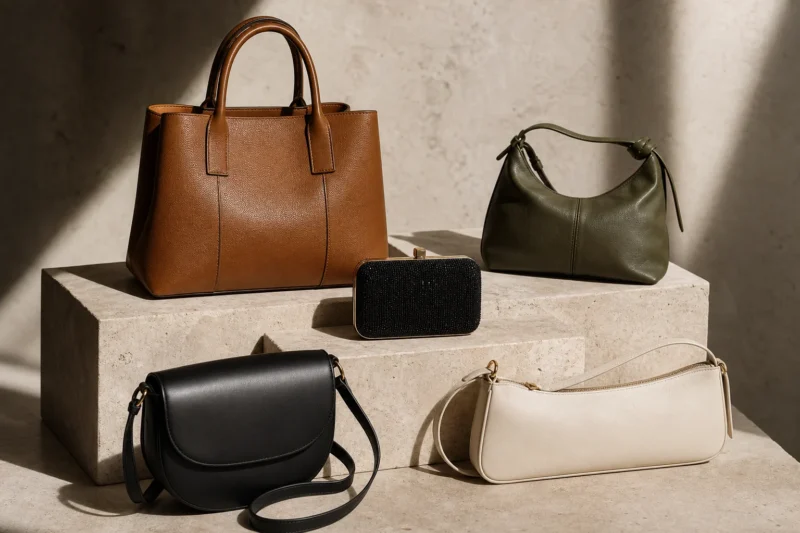
A practical tip: start with an accessory. A belt, a pair of earrings or a bag in the trend’s colour or shape costs less, takes up little wardrobe space and quickly shows whether that language suits you. If it does, the bigger piece can come later, with more confidence.
Myths about fashion shows
"Runway fashion is useless." Myth. It is the industry’s research and development.
"Everything on the runway goes to the shops." Myth. Many pieces exist only for the show.
"People who understand fashion wear what is on the runway." Myth. People who understand fashion know how to translate the runway into their own lives.
"A trend is an obligation." Myth. A trend is a language on offer. You choose what speaks for you.
Frequently asked questions
Because a fashion show is not a showcase of ready-to-wear pieces. It works as a laboratory of ideas and a brand manifesto. Exaggeration makes the idea visible in photos and communicates the collection’s concept.
Some pieces, yes, especially in haute couture, which is made to measure for clients. In ready-to-wear, many runway pieces are produced in adjusted versions for sale, while others exist only for the show.
Haute couture is made to measure, largely by hand, by houses that follow the French fashion federation’s rules. Ready-to-wear is fashion produced in standard sizes.
Through dilution: the silhouette, colour, texture or a detail from the show is simplified and adapted for different prices and routines until it appears in department stores and fast fashion.
Fashion as a personal language
The runway shows ideas at full volume. Real life needs translation. When you understand what each silhouette, colour and texture communicates, fashion stops being pressure and becomes a tool.
Want more fashion, hair and image trivia and practical guides? Subscribe to the blog newsletter. And if you would like to discover which lines, colours and shapes express your personality, see the Visagism Consultation.
Nelma Faleiro holds a degree in Visagism and Hair Therapy from Universidade Anhembi Morumbi, where she lectured for 10 years, and received the SINVISA 2025 Award.