Quick answer: to make the most of Hair Brasil, go with a plan: set 2 or 3 goals (technique, product, networking), check the official programme in advance, allow 1 to 2 days, bring a fixed budget and a notebook. Buy only what you have already tested, ask for samples of new launches and apply at least one idea in your salon the following week.
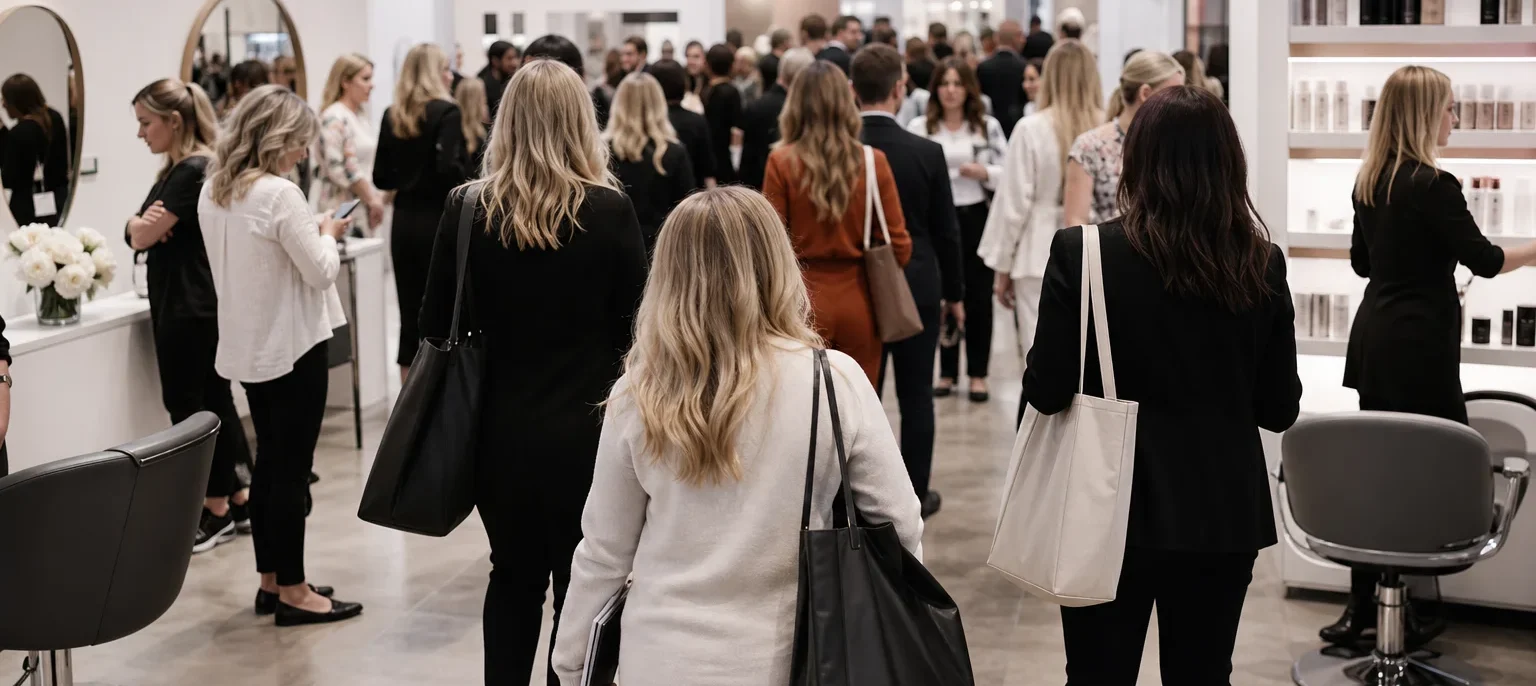
A big trade fair is great and exhausting at the same time. You walk in excited, cover kilometres between stands, catch half a talk, buy on impulse and go home with sore feet and few ideas you can use. I have seen it happen to many students, and it happened to me on my first visits.
This guide is for you, as a beauty professional, to plan your visit to Hair Brasil and come back with something that genuinely improves your work.
What is Hair Brasil and why go?
Hair Brasil is one of São Paulo’s professional beauty trade fairs aimed at hairdressers, barbers, make-up artists, scalp therapists and salon owners. It usually brings together exhibitors of products and equipment, stages with demonstrations, talks, classes and a business area.
Dates, venue, programme and registration rules change from one edition to the next. So always check the information on the organiser’s official channels before booking travel or a hotel.
There are three reasons to go:
- Technical updates: seeing cutting, colour and styling techniques up close.
- Products and equipment: comparing side by side, asking technicians questions and testing.
- Relationships: meeting suppliers, colleagues and educators.
Before the fair: the planning that makes the difference
Set clear goals
Write down up to 3 goals on a sheet of paper. For example:
- "Learn a cutting technique for curly hair."
- "Compare 3 brands of bleach."
- "Find a supplier of backwash units with better ergonomics."
A vague goal such as "see what is new" leads to a scattered day.
Study the programme
- download the floor plan and the talk schedule;
- mark fixed times you do not want to miss;
- leave 30 to 60 minutes between commitments;
- group stands by area so you do not cross the hall several times.
Sort out logistics
- register in advance, if that option exists;
- wear comfortable shoes and layers;
- bring a water bottle, a power bank and a snack;
- bring business cards or a QR code with your professional profile;
- set a maximum shopping budget and stick to it.
During the fair: how to get around without getting lost
A 1-day route
| Time | What to do |
|---|---|
| Opening | Priority stands, before the crowds |
| Late morning | First talk or demonstration on your list |
| Lunch | Outside peak hours, to save time |
| Afternoon | Second talk and product comparison |
| End of day | Planned purchases and a review of your notes |
At the stands
Ask technical questions, not just about price:
- "What is the pH and which hair type is it for?"
- "What processing time and dilution do you recommend?"
- "Is the product registered with the regulator?"
- "Is there a technical data sheet or test report I can see?"
A well-prepared technician answers clearly. Generic answers and miracle promises are a warning sign.
At talks and demonstrations
Bring a notebook and write down 3 concrete actions per talk. Take photos only if allowed and respect the presenter’s image rights. Also watch the method: how the educator runs the consultation, positions the client and explains the result. That is learning too.
What to prioritise for your profile
Each professional gets something different from the fair. Some suggestions:
Hairdresser starting out
Prioritise live cutting and colour demonstrations and talk to educators about training. Watch posture, ergonomics and how the consultation is run. Avoid spending your budget on expensive equipment before you have the clients for it.
Salon owner
Focus on management, everyday equipment, backwash ergonomics and suppliers with good support. Bring figures from your salon, such as best-selling services and average ticket, to negotiate with more confidence.
Scalp therapist
Look for stands with assessment equipment and scalp actives. Ask for studies, technical data sheets and full ingredient lists. Be wary of devices that promise automatic diagnosis or guaranteed results.
Barber
Watch fade techniques, beard shaping and visagism for men. Compare clippers by weight, noise and battery life, testing them in your hand whenever possible.
Shopping: how not to come back with a suitcase full of regret
- Buy what you know. A fair is a good place to restock items you use, if the price is right.
- For new launches, ask for samples. Test them in the salon on different hair types before buying in quantity.
- Check regulation. Cosmetics must be properly registered; in Brazil, Anvisa explains the rules and lets you look up products.
- Equipment: ask for a written warranty, local technical support and the correct voltage.
- Be wary of promises such as "straightens without chemicals" or "cures hair loss". A medical claim on a cosmetic is a red flag.
Networking with purpose
A fair is one of the few places where suppliers, educators and colleagues are all together. Make the most of it:
- introduce yourself by saying what you do and what you are looking for;
- exchange contacts with people who serve the same clients as you;
- talk to educators about classes and continuing education;
- after the fair, send a short message to the most relevant contacts within 7 days.
After the fair: turn it into a service
This is what separates people who "went to the fair" from people who grew from it.
- Review your notes within 48 hours.
- Choose 1 technique to practise on a model or mannequin in the next 2 weeks.
- Test the samples and record the results on a client card.
- Create or adjust a service based on what you learned, with a price and a description.
- Tell your clients about it, explaining the real benefit.
If the fair sparked your interest in cutting trends, review what is in fashion in women’s haircuts 2026. And if your focus is the scalp, the basis for assessment is in scalp therapy: what it is and how much it costs.
A checklist to keep on your phone
- [ ] 3 written goals
- [ ] Programme marked, with times
- [ ] Map of priority stands
- [ ] Maximum budget set
- [ ] Technical questions for exhibitors
- [ ] Business cards or contact QR code
- [ ] Water, snack and charger
- [ ] Plan to apply one idea the following week
A fair is not a substitute for training
A fair inspires, shows you directions and brings people together. But a 40-minute demonstration does not train anyone. Solid technique comes from guided practice, repetition and correction. Use the fair to choose what to study next.
Frequently asked questions
It is one of the professional beauty trade fairs held in São Paulo, with exhibitors of products and equipment, talks, demonstrations and classes. Dates, venue and programme should always be checked on the organiser’s official channels.
If you want to attend talks and compare products, set aside 2 days. With only 1 day, choose no more than 2 priorities and plan a route by area.
It is worth it for items you already know and use, when the price is right. For new launches, ask for samples, check the regulatory registration and test in the salon before buying in quantity.
Choose topics that solve a real problem in your salon, write down 3 concrete actions per talk and apply at least one the following week. Without application, a talk is just inspiration.

Keep learning after the fair
If what caught your eye most was precision cutting and adapting to different textures, the Cutting Technology Course offers 16 hours of practice with the short bob, the pixie and adaptation for wavy, curly and coily hair, with visagism applied to cutting.
See the Cutting Technology Course →
If your interest is the scalp, the Practical Trichology e-book organises assessment, scalp disorders and protocols in 109 pages for you to apply in the chair.
Nelma Faleiro holds a degree in Visagism and Hair Therapy from Universidade Anhembi Morumbi, where she lectured for 10 years, is a specialist in Cosmetic Trichology and received the SINVISA 2025 Award.