Quick answer: scalp therapy is the assessment and treatment of the scalp and hair based on a consultation and trichoscopy. It suits oiliness, dandruff, dermatitis, hair loss (supporting the doctor), thinning and damaged hair. A session includes cleansing, actives and sometimes devices. In Brazil in 2026, an assessment usually costs R$150 to R$400 and packages of 4 to 10 sessions R$800 to R$3,500.
The word "therapy" has attracted many things under the same name — from steam conditioning to protocols with a trichoscope and comparison photos. That is why so many people ask whether scalp therapy works and whether it is worth the price. The answer depends on what is being sold under that name.
In this guide you will learn what real scalp therapy is, who it is for, what a session involves, how many sessions are usually needed and how much it costs in 2026.
What scalp therapy is
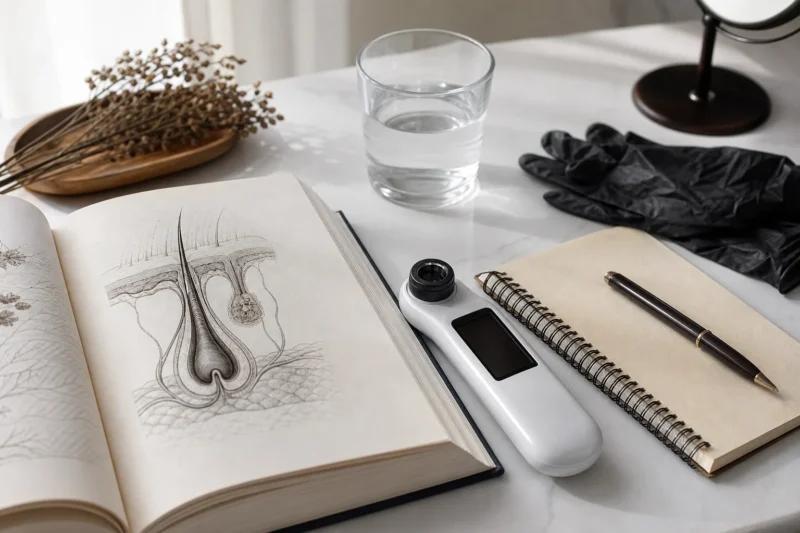
Scalp therapy is a set of cosmetic procedures focused on scalp health and hair shaft quality. It comes from trichology — the study of hair and scalp — and rests on three pillars:
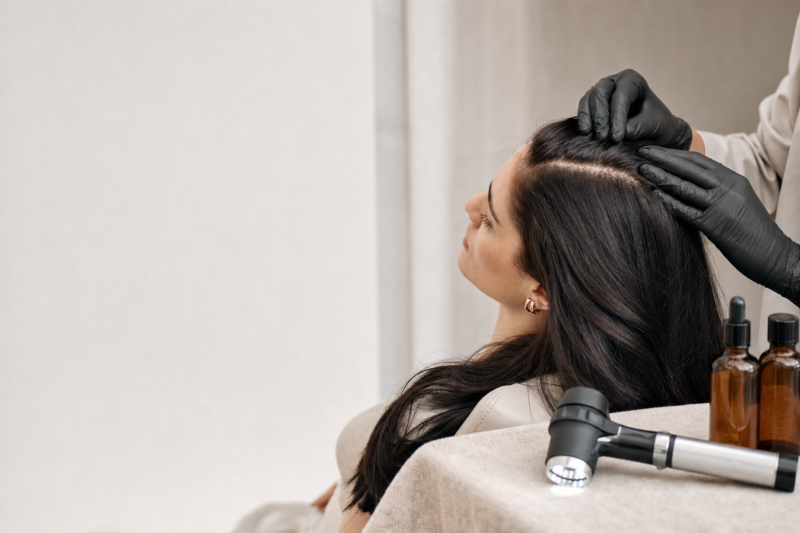
- Assessment — a consultation (interview) and trichoscopy (magnified imaging of the scalp);
- Treatment — cleansing, exfoliation, actives, massage and devices;
- Follow-up — standardised photos, reassessment and protocol adjustment.
The central point: treatment follows from assessment. Without understanding what is going on, any protocol becomes guesswork.
Who scalp therapy is for
- an oily scalp that feels "dirty" the same day;
- dandruff and seborrheic dermatitis (complementing medical treatment during flares);
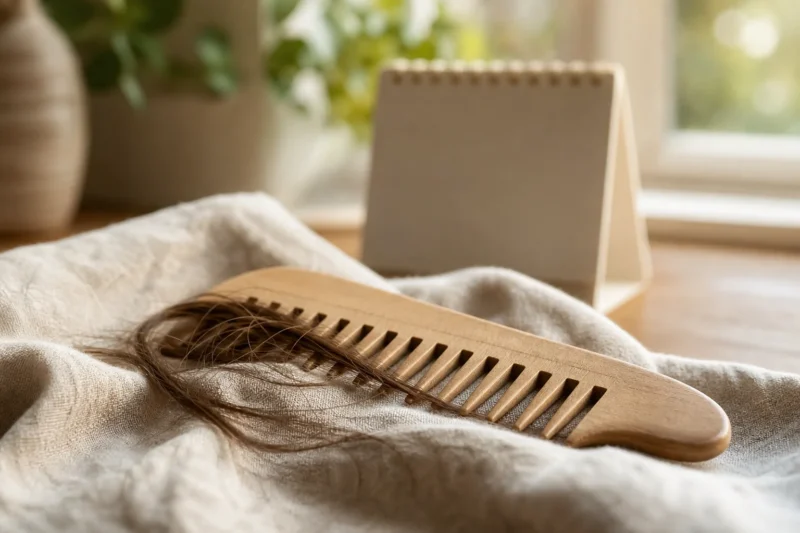
- hair loss — telogen effluvium, postpartum, after weight loss — always with investigation of the cause;
- thinning and androgenetic alopecia, together with a dermatologist;
- sensitivity, itching and burning without a diagnosed disease;
- hair damaged by chemicals and heat;
- anyone who wants to prevent problems and monitor hair health over time.
When it isn’t the first step
Round bald patches, sores, pain, thick crusts, heavy shedding for more than 6 months or hormonal signs call for a dermatologist first. A good hair therapist refers and works alongside them.
What a scalp therapy session involves
| Stage | What happens | Approximate time |
|---|---|---|
| Consultation (1st session) | Health history, routine, chemical services, complaint | 20–40 min |
| Trichoscopy | Scalp and hair magnified 20x to 200x | 10–15 min |
| Cleansing | Cleansing suited to the scalp type | 10 min |
| Exfoliation or pre-treatment | Removes residue and scales, when appropriate | 5–10 min |
| Actives + massage | Sebum-regulating, soothing, stimulating | 10–15 min |
| Devices (if appropriate) | High frequency, LED, steam | 10–20 min |
| Home-care guidance | Products, wash frequency, habits | 5–10 min |
The first session usually lasts 60 to 90 minutes; later ones, 45 to 60 minutes.
The details of the initial interview are in our guide to the trichology consultation form, which we use when training professionals.
How many sessions you need
- Oiliness and flaking: usually 4 to 8 weekly or fortnightly sessions, then monthly maintenance.
- Effluvium shedding: 3 to 6 months of follow-up while the cause is corrected.
- Androgenetic thinning: ongoing follow-up, alongside medical treatment.
- Damaged shaft: 4 to 6 sessions, with a change of home routine.
Be wary of anyone promising results in 1 session or guaranteed regrowth. Hair grows about 1 cm a month: any serious assessment of results takes months.
How much scalp therapy costs in 2026
Prices vary by city, the professional’s training, session length and devices. As a market reference in Brazilian state capitals:
| Service | Common range in 2026 |
|---|---|
| Assessment with trichoscopy | R$150 to R$400 |
| Single session | R$150 to R$350 |
| Package of 4 to 6 sessions | R$800 to R$2,000 |
| 8 to 10 session protocol with reassessments | R$1,500 to R$3,500 |
| Home-care products (per month) | R$100 to R$400 |
These ranges are indicative, not an official price list. What justifies the price is the assessment, the time spent, image-based follow-up and the training of the practitioner.
How to tell you’re paying for real therapy
- was there a consultation and trichoscopy before any proposal?
- did the professional explain what they saw and why they chose each stage?
- is there a reassessment date with comparable photos?
- did they talk about the limits of therapy and when to see a doctor?
If the answer is "no" to most of these, it is probably a salon treatment with a therapy label.
How to prepare for your first session
A few simple steps make the assessment far more accurate:
- Don’t wash your hair on the day (or wash the day before), so the professional sees your real oiliness and flaking.
- Avoid stylers, oils and pomades at the root for 24 hours.
- Bring a list of medication and supplements, including contraceptives and compounded formulas.
- Bring recent test results, if you have any — the therapist doesn’t interpret them like a doctor, but records them.
- Take photos of your hair from a few months ago, if you have them: they help show the evolution.
- Note the timeline: when it started and what changed in the previous 3 months (stress, diet, chemical services, childbirth).
Home care between sessions
Scalp therapy doesn’t only happen in the chair. Most of the result depends on what you do on the other 6 days of the week:
- stick to the agreed wash frequency — no more, no less;
- use the recommended products in the right amount and for the right contact time;
- dry the roots well with a warm, not hot, hairdryer;
- avoid new chemical services until the reassessment;
- log symptoms (itching, oiliness, shedding) in a notes app to bring to the next session.
People who keep up the home routine often notice less oiliness and itching within the first weeks; shedding takes longer.
Hair therapist, trichologist or dermatologist?
A dermatologist is a doctor: they diagnose disease, order tests and prescribe medication. A hair therapist and a trichologist — non-medical training in Brazil — assess and treat with cosmetic procedures, without diagnosing disease or prescribing. The best results usually come from working together. To understand hair-loss causes that need a doctor, see female hair loss: 9 causes. Internationally, bodies such as the International Association of Trichologists set training standards for the field.
Myths about scalp therapy
"It’s just a more expensive conditioning treatment." Not when there is an assessment, scalp actives and follow-up. Conditioning cares for the lengths; scalp therapy starts at the root.
"It fixes any hair loss." No. Scalp diseases and hormonal changes need a doctor.
"You have to do it forever." Not always. Many cases have a treatment phase followed by spaced-out maintenance with a home routine.
Frequently asked questions
It works for what it sets out to do: identify changes in the scalp and hair, treat oiliness, flaking, inflammation and shaft damage, and support medical treatment of hair loss. It does not replace a dermatologist for scalp diseases or promise guaranteed regrowth.
It depends on the complaint. Protocols for oiliness and flaking usually have 4 to 8 sessions; for hair loss, follow-up usually lasts 3 to 6 months, with reassessments using photos and trichoscopy.
A dermatologist is a doctor: they diagnose disease, order tests and prescribe medication. Hair therapists and trichologists (non-medical training) assess and treat the scalp and hair with cosmetic procedures and refer to a doctor when needed.
No. The stages involve cleansing, gentle exfoliation, applying actives, massage and, when appropriate, devices such as high frequency or LED. It usually feels relaxing.
Start with the right assessment
If you live with oiliness, itching, flaking or shedding and no longer know which product to try, the Hair & Scalp Therapy Consultation is the place to start: a full consultation, trichoscopy, a clear explanation of what is happening and an individual protocol with photo follow-up.
Want to offer scalp therapy with rigour in your salon or studio? The Practical Trichology e-book (in Portuguese) covers assessment, the main disorders and protocol building in 109 pages.
Nelma Faleiro is a specialist in Cosmetic Trichology, holds a degree in Visagism and Hair Therapy and lectured at Universidade Anhembi Morumbi for 10 years. Reference prices vary by region.