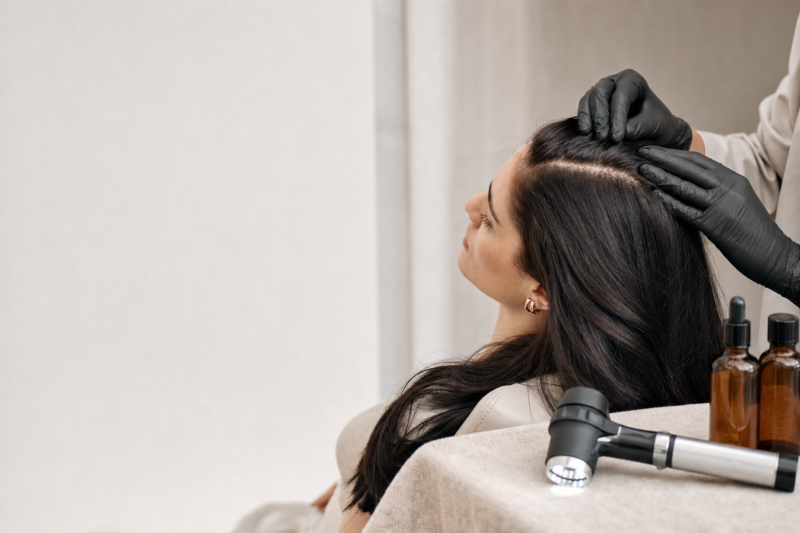

Quick answer: a trichology consultation form is the structured interview that comes before any treatment. A complete form covers 8 blocks: identification, main complaint, health history, medication, hormones, habits and diet, hair routine and chemical services, and expectations — followed by standardised photos, consent and clear criteria for medical referral.
Every hair therapist has lived this scene: the client sits down, points at her parting and says "my hair is falling out so much". The temptation is to grab the trichoscope and suggest a protocol on the spot. But without a thorough trichology consultation form, you are treating a guess — and selling products, not treatment.
In this guide you will find the framework I have used and taught for more than two decades: the blocks of the form, the questions that actually change your approach, the red flags and how to record everything safely.
Why the consultation comes before trichoscopy
Trichoscopy shows what is happening on the scalp: miniaturisation, oiliness, flaking, redness. The consultation explains why. Diffuse shedding can be effluvium from stress, iron deficiency, thyroid problems, childbirth or weight-loss injections — and the magnified image alone cannot tell all those causes apart.
The consultation also:
- defines whether the case is for hair therapy, for a doctor (or both);
- avoids contraindications, such as actives and devices in pregnancy or on a scalp with sores;
- creates a baseline for comparing results;
- increases perceived value — the client feels heard, and that builds loyalty.
Trichology consultation form: the 8 essential blocks
1. Identification and contact
Name, date of birth, occupation, contact details, how they heard about you. Occupation matters: people who wear helmets or caps or work in the sun have a different hair routine.
2. Main complaint
Let the client speak first and write it down in her words. Then go deeper:
- Since when have you noticed it? Suddenly or gradually?
- Where do you notice it most: crown, parting, temples, nape, all over?
- Does it fall from the root or break along the length?
- Is there itching, burning, pain, flaking, oiliness or sores?
- Does anyone in the family have a similar complaint?
3. Health history
Current and past illnesses, surgery in the last 12 months, recent high fever or infections, anaemia, thyroid disease, autoimmune and skin conditions (psoriasis, dermatitis) and allergies, including to cosmetics.
4. Medication and supplements
List everything, including what the client considers "natural". Contraceptives, antidepressants, anticoagulants, retinoids, thyroid medication, weight-loss injections such as semaglutide and tirzepatide, minoxidil, finasteride and supplements. Ask how long they have been taking them and whether the dose changed. Changes 2 to 4 months before the shedding are valuable clues — see the example in hair loss on Mounjaro and Ozempic.
5. Hormonal phase
Menstrual cycle (regular? heavy flow?), pregnancy, breastfeeding, postpartum, menopause, hormone therapy, signs such as sudden acne or increased facial hair.
6. Habits and diet
Sleep quality, stress level (0 to 10), physical activity, smoking, alcohol, vegetarian or restrictive diet, recent weight loss or gain, water and protein intake.
7. Hair routine and chemical services
- Wash frequency and water temperature;
- Products used (ask for photos of the labels);
- Hairdryer, flat iron, curling tongs: frequency and temperature;
- Tight hairstyles, braids, extensions;
- Chemical services in the last 12 months: colour, bleach, relaxers, keratin treatments — and the interval between them.
8. Expectations and availability
What does the client expect? In what time frame? How much time and money can she commit to the protocol? Aligning expectations here prevents frustration later.
Red flags: when to refer to a dermatologist
Refer before starting any protocol if there are:
- smooth, round bald patches, or areas with scarring;
- sores, pus, thick crusts, pain or bleeding on the scalp;
- heavy shedding for more than 6 months with no apparent cause;
- signs of hormonal change (sudden acne, hirsutism, irregular cycle);
- unexplained weight loss, extreme tiredness or fever;
- suspected pattern hair loss, which requires medical treatment.
Referring is not losing the client. It shows ethics — and most of the time she comes back for the supporting protocol with your team.
Standardised photos and records
The consultation ends with standardised photos: same light, same distance, same angles (front, crown, centre parting, sides, nape) and trichoscopy images of the same areas. Note the magnification used. Without standardisation, comparing results before and after the protocol is meaningless.
| Record | First visit | Follow-ups |
|---|---|---|
| Complete consultation form | Yes | Update |
| Clinical photos (5 angles) | Yes | Every 30–60 days |
| Trichoscopy (same areas) | Yes | Every 30–60 days |
| Consent form | Yes | New form if the protocol changes |
| Progress notes and actions | Yes | Every session |
Consent and data protection
Health data are sensitive data under data protection laws — in Brazil, the LGPD (Law 13,709/2018); in Europe, the GDPR. The form should therefore include:
- consent for the procedure, with risks and contraindications explained;
- specific permission for photo use (internal and technical use and, separately, publication);
- information on how the data will be stored and for how long.
Keep forms somewhere secure — locked files or password-protected systems — and never send clinical photos through group chats.
6 common consultation mistakes
- Asking too many closed questions. "Are you stressed?" gets a "no". "How have the last six months been for you?" gets the story of the bereavement, the job change or the surgery that explains the shedding.
- Ignoring what the client calls natural. Teas, compounded formulas, essential oils and gym supplements belong on the medication list.
- Not asking about the interval between chemical services. A relaxer followed by bleach a few weeks later explains a lot of "hair loss" that is really breakage.
- Forgetting the timeline. Today’s shedding usually has a trigger from 2 to 4 months ago. Always ask what changed in that period.
- Promising results at the first visit. Before the reassessment, talk about hypotheses and goals, not guaranteed regrowth.
- Not updating the form at follow-ups. A new medication, pregnancy or diet changes your approach. Five minutes of updating each session prevents mistakes and shows care.
Consultation tip
Send part of the form before the appointment as a digital questionnaire, with the identification, medication and routine blocks. That frees the in-person conversation for what matters: hearing the complaint, investigating the timeline and explaining what you see through the trichoscope.
From consultation to protocol
With the consultation form, the trichoscopy and the photos in hand, you form a hypothesis, decide whether the case is yours, the doctor’s or shared, and only then build the protocol: cleansing, actives, devices, number of sessions, home care and a reassessment date. This sequence is what turns a one-off appointment into a treatment with a beginning, middle and end.
Frequently asked questions
It is the structured interview a hair therapist carries out before any assessment or treatment: main complaint, health history, medication, routine, chemical services, diet and expectations. It guides the trichoscopy, the protocol and any medical referral.
At the first appointment, 20 to 40 minutes, including the conversation, completing the form and taking standardised photos. At follow-ups, a 5 to 10 minute update is usually enough.
No. Ordering and interpreting laboratory tests and diagnosing disease are medical responsibilities. The therapist can ask about tests already done, record them and refer to a dermatologist when there are red flags.
It is recommended. The signature confirms the information was provided by the client and records consent for the procedure and for the use of photos, in line with data protection laws such as Brazil’s LGPD or the GDPR.

Take your assessments to the next level
If you want to handle hair-loss, oiliness and dandruff complaints with confidence, the Practical Trichology e-book (in Portuguese) is your shortcut. It has 109 pages on hair anatomy and physiology, scalp and hair assessment protocols, a map of the main disorders and how to build personalised protocols — with a checklist of safe practices to apply at your very next appointment.
Get the Practical Trichology e-book →
Have a difficult case and want a second opinion, or are you a client looking for an assessment? Discover the Hair & Scalp Therapy Consultation.
Nelma Faleiro is a specialist in Cosmetic Trichology, holds a degree in Visagism and Hair Therapy and lectured at Universidade Anhembi Morumbi for 10 years. Educational content for professionals; always respect the legal limits of your practice.