
Quick answer: to wash your hair properly, think scalp first and lengths second. Use lukewarm water, apply shampoo only at the roots and massage with your fingertips for 1 to 2 minutes; let the lather run down the lengths, rinse well and use conditioner from mid-lengths to ends. Frequency depends on your scalp: an oily one needs washing daily or every other day.
Washing is the cheapest hair treatment there is — and the one most often done wrong. Many people scrub the lengths, use scalding water, put conditioner on the roots or wash less often for fear of "ruining" their hair. Knowing how to wash your hair properly solves many complaints about oiliness, itching, frizz and lifeless hair, without a single new product.
In this guide you will see the right frequency for your scalp, water temperature, the step by step and the most common mistakes.
Why does the scalp come first?
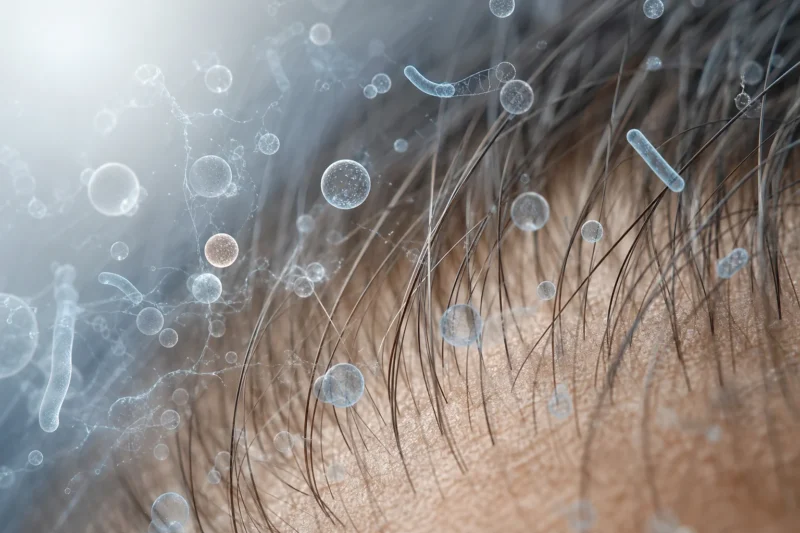
The scalp is skin: it has sebaceous glands, sweat, cells that renew themselves and a community of microorganisms. Sebum, sweat, pollution and product residue build up there. The lengths, on the other hand, are a fibre with no biological life — they need gentle cleaning and protection.
Hence the golden rule: shampoo on the scalp, conditioner on the lengths. Learn more about scalp skin in the scalp microbiome.
How often should you wash your hair?
| Scalp type / situation | Suggested frequency | Signs it needs washing |
|---|---|---|
| Oily | Daily or every other day | Oily roots in under 24 hours, itching |
| Normal | Every 2 or 3 days | Heavy roots, loss of volume |
| Dry or sensitive | 2 to 3 times a week | Itching, tightness |
| Curly and coily | 2 to 3 times a week (co-wash in between if needed) | Itchy scalp, product build-up |
| With seborrheic dermatitis | As advised, usually often | Flaking, redness |
| After exercise or heavy sweating | The same day | Sweat, odour |
Does washing less "train" your scalp?
There is no good evidence for that. Sebum production is regulated mainly by hormones and genetics. Spacing out washes on an oily scalp usually just builds up sebum and encourages itching and flaking. See more in oily scalp and dry ends.
What is the ideal water temperature?
- Lukewarm on the scalp: removes sebum without irritating;
- Cooler on the lengths, especially for the final rinse: helps smooth the cuticle and reduces frizz;
- Avoid very hot water: it dries the hair, can irritate sensitive skin and increases the feeling of oiliness afterwards.
Step by step: how to wash your hair properly
1. Detangle first
With dry hair, run your fingers or a wide-tooth comb through. Tangled hair gets more tangled in the shower and breaks. On curly and coily hair, a pre-wash with conditioner or oil on the lengths (pre-poo) protects the ends.
2. Wet thoroughly
Let the water run for about 1 minute, until your scalp is fully wet. This already removes some dirt and helps the shampoo go further.
3. Apply shampoo at the roots
A coin-sized amount is usually enough for short to medium hair. Spread it in your hands first with a little water, then apply it at different points on the scalp: top, sides, nape.
4. Massage with your fingertips
Firm, gentle circular movements for 1 to 2 minutes. Never use your nails: they create micro-injuries that irritate and inflame. Silicone scalp brushes can help people with a lot of oil, as long as they are used lightly.
5. Let the lather run down the lengths
There is no need to scrub the lengths. The lather that runs down as you rinse cleans them without damage.
6. Second application, if needed
If your scalp was very oily, loaded with product, or you are using a treatment shampoo (which needs 3 to 5 minutes of contact), apply a second time.
7. Rinse well
Shampoo residue on the scalp can cause itching and flaking. Rinse until your scalp feels "clean" to the touch, usually for 1 to 2 minutes.
8. Conditioner from mid-lengths to ends
Squeeze out excess water, apply conditioner from ear level down and detangle with your fingers. Leave it on for the time on the label and rinse with cooler water.
9. Dry carefully
Squeeze your hair with a microfibre towel or T-shirt, without rubbing. Dry the roots well: sleeping with a damp scalp encourages fungi and odour. If you use a hairdryer, keep it about 15 cm away on medium heat.
How do you choose a shampoo?
- Oily scalp: more efficient cleansing formulas designed for oiliness;
- Dry or sensitive scalp: mild cleansers, without high fragrance;
- Flaking: shampoos with specific actives — see dandruff or seborrheic dermatitis;
- Curls and coils: mild formulas and, between washes, co-wash;
- Chemically treated hair: mild, colour-protecting formulas.
Clarifying shampoo should be used occasionally, not at every wash. Give any new shampoo at least 3 or 4 washes before deciding whether it works for you, and note how your scalp feels the next day.
The most common washing mistakes
- Very hot water;
- Scrubbing the lengths and piling hair on top of your head;
- Using your nails on the scalp;
- Conditioner or mask at the roots;
- Rinsing too quickly, leaving residue;
- Wrapping wet hair tightly in a towel for a long time;
- Sleeping with wet hair;
- Washing less often on an oily scalp for fear of "ruining" it;
- Switching shampoo every week, with no time to judge the result.
Hair loss in the shower: is it normal?
Losing hairs while washing is normal. On average we lose about 50 to 100 hairs a day, and many come out precisely in the shower and when combing. People who wash every 3 or 4 days see more at once, because loose hairs accumulate. If shedding has increased a lot, lasts more than 3 months or comes with bald patches, get an assessment — see the most common causes in female hair loss: 9 causes.
Special situations
- Beach and pool: wet your hair with fresh water before going into the sea or pool and wash it the same day;
- Sunscreen on the scalp and face: may call for a second shampoo;
- A scalp with sores or pain: stop new products and see a dermatologist;
- After a chemical service: follow the interval advised by your stylist before the first wash.
The American Academy of Dermatology reinforces these basics: wash the scalp, condition the lengths and reduce friction and heat.
Frequently asked questions
It depends on your scalp, not your length. An oily scalp usually needs washing daily or every other day; a normal scalp every 2 or 3 days; a dry scalp and curly or coily hair 2 to 3 times a week. Itching, odour and oiliness are signs it is time.
Very hot water can dry out the lengths, irritate a sensitive scalp and increase the feeling of oiliness. Ideally, use lukewarm water on the scalp and cooler water for the final rinse of the lengths.
Not always. A second application helps when there is a lot of oil, product or sunscreen build-up, or when a treatment shampoo needs contact time. With frequent washing, one good application is usually enough.
No. The hairs that come out in the shower were already loose and would have fallen anyway. People who wash less see more hair collected at each wash, but they do not lose more hair by washing often.

A washing routine made for your scalp
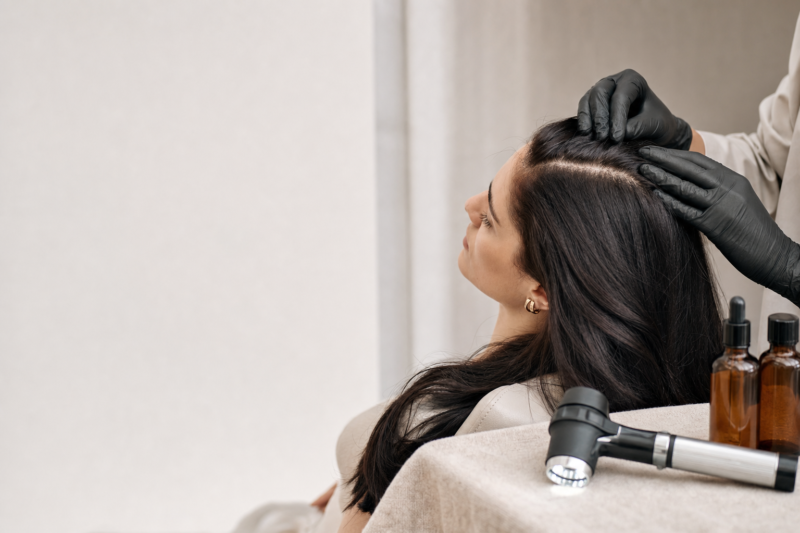
If, even washing correctly, your scalp itches, flakes, gets oily quickly or your hair falls out more than it should, it is time for an assessment. In the Hair & Scalp Therapy Consultation, I take your history and perform trichoscopy, identify what is happening and build a washing routine with the right frequency, technique and products for you — with medical referral when needed.
I want a washing routine for my scalp →
A beauty professional? The Practical Trichology e-book provides the assessment basics and guidance to teach clients how to care for their scalp at home.
Nelma Faleiro holds a specialisation in Cosmetic Trichology (Faculdades Oswaldo Cruz) and a degree in Visagism and Hair Therapy Technology from Anhembi Morumbi University, where she taught for 10 years. Educational content: it does not replace medical advice.