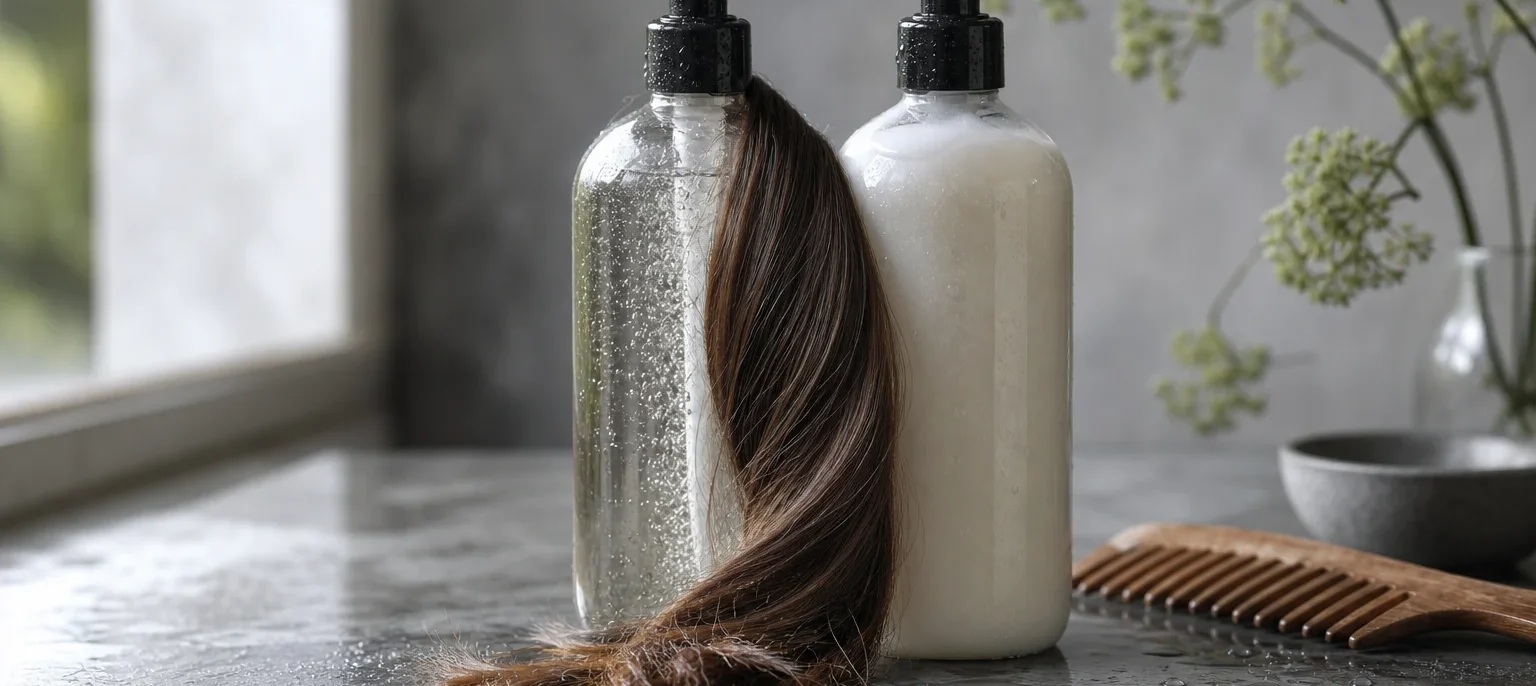
Quick answer: an oily scalp and dry ends happen together because roots and lengths have different problems: the roots get sebum from the glands; the ends are the oldest, most damaged part of the strand, where sebum never arrives. The fix is to treat them separately — shampoo and frequent washing for the scalp, conditioner and leave-in only on the lengths. Washing less does not "train" your scalp.
It is one of the most common complaints in hair assessments: "by the end of the day my roots are greasy, but my ends feel like straw". Many people try to solve it with a single product — and get it wrong both ways. A strong shampoo dries the ends; a rich cream weighs down the roots. An oily scalp with dry lengths needs split care, and understanding why it happens is the first step.
Why does the scalp get oily?
The scalp has one of the highest concentrations of sebaceous glands in the body, attached to each follicle. Sebum protects and lubricates skin and hair — the problem is excess. The main factors:
- Hormones: androgens stimulate the sebaceous glands. That is why oiliness increases at puberty and can vary with the menstrual cycle, pregnancy and some contraceptives.
- Genetics: gland size and activity vary from person to person.
- Climate: heat and humidity increase the perception of oiliness.
- Habits: very hot water, heavy products at the roots, touching your hair a lot and sleeping with damp roots.
- Stress: it can influence oiliness and trigger seborrheic dermatitis flares.
Does washing less "train" your scalp?
It is one of the most persistent myths. There is no good evidence that spacing out washes makes the glands produce less sebum. What happens is the opposite: accumulated sebum oxidises, encourages the growth of Malassezia and can lead to itching, odour and flaking. For people with an oily scalp, washing daily or every other day is usually best.
Why do the ends get dry?
The ends are the oldest part of the hair. On 40 cm of hair, which grows about 1 cm a month, the ends have more than 3 years of washing, brushing, sun, heat and chemicals behind them. Over time:
- the cuticle wears down and opens;
- the hair loses lipids and proteins;
- porosity increases and it loses water easily.
On top of that, sebum travels down the strand with difficulty — especially on long, wavy, curly and coily hair. The result: oily roots, dry ends.
How do you balance them? The split routine
1. A shampoo designed for the scalp
Shampoo is for the scalp, not the lengths. Choose a formula for oily or balancing scalps, apply it only at the roots, massage with your fingertips for 1 to 2 minutes and let the lather run down the lengths as you rinse. That is enough to clean the ends without harming them.
If there is flaking, itching or redness, it may be seborrheic dermatitis, which needs a shampoo with specific actives — see dandruff or seborrheic dermatitis.
2. Conditioner only from mid-lengths to ends
Apply from ear level down. Conditioner and masks at the roots increase the feeling of oiliness and can encourage build-up.
3. Leave-in and oil only on the lengths
A small amount of leave-in conditioner or serum on the ends protects against friction during the day. Avoid oils at the roots.
4. Water temperature
Lukewarm water for the scalp; cooler for the final rinse on the ends. Very hot water stimulates oil and dries out the lengths.
5. Drying
Dry the roots thoroughly — sleeping with a damp scalp encourages fungi and odour. Use the hairdryer on medium heat, at least 15 cm away, aiming at the roots, and leave the ends until last.
Table: what goes on the roots and what goes on the ends
| Product | Roots / scalp | Lengths and ends |
|---|---|---|
| Shampoo for oily scalp | Yes | Only the lather that runs down |
| Treatment shampoo (anti-dandruff) | Yes, left on for 3 to 5 minutes | No |
| Conditioner | No | Yes |
| Mask | No | Yes, 1 to 2 times a week |
| Leave-in / serum | No | Yes, a small amount |
| Hair oil | No | Yes, a few drops on the ends |
| Dry shampoo | Occasionally | No |
| Scalp exfoliant | With guidance, every 2 to 4 weeks | No |
How many times a week should you wash?
There is no magic number, but a practical reference helps you start:
| Situation | Suggested frequency |
|---|---|
| Very oily scalp, fine straight hair | Daily |
| Oily scalp, wavy hair | Every 1 or 2 days |
| Oily scalp, curly or coily hair | 2 to 4 times a week, with co-wash on the ends if needed |
| Oily scalp with seborrheic dermatitis | As advised, usually daily or every other day |
| Intense exercise and heavy sweating | After the workout, with a mild shampoo |
Watch your scalp for 2 weeks: if the roots turn oily in under 24 hours, washing every day is the way to go. If they last 48 hours without itching or odour, every other day is usually enough. On curly and coily hair, which dries out more, the roots can be washed with shampoo and the lengths protected with conditioner applied before washing (pre-poo).
Mistakes that make it worse
- Washing with hot water to "strip the oil";
- Using a clarifying shampoo every week without need, drying the ends even more;
- Applying a rich mask at the roots;
- Overusing dry shampoo, which builds up and irritates;
- Scratching with your nails, creating micro-injuries;
- Tying hair up while damp straight after showering;
- Touching your hair all the time, transferring oil from your hands.
Does a hair treatment schedule help?
A schedule can help the ends, as long as masks stay away from the roots. See how to adjust the frequency of hydration, nourishment and reconstruction in does a hair treatment schedule work?. For very damaged ends, a 1 to 3 cm trim usually brings a quicker result than any treatment.
What can scalp therapy do?
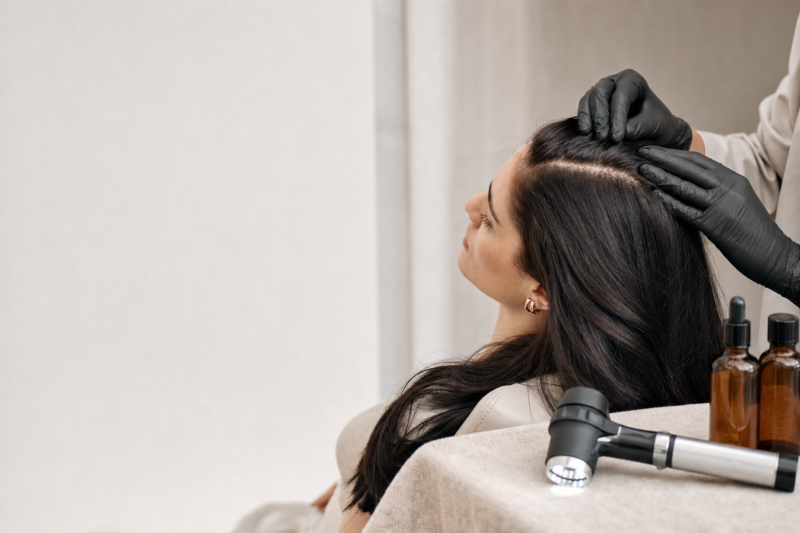
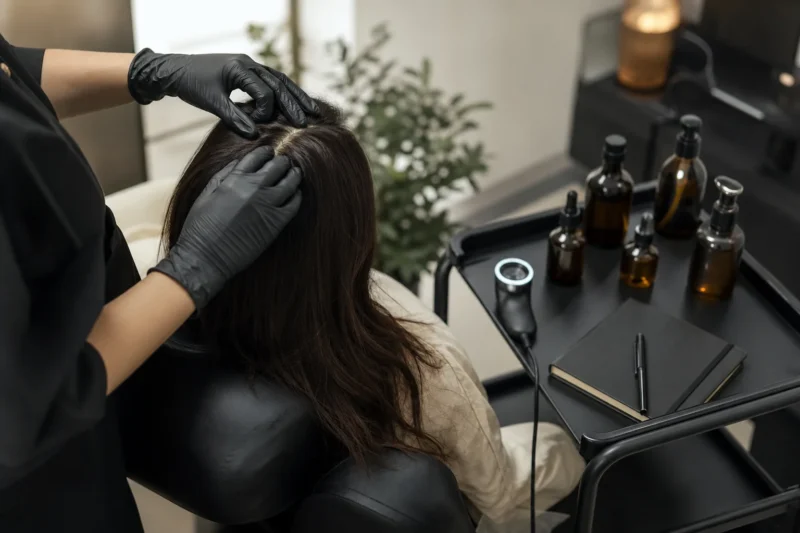
In scalp therapy, trichoscopy shows the degree of oiliness, whether follicular openings are blocked, whether there is flaking or inflammation, and the condition of the lengths. From there, the protocol may include:
- deep cleansing and controlled scalp exfoliation;
- sebum-regulating and soothing actives;
- equipment such as high frequency, when indicated;
- separate treatment for the lengths;
- a home washing plan with the right products.
When should you see a dermatologist?
See a doctor if oiliness comes with intense itching, sores, plaques, persistent redness, increased shedding or thinning hair; if facial acne and increased body hair appear along with the oiliness (which can point to a hormonal change); or if oiliness has changed suddenly. The American Academy of Dermatology also recommends washing the scalp and conditioning the lengths as the basis of hair care.
Frequently asked questions
There is no good evidence of that. Sebum production is controlled mainly by hormones and genetics. For people with an oily scalp, washing daily or every other day is usually the most effective way to control oil.
Because roots and ends have different problems. The roots sit next to the sebaceous glands, which may produce more sebum. The ends are the oldest part of the strand, with years of friction, heat and chemicals, and sebum does not reach them, especially on long, wavy or curly hair.
It helps disguise oil between washes, but it does not clean. Used often, it builds up on the scalp and can cause irritation. It does not replace washing with water and shampoo.
Oiliness itself does not cause hair loss. But it can come with seborrheic dermatitis, which inflames the scalp, and with androgenetic alopecia, which is also hormone-related. If there is shedding or thinning, get an assessment.

Light roots, soft ends
If you have already tried shampoos and masks and your hair is still oily at the roots and dry at the ends, the next step is an assessment. In the Hair & Scalp Therapy Consultation, I take your history and perform trichoscopy, identify what is happening on your scalp and lengths and build a separate routine for each — with medical referral when needed.
A professional who wants to build safe protocols for oily scalps? The Practical Trichology e-book covers assessment, disorders and evidence-based protocols.
Nelma Faleiro holds a specialisation in Cosmetic Trichology (Faculdades Oswaldo Cruz) and a degree in Visagism and Hair Therapy Technology from Anhembi Morumbi University, where she taught for 10 years. Educational content: it does not replace medical advice.