
Quick answer: vitamins for hair only work if you have a proven deficiency. Biotin, iron, zinc, vitamin D and B12 can help when they are low — and that is diagnosed through tests ordered by a doctor. In people with normal levels, supplements rarely make a difference, can mask the real cause of hair loss and, in the case of high-dose biotin, can skew blood tests.
In hair assessments, it is common to see three or four bottles on the table: a "hair, skin and nails" formula, a high-dose biotin, a collagen and a multivitamin. The shedding continues. Vitamins for hair are among the best-selling beauty products and among the most frustrating — because, in most cases, that was not what was missing.
In this guide you will learn when supplements help, which tests are usually ordered and the risks of taking them on your own.
Do vitamins for hair work?
They work when they correct a deficiency. The hair follicle divides very quickly and feels a lack of nutrients early. If iron is low, for example, restoring it can reduce shedding. But if levels are already adequate, adding more does not make hair grow beyond normal.
The review The Role of Vitamins and Minerals in Hair Loss (Almohanna and colleagues, 2019) found associations between deficiencies of some nutrients and different types of hair loss, but a lack of evidence that supplementation benefits people who are not deficient — and it warned about the risks of excess for some of them.
What about biotin?
Biotin (vitamin B7) has become synonymous with "the hair vitamin". What we know:
- Biotin deficiency is rare in people with a varied diet. It appears in specific situations: some genetic conditions, long-term use of certain medicines, alcohol misuse, frequent consumption of raw egg white and some gut conditions.
- A review of biotin use for hair loss in Skin Appendage Disorders (Patel and colleagues, 2017) found reports of improvement only in patients with a deficiency or specific conditions — not in healthy people.
- High doses of biotin interfere with lab tests that use biotin-streptavidin technology, such as some thyroid tests and cardiac markers. Regulators, including the US FDA, have issued warnings about this.
In practice: taking biotin on your own may not help your hair and can even get in the way of diagnosing the real cause of hair loss — a thyroid problem, for example.
Which nutrients are most linked to hair loss?
| Nutrient | Link to hair loss | Who is at higher risk of deficiency |
|---|---|---|
| Iron / ferritin | Associated with effluvium and worsening of other conditions | Women with heavy periods, pregnant women, vegetarians, after bariatric surgery |
| Vitamin D | Low levels associated with several types of hair loss | Little sun exposure, darker skin, obesity |
| Zinc | Deficiency linked to diffuse shedding | Restrictive diets, gut conditions |
| Vitamin B12 | Deficiency can accompany shedding and fatigue | Vegans, older adults, long-term use of some medicines |
| Protein | A shortfall leads to telogen effluvium | Restrictive diets, rapid weight loss |
| Biotin | Deficiency is rare | The specific situations listed above |
See how diet fits in in hair nutrition: the nutrients that really make a difference.
Which tests does a doctor usually order?
There is no standard "hair check-up", and the choice of tests depends on each patient’s history. When investigating hair loss, dermatologists commonly consider:
- Full blood count — to assess anaemia;
- Ferritin and serum iron — iron stores;
- TSH and free T4 — thyroid function;
- Vitamin D;
- Vitamin B12 and folate;
- Zinc, in selected cases;
- Hormones, when there are signs such as irregular periods, acne or increased body hair.
Interpretation and any replacement are the doctor’s job. No "internet doses".
The risks of self-supplementing
- Too much can also cause hair loss. High doses of vitamin A and selenium are associated with shedding.
- Interference with tests, as with biotin.
- Iron overload, in people who do not need it, can cause digestive problems and, in specific cases, build-up in the body.
- Delayed diagnosis. While you test capsules, androgenetic alopecia or a thyroid problem progresses.
- Money spent with no return. Long-term supplements weigh on the budget for months.
Situations that need closer attention
Pregnancy and after birth
Pregnancy increases the need for iron, folate and other nutrients, and supplements are usually prescribed by the obstetrician. The heavy shedding that appears 2 to 4 months after giving birth is, in most cases, telogen effluvium linked to the hormonal drop — and more vitamins will not fix it. See more in postpartum hair loss. Low ferritin, however, can prolong it and deserves investigation.
After bariatric surgery
The surgery reduces absorption of several nutrients, and rapid weight loss triggers shedding. Supplementation is part of the medical team’s follow-up, with regular tests. Do not change doses on your own to "save your hair".
Vegetarian and vegan diets
They can be complete, but they need attention to vitamin B12 (which comes almost only from animal foods or supplements), iron, zinc and protein. Support from a dietitian prevents silent deficiencies.
Weight-loss medication
Medicines that greatly reduce appetite can lead to low protein and calorie intake. Shedding that appears months later is usually more linked to that shortfall and to weight loss than to a lack of one specific vitamin.
When does a supplement make sense?
It makes sense when there is:
- a deficiency confirmed by a test;
- a recognised risk situation (bariatric surgery, pregnancy, a vegan diet, rapid weight loss);
- a recommendation and follow-up from a doctor or dietitian;
- a plan for reassessment, usually with new tests in 3 to 6 months.
When a deficiency is corrected, shedding usually improves within 3 to 6 months. Hair grows about 1 cm a month, so a visible change in length takes even longer.
Hair loss has a cause — and each cause its own approach
Most hair loss is not solved by vitamins, because the cause lies elsewhere: telogen effluvium after stress or illness, androgenetic alopecia, scalp problems, traction, hormonal changes. Learn about the most common causes in female hair loss: 9 causes and what to do and the signs of progressive thinning in female pattern hair loss.
Collagen, gelatine and "beauty capsules"
Hydrolysed collagen and gelatine are protein sources, but they have no proven special effect on hair. "Hair, skin and nails" formulas often combine several vitamins in doses that may be unnecessary — and sometimes too high. If you already take one of these products, bring the label to your medical appointment.
Frequently asked questions
Only in people who are biotin deficient, which is rare. In people with normal levels, there is no good evidence that biotin makes hair grow faster or fall out less.
No vitamin treats hair loss universally. When there is a proven deficiency — of iron, vitamin D, zinc or B12, for example — replacement guided by a doctor can help. Without a deficiency, supplements are unlikely to make a difference.
Yes. High doses of biotin can interfere with tests that use biotin-streptavidin technology, such as some thyroid tests and cardiac markers, producing false results. Tell your doctor and the lab if you are taking it.
When there was a deficiency and it has been corrected, shedding usually improves within 3 to 6 months, because the hair cycle is slow. Visible regrowth takes even longer.

Before the bottle, an assessment
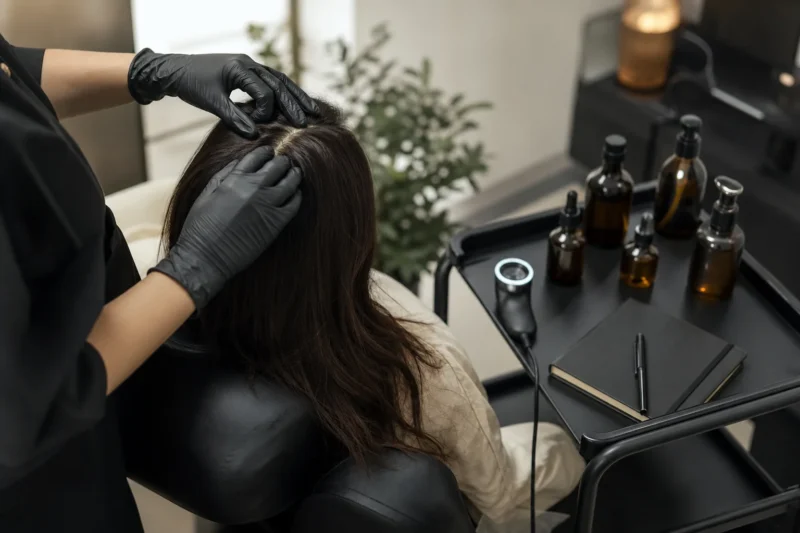
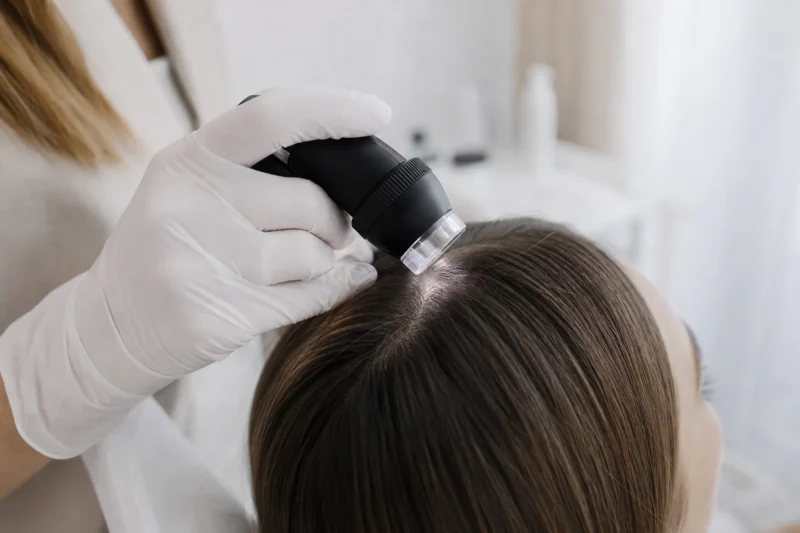
If your hair is falling out or thinning, the first step is to understand why. In the Hair & Scalp Therapy Consultation, I take a full history — including diet, supplements and recent tests — perform trichoscopy and photo documentation, and refer you to a dermatologist or dietitian when investigation is needed. Then I follow your progress with a scalp protocol.
I want to find the cause of my hair loss →
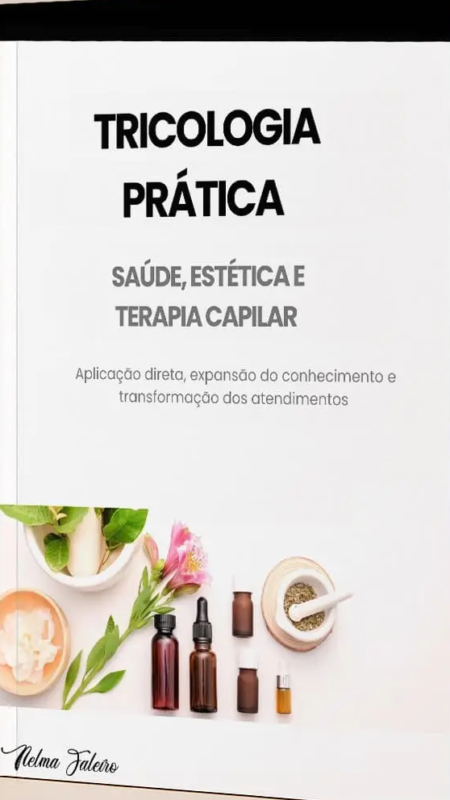
A beauty professional? The Practical Trichology e-book teaches you to spot, during the consultation, signs that shedding may be linked to nutrition and when to refer.
Nelma Faleiro holds a specialisation in Cosmetic Trichology (Faculdades Oswaldo Cruz) and a degree in Visagism and Hair Therapy Technology from Anhembi Morumbi University, where she taught for 10 years. Educational content: it does not replace medical advice. Do not take supplements without guidance.