Quick answer: hair nutrition has no miracle food, but it matters when something is missing. The nutrients that count most are protein, iron, zinc, vitamin D and enough calories. Very restrictive diets and rapid weight loss can trigger shedding 2 to 3 months later. Supplements only help people with a deficiency — and should be recommended by a doctor.
Every week a new "food for hair growth" goes viral. The truth is less flashy and more useful: the hair follicle is one of the fastest-dividing structures in the body, so it is among the first to feel a shortage of raw material. Hair nutrition works as a foundation — it does not speed up growth, but it keeps a lack of nutrients from knocking hair out.
In this guide you will see which nutrients count, where to find them and when shedding needs to be investigated.
Why does diet affect your hair?
The hair shaft is made mainly of keratin, a protein. During the growth phase (anagen), the follicle produces hair non-stop and needs energy, amino acids, iron, zinc and vitamins. When the body runs short, it prioritises vital organs — and hair, which is not essential for survival, takes a back seat.
The usual result is telogen effluvium: many hairs move into the resting phase at the same time and fall out 2 to 3 months after the trigger. Understand the cycle in telogen effluvium: how long does it last.
Which nutrients really make a difference for hair?
| Nutrient | Role in hair | Where to find it |
|---|---|---|
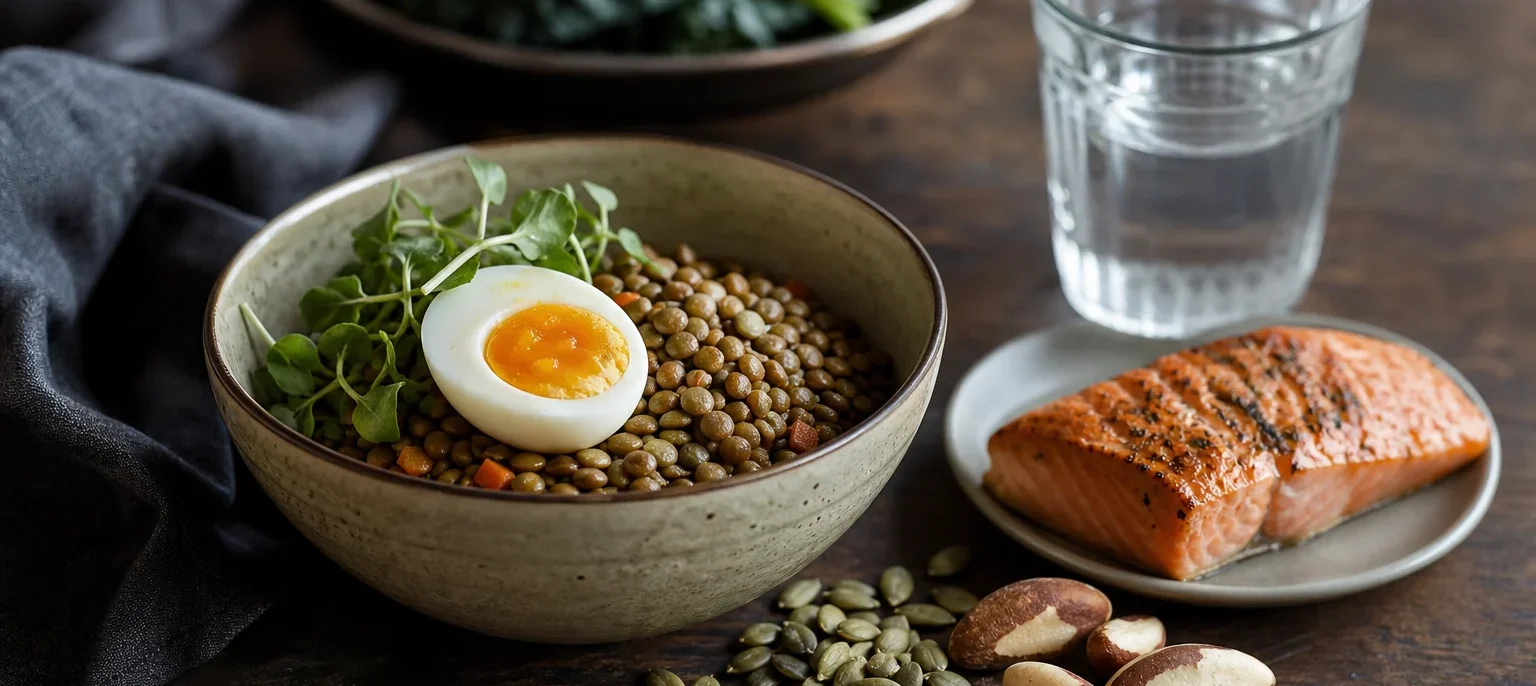
| Protein | Raw material for keratin | Eggs, meat, fish, beans, lentils, chickpeas, dairy, tofu |
| Iron | Oxygen supply and cell division in the follicle | Red meat, beans, dark leafy greens (with vitamin C) |
| Zinc | Cell division and protein synthesis | Meat, seafood, pumpkin seeds, nuts |
| Vitamin D | Follicle cycling | Sun exposure, oily fish, eggs |
| Omega-3 | Anti-inflammatory action | Sardines, salmon, flaxseed, chia |
| B vitamins | Energy metabolism | Whole grains, eggs, meat, pulses |
| Enough calories | Energy for growth | A varied, regular diet |
According to the review The Role of Vitamins and Minerals in Hair Loss (Almohanna and colleagues, Dermatology and Therapy, 2019), iron, zinc and vitamin D deficiencies are associated with different types of hair loss, but the evidence for supplementing people who are not deficient is weak.
Protein
This is the starting point. As a reference, the classic recommendation for healthy adults is about 0.8 g of protein per kilo of body weight per day — athletes, pregnant women and older adults may need more. Spreading protein across meals helps: eggs at breakfast, beans with meat or fish at lunch, pulses or dairy at dinner.
Iron and ferritin
Iron deficiency is one of the most common deficiencies worldwide, especially in women of childbearing age because of menstrual loss. Ferritin, which measures iron stores, is often among the tests a doctor orders when there is shedding. Plant iron is absorbed better with vitamin C in the same meal (orange, acerola, tomato) and worse with coffee or tea right afterwards.
Zinc
Zinc takes part in cell division. Deficiencies appear with very restrictive diets, gut conditions and some medicines. Excess supplemental zinc, however, can reduce copper absorption.
Vitamin D
Low levels are common and are associated with hair loss in studies, but whether they cause it is still debated. Testing and replacement are matters for your doctor.
Restrictive diets and hair loss
This is one of the scenarios I see most in consultations: shedding appears months after a very restrictive diet, prolonged fasting or rapid weight loss — including with weight-loss medication. Read more in hair loss with Mounjaro and Ozempic.
Warning signs:
- losing more than 5 to 10% of body weight in a few months;
- a diet low in protein or with fewer than three meals a day;
- cutting out entire food groups without guidance;
- diffuse shedding that began 2 to 3 months after the change.
Vegetarian and vegan diets can be complete, but they need attention to iron, zinc, vitamin B12 and protein. Support from a dietitian makes a difference.
What about hair supplements?
"Hair, skin and nails" capsules are bestsellers. The problem:
- They only help people with a deficiency. In people with adequate levels, there is no good evidence of benefit.
- Too much can also cause hair loss. Excess vitamin A and selenium are associated with shedding.
- High-dose biotin interferes with lab tests, such as thyroid and cardiac markers, and can lead to wrong results.
- They mask the real cause. Self-supplementing can delay the diagnosis of anaemia, thyroid disease or androgenetic alopecia.
The rule is simple: test first, supplement later — always with guidance from a doctor or dietitian.
A plate that helps your hair
You do not need a "hair menu". The Dietary Guidelines for the Brazilian Population, from Brazil’s Ministry of Health, recommend basing your diet on fresh and minimally processed foods — which already meets hair’s needs for most people. In practice:
- half the plate with varied vegetables;
- a quarter with rice, potato, cassava or another grain or tuber;
- a quarter with protein: beans with meat, chicken, fish or eggs;
- fruit as snacks, nuts and seeds in small portions;
- water throughout the day.
Myths about diet and hair
"Gelatine strengthens hair." Gelatine is an incomplete protein. It does no harm, but it has no special effect on the hair: what matters is total daily protein from varied sources.
"Eating an egg every day makes hair grow." Eggs are an excellent source of protein, biotin and other nutrients, but they do not speed up growth, which runs at around 1 cm a month.
"Green juice fixes hair loss." Dark leafy greens are good sources of plant iron and folate. On their own, however, they do not correct anaemia or treat alopecia.
"People who eat well don’t lose hair." Diet is only one possible cause. Genetics, hormones, thyroid, stress and scalp conditions also cause shedding in people who eat very well.
"Collagen powder replaces protein at meals." It does not. It can complement them, but meals with good-quality protein remain the base.
When does hair loss need investigating?
Diet helps, but it does not solve every case of shedding. See a dermatologist if:
- shedding lasts more than 3 months;
- gaps, a receding hairline or a widening part appear;
- there is tiredness, weak nails, pallor or very heavy periods;
- you have followed a very restrictive diet or had bariatric surgery.
See the most common causes in female hair loss: 9 causes and what to do.
Frequently asked questions
None. The growth rate, around 1 cm a month, is set mainly by genetics. A balanced diet makes sure the follicle has what it needs; it does not speed growth beyond your own pattern.
It can. Rapid weight loss and diets low in protein or calories are known triggers of telogen effluvium, the diffuse shedding that usually appears 2 to 3 months after the change.
Only if a deficiency is confirmed, which is rare. In people without a deficiency there is no good evidence of benefit, and high-dose biotin can interfere with blood tests. Talk to your doctor first.
Low ferritin, which signals reduced iron stores, is associated with hair shedding in several studies, especially in women. Testing and any replacement should be handled by a doctor.
Care for your hair as a whole
When shedding appears, diet is one of the pieces — alongside scalp health, hormones, stress and routine. In the Hair & Scalp Therapy Consultation, I take a full history (including eating habits and recent diets), perform trichoscopy and build an individual protocol, with referral to a doctor and a dietitian when needed.
I want to understand my hair loss →
A beauty professional? The Practical Trichology e-book covers the consultation and warning signs that help identify when shedding is linked to nutrition.
Nelma Faleiro holds a specialisation in Cosmetic Trichology (Faculdades Oswaldo Cruz) and a degree in Visagism and Hair Therapy Technology from Anhembi Morumbi University, where she taught for 10 years. Educational content: it does not replace medical or nutritional advice.