Quick answer: telogen effluvium is sudden, diffuse hair shedding that appears 2 to 3 months after a trigger — high fever, childbirth, surgery, crash dieting, intense stress or iron deficiency. The acute form lasts 3 to 6 months and does not cause baldness. If it goes on for more than 6 months, it is chronic and needs medical investigation.
You wash your hair and the drain is full. Hair on the brush, on the pillowcase, on the bathroom floor. The shock is huge, and the first question is "what did I do wrong yesterday?". Most of the time, the answer lies months back. That is exactly what makes telogen effluvium so confusing.
In this guide I explain the shedding timeline, the symptoms that set effluvium apart from other conditions, how long it lasts and what really helps recovery. No miracle promises, and with a clear line between what is cosmetic and what is medical.
What is telogen effluvium?
Telogen effluvium is an imbalance in the hair growth cycle. A large number of hairs leave the growth phase at the same time and enter the resting phase. Months later, those hairs fall out together.
To understand it, remember the three phases of the hair cycle:
| Phase | What happens | Approximate length | % of hairs (normal) |
|---|---|---|---|
| Anagen | Active growth | 2 to 7 years | 85% to 90% |
| Catagen | Transition, the follicle shrinks | 2 to 3 weeks | about 1% |
| Telogen | Rest, the hair stays in place until it falls | about 3 months | 10% to 15% |
In effluvium, the share of resting hairs can exceed 30%. That is why the shedding is so visible. The follicle, however, is still alive. It has simply paused and will produce a new hair.
Why does shedding start months after the trigger?
This is the point almost nobody connects. The trigger pushes hairs into the telogen phase. That phase lasts around 3 months. Only at its end does the new hair start growing and push the old one out.
In practice, the timeline usually looks like this:
- Month 0: the trigger happens (fever, childbirth, surgery, grief, a diet).
- Months 1 to 2: nothing seems to happen. The hair is on hold.
- Months 2 to 3: shedding begins, usually suddenly.
- Months 3 to 6: shedding is heavy, then gradually slows down.
- Months 6 to 12: short hairs appear along the hairline and the parting.
- 12 to 18 months: volume recovers, since hair grows about 1 cm per month.
That is why, in the consultation, I always ask what happened three months before the shedding started. That question changes the whole reasoning. If you want to see what this interview looks like, read the complete trichology consultation form.
What are the symptoms of telogen effluvium?
The most common signs are:
- diffuse shedding across the whole scalp, not in patches;
- hairs that come out with a tiny white bulb at the tip (the telogen club);
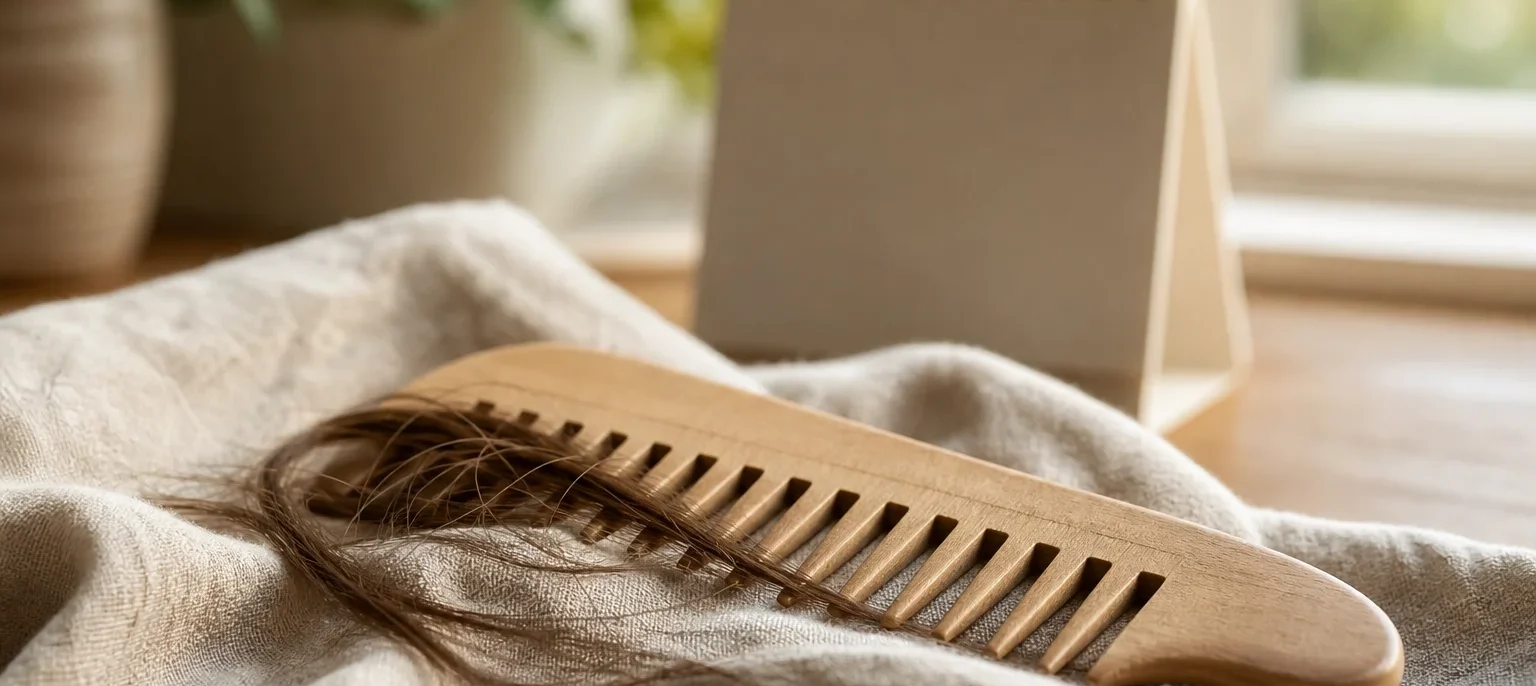
- more hair than usual in the shower, on the brush and on the pillow;
- a thinner ponytail, with no completely bare areas;
- sometimes, scalp sensitivity or mild pain (trichodynia).
Losing 50 to 100 hairs a day is considered normal. In effluvium, that number can double or triple. Even so, telogen effluvium does not cause complete baldness.
How to tell it apart from androgenetic alopecia
Androgenetic alopecia thins hairs gradually, mainly on the crown and along the parting. In effluvium, hairs fall out whole and with normal thickness. Trichoscopy shows the difference clearly: androgenetic alopecia shows hairs of very different diameters (miniaturisation), while effluvium shows hairs of similar thickness. The two can coexist, and effluvium can reveal an androgenetic pattern that was hidden.
How to tell it apart from alopecia areata
Alopecia areata usually forms smooth, round bald patches. It is an autoimmune condition with specific medical treatment. If you find a completely bare area, see a dermatologist.
What are the most common causes?
The most frequent triggers described in the dermatology literature are:
- high fever and infections, including COVID-19 and dengue;
- childbirth (so-called postpartum shedding);
- surgery and general anaesthesia;
- restrictive diets and rapid weight loss;
- iron, protein or vitamin D deficiency;
- thyroid changes;
- intense emotional stress, such as grief or a break-up;
- starting, switching or stopping medication, including the contraceptive pill;
- weight-loss injections, because of the fast weight loss — a topic I covered in hair loss on Mounjaro and Ozempic.
The dermatology site DermNet has a good summary of the triggers and the course of the condition.
How long does telogen effluvium last?
It depends on the form:
- Acute effluvium: heavy shedding lasts 3 to 6 months and stops on its own if the trigger is gone.
- Chronic effluvium: shedding persists for more than 6 months, sometimes with better and worse phases. It is more common in women aged 30 to 60.
When shedding does not ease, it usually means a trigger is still active. It may be low ferritin, an uncontrolled thyroid, a low-protein diet or a medication. In that case, medical investigation is essential.
What slows recovery down
- staying on a very restrictive diet;
- treating only the hair without correcting the cause;
- switching products every week;
- tension, excessive heat and harsh chemical services during the shedding phase.
How is telogen effluvium treated?
The main treatment is to identify and correct the trigger. That is the doctor’s job, with tests such as a full blood count, ferritin, TSH and vitamin D, depending on each case. Do not take supplements on your own: too much iron, for example, is also harmful.
The role of hair and scalp therapy
Hair therapy does not diagnose or prescribe. It works as support, and that support makes a difference:
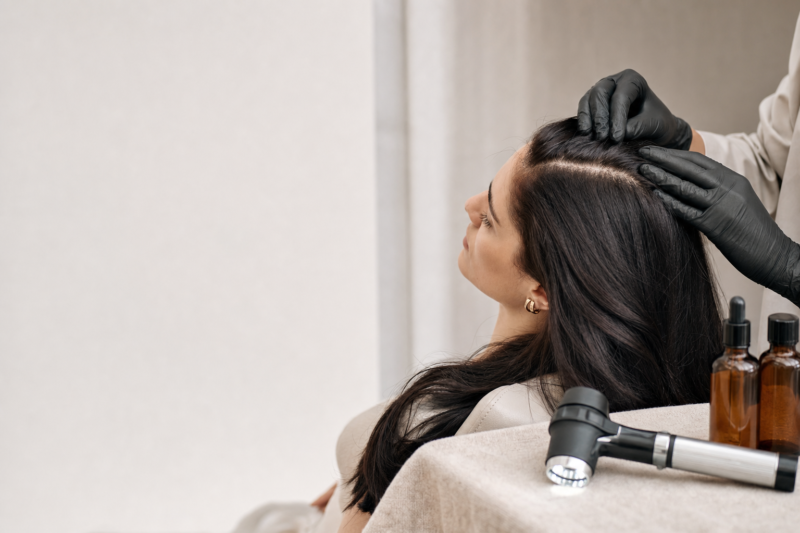
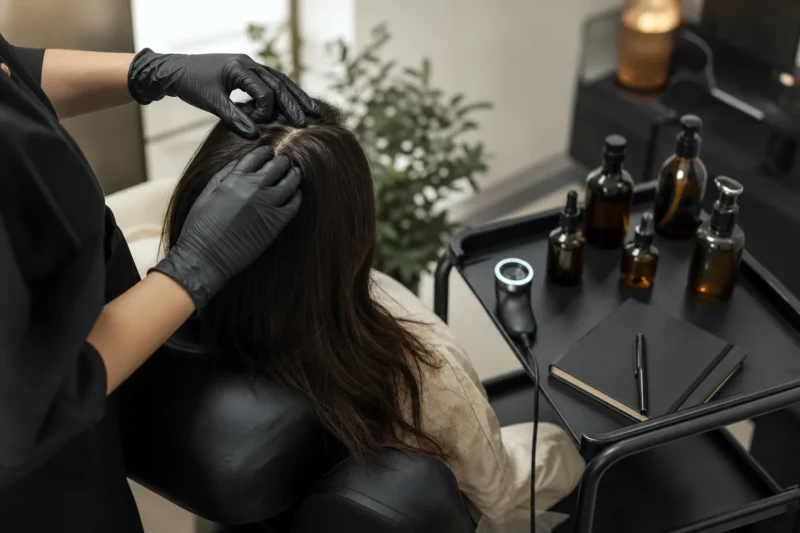
- Assessment with trichoscopy to describe the shedding pattern and document progress.
- Proper scalp cleansing, without fear of washing. Washing does not increase shedding: the hairs that come out in the shower were already loose.
- Supportive cosmetic actives, such as caffeine or peptide tonics, always as helpers.
- Massage to stimulate microcirculation and reduce tension.
- Standardised photos every 30 days, to measure progress properly rather than by fear.
What you can do at home
- eat enough protein at every meal;
- sleep well and manage stress as far as possible;
- avoid tight hairstyles and chemical services while shedding;
- use a wide-tooth comb and detangle with conditioner;
- be patient: the hair cycle runs on its own clock.
When should you see a dermatologist?
See a doctor if:
- shedding lasts more than 6 months;
- bald patches appear;
- there is intense itching, pain, redness or heavy flaking;
- shedding comes with tiredness, weak nails, weight changes or menstrual changes;
- volume has not returned after 12 months.
The NHS hair loss page explains when to seek medical help. To see other causes of hair loss in women, read female hair loss: the 9 most common causes.
Frequently asked questions
In the acute form, heavy shedding usually lasts 3 to 6 months once it starts. When it goes beyond 6 months it is called chronic telogen effluvium, which needs a more detailed medical investigation.
No. Telogen effluvium reduces volume diffusely but does not destroy the follicle. Once the cause is corrected, the hair grows back. If volume does not return, another condition should be investigated.
Because the trigger pushes many hairs into the resting (telogen) phase, which lasts about 3 months. Shedding only shows when that rest ends and the new hair pushes the old one out.
A dermatologist diagnoses it and investigates the causes, with blood tests when needed. Hair and scalp therapy works as support for the scalp and for follow-up.
Professional support to get through the shedding
Telogen effluvium is frightening because it is visible and because recovery feels far too slow. What helps most is knowing where you are on the timeline and having an objective record of your progress.
In the Hair & Scalp Therapy Consultation, I carry out a detailed consultation, trichoscopy and an individual scalp support protocol. When the signs call for investigation, I refer you to a dermatologist and we work together.
Are you a beauty professional who wants to tell effluvium, androgenetic alopecia and alopecia areata apart in the chair? The Practical Trichology e-book covers assessment, scalp disorders and protocols in 109 pages.
Nelma Faleiro holds a postgraduate specialisation in Cosmetic Trichology (Faculdades Oswaldo Cruz) and a degree in Visagism and Hair Therapy from Universidade Anhembi Morumbi, where she lectured for 10 years. Educational content: it does not replace medical advice.