Quick answer: seborrheic dermatitis of the scalp is a chronic inflammation linked to excess oil and the yeast Malassezia; dandruff is its mildest form. Dandruff has fine, dry flakes and no redness. Seborrheic dermatitis brings yellowish, greasy scales, itching and redness. Both call for regular washing with the right actives; a dermatitis flare calls for a dermatologist.
"I have dandruff" is one of the phrases I hear most in assessments — and often the scalp shows something else: redness, greasy patches, itching that wakes you at night. That is seborrheic dermatitis, dandruff’s more intense cousin. Treating one as if it were the other drags out the discomfort and wastes money on the wrong product.
In this guide you will understand the difference, the triggers, the washing routine that works and when the case belongs in a doctor’s office.
What seborrheic dermatitis of the scalp is
Seborrheic dermatitis is a skin inflammation that appears where there are more sebaceous glands: the scalp, eyebrows, sides of the nose, behind the ears and the centre of the chest. Three factors act together:
- Excess sebum — the raw material of the problem;
- Malassezia — a yeast that normally lives on the skin and feeds on sebum; as it breaks it down, it produces irritating fatty acids;
- Individual sensitivity — some people react more to these by-products, with inflammation and faster shedding of skin cells.
Under normal conditions the scalp renews itself in about 28 days. In dermatitis this cycle speeds up and cells come away in visible clumps: the scales.
According to the American Academy of Dermatology, it is a common condition, it is not contagious and it has nothing to do with poor hygiene.
Dandruff vs seborrheic dermatitis: how to tell them apart
| Sign | Dandruff | Seborrheic dermatitis |
|---|---|---|
| Flakes | Fine, white, dry | Yellowish, greasy, stuck on |
| Redness | Absent or minimal | Present, in patches |
| Itching | Mild | Moderate to intense |
| Other areas | Scalp only | Brows, nose, ears, chest |
| Oiliness | Normal or increased | Usually increased |
| Course | Stable, worse in cold weather | Flares linked to stress, climate, hormones |
And when it is neither
Flaking also appears in psoriasis (thick, silvery, well-defined plaques, sometimes beyond the hairline), contact dermatitis (after hair dye or a new product) and a dry scalp (small flakes, no oiliness, worse with hot water). That is why a visual assessment — ideally with trichoscopy — makes a difference.
What makes flares worse
- Stress and poor sleep — a classic trigger reported by many patients;
- Cold and low humidity — winter tends to concentrate flares;
- Washing too rarely — built-up sebum feeds Malassezia;
- Very hot water — stimulates rebound oiliness and irritates;
- Occlusive products at the root — oils, butters and heavy stylers applied to the scalp;
- Hormonal changes and some neurological and immune conditions, which the doctor investigates.
How to treat it: the routine that works
1. Wash as often as your scalp needs
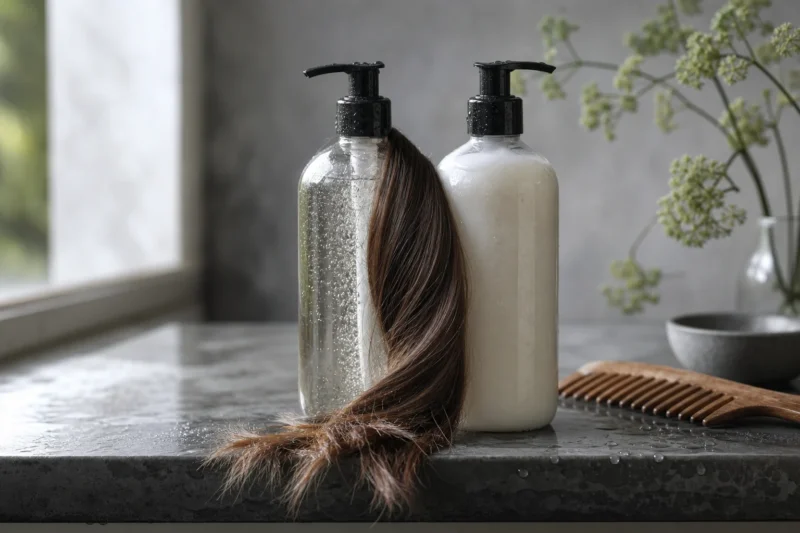
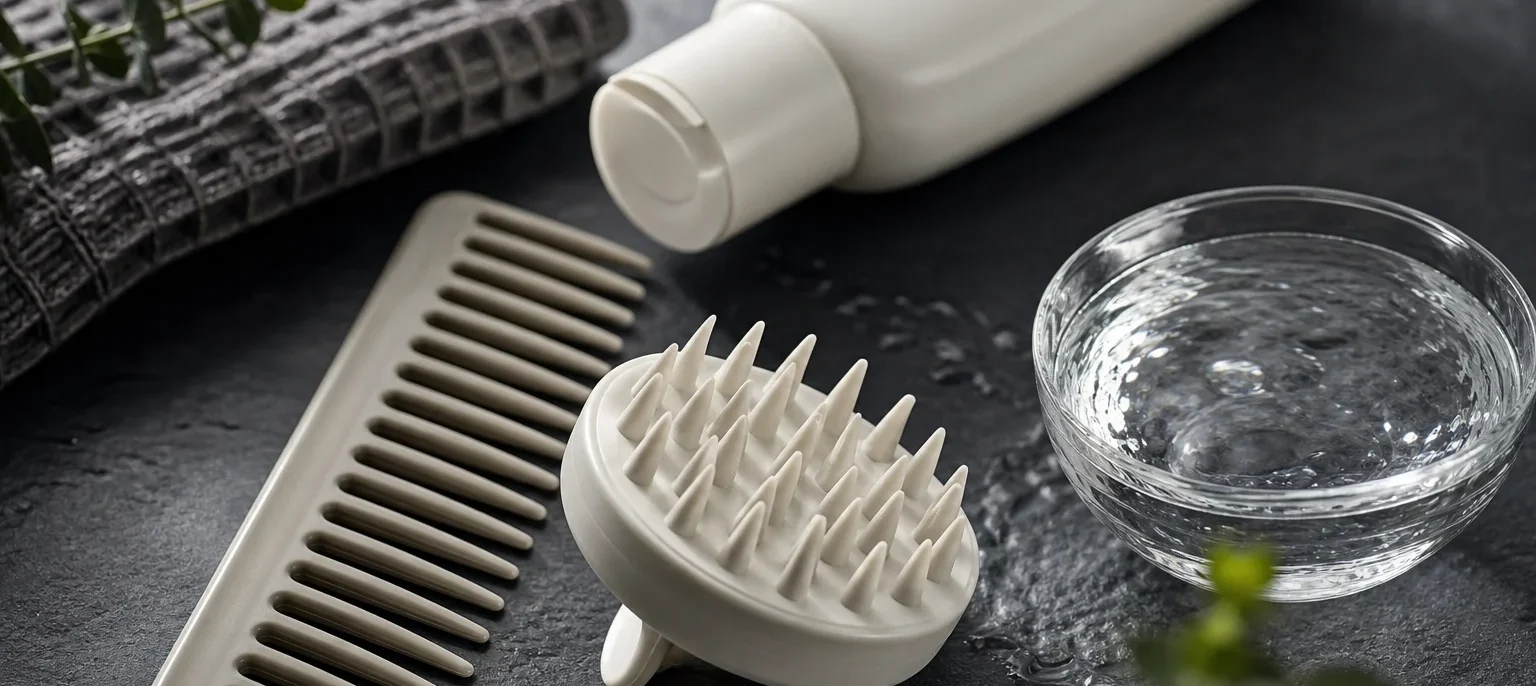
An oily scalp with dermatitis usually benefits from washing daily or every other day. Use lukewarm water, massage with your fingertips for 1 to 2 minutes and rinse well.
2. Let the treatment shampoo work
Actives need contact time. Apply to the scalp and wait 3 to 5 minutes before rinsing. Actives commonly found in dandruff and dermatitis shampoos:
- zinc pyrithione — antifungal and antibacterial, good for maintenance;
- selenium sulfide — slows accelerated cell turnover and reduces Malassezia;
- salicylic acid — helps loosen stuck-on scales;
- ketoconazole and ciclopirox — antifungals, usually recommended by a doctor during flares;
- coal tar — more often used for psoriasis, with guidance.
Alternate the treatment shampoo with a gentle one so the lengths don’t dry out.
3. Conditioner from mid-lengths to ends only
Conditioner and masks on the scalp increase oiliness. Apply from ear level down.
4. Don’t pick the scales
Scratching with your nails creates micro-injuries and worsens inflammation. If scales are very stuck on, a professional may suggest a pre-wash with a keratolytic active.
5. Review stylers and habits
Avoid oils at the root, dry the scalp properly (sleeping with a damp scalp favours yeast) and lower the temperature of your hairdryer.
What hair therapy does for seborrheic dermatitis
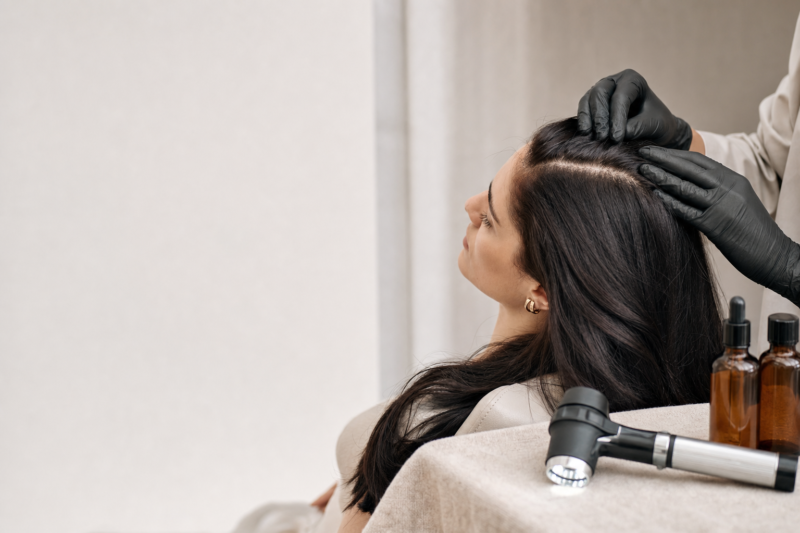
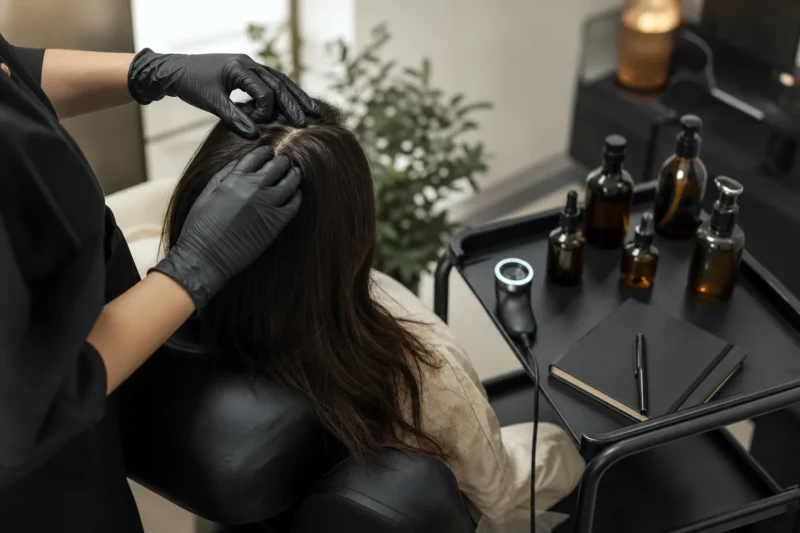
In hair therapy, trichoscopy shows the pattern of flaking, redness around the follicle openings and the degree of oiliness — and helps tell it apart from psoriasis or contact dermatitis. The protocol then usually combines:
- deep cleansing and controlled exfoliation of the scalp;
- sebum-regulating and soothing actives;
- devices such as high frequency, when appropriate, for its antiseptic effect;
- a home washing plan, with the right product for each phase;
- comparison photos at each session.
Hair therapy works alongside the dermatologist: in flares with intense inflammation, sores or pain, referral comes first. If flaking comes with shedding, also read female hair loss: 9 causes and what to do.
Myths and facts about dandruff and dermatitis
"Dandruff means poor hygiene." Myth. Seborrheic dermatitis is an inflammatory skin response to sebum and Malassezia. Very careful people have flares too. What helps is washing with the right frequency and product, not scrubbing harder.
"An oily scalp needs less washing so it doesn’t make more oil." Myth. Sebum production is mainly regulated by hormones and genetics. Leaving sebum to build up for days just gives the yeast more food and the skin more irritation.
"Vinegar and baking soda fix it." There is no good evidence, and both can irritate already inflamed skin. Home remedies on a sensitive scalp often make redness worse.
"My anti-dandruff shampoo stopped working." Sometimes true. Rotating actives (for example zinc pyrithione one week and selenium sulfide the next) helps maintain the response. Ideally, agree on this rotation with a professional.
"Stress makes it worse." True. Flares after tense weeks are very common, and looking after your sleep is part of treatment.
Sample weekly routine for an oily, flaky scalp
| Day | Wash | Product on the scalp | Note |
|---|---|---|---|
| Monday | Yes | Treatment shampoo, 3 to 5 minute pause | Conditioner on ends only |
| Tuesday | Yes | Gentle shampoo | Dry the roots well |
| Wednesday | Yes | Treatment shampoo | No oil at the root |
| Thursday | Yes | Gentle shampoo | — |
| Friday | Yes | Treatment shampoo | 5 minute pause |
| Weekend | Once | Gentle shampoo | Exfoliate only if advised |
This routine is a starting point for oily scalps. A drier scalp may need longer intervals. Adjust with a professional after 2 to 4 weeks, watching itching, flakes and oiliness.
When to see a dermatologist
- flaking that does not improve after 4 weeks of a suitable shampoo;
- intense redness, sores, crusts or discharge;
- thick, silvery plaques (possible psoriasis);
- itching that disturbs your sleep;
- lesions spreading to the face and body.
Frequently asked questions
They sit on the same spectrum. Dandruff is the mild form, with fine flaking and no visible inflammation. Seborrheic dermatitis brings redness, stronger itching, yellowish greasy scales and can affect the eyebrows, the sides of the nose and behind the ears.
It is a chronic condition with flare-ups and calmer phases. There is no permanent cure, but it can be controlled: regular washing, shampoos with suitable actives and medical treatment during flares keep the scalp calm most of the time.
Chronic inflammation and intense scratching can increase shedding, which usually improves once the inflammation is controlled. If shedding persists, other causes should be investigated with a dermatologist.
Usually not. For an oily scalp with seborrheic dermatitis, frequent washing tends to help because it removes the excess sebum that feeds Malassezia. What matters is lukewarm water and the right product.
Stop treating it blindly
If you have tried several anti-dandruff shampoos and the itching and flakes always come back, the next step is to understand what is happening on your scalp. In the Hair & Scalp Therapy Consultation I carry out a full consultation and trichoscopy and build a protocol to control oiliness, inflammation and flaking, with a home routine and photo follow-up — and medical referral whenever needed.
Are you a professional who wants to tell dandruff, seborrheic dermatitis and psoriasis apart with confidence? The Practical Trichology e-book (in Portuguese) maps the main scalp disorders and shows how to build evidence-based protocols.
Nelma Faleiro is a specialist in Cosmetic Trichology (Faculdades Oswaldo Cruz) and holds a degree in Visagism and Hair Therapy (Universidade Anhembi Morumbi). Educational content: it does not replace medical advice.