Quick answer: high frequency scalp treatment uses an electrotherapy device that delivers a high-frequency, low-intensity alternating current through glass electrodes. On the scalp, its best-supported use is the antiseptic effect (from ozone formation) and superficial stimulation, within protocols for oiliness and flaking. There is no good evidence that it makes hair grow on its own.
Few devices are as closely associated with hair therapy as high frequency scalp treatment. The violet glow of the glass electrodes has become almost a symbol of the field. That is exactly why it deserves a technical look: what the device does, what is exaggerated promise and how to use it safely.
This guide is for professionals who already use high frequency or plan to use it with clients.
What is high frequency and how does it work?
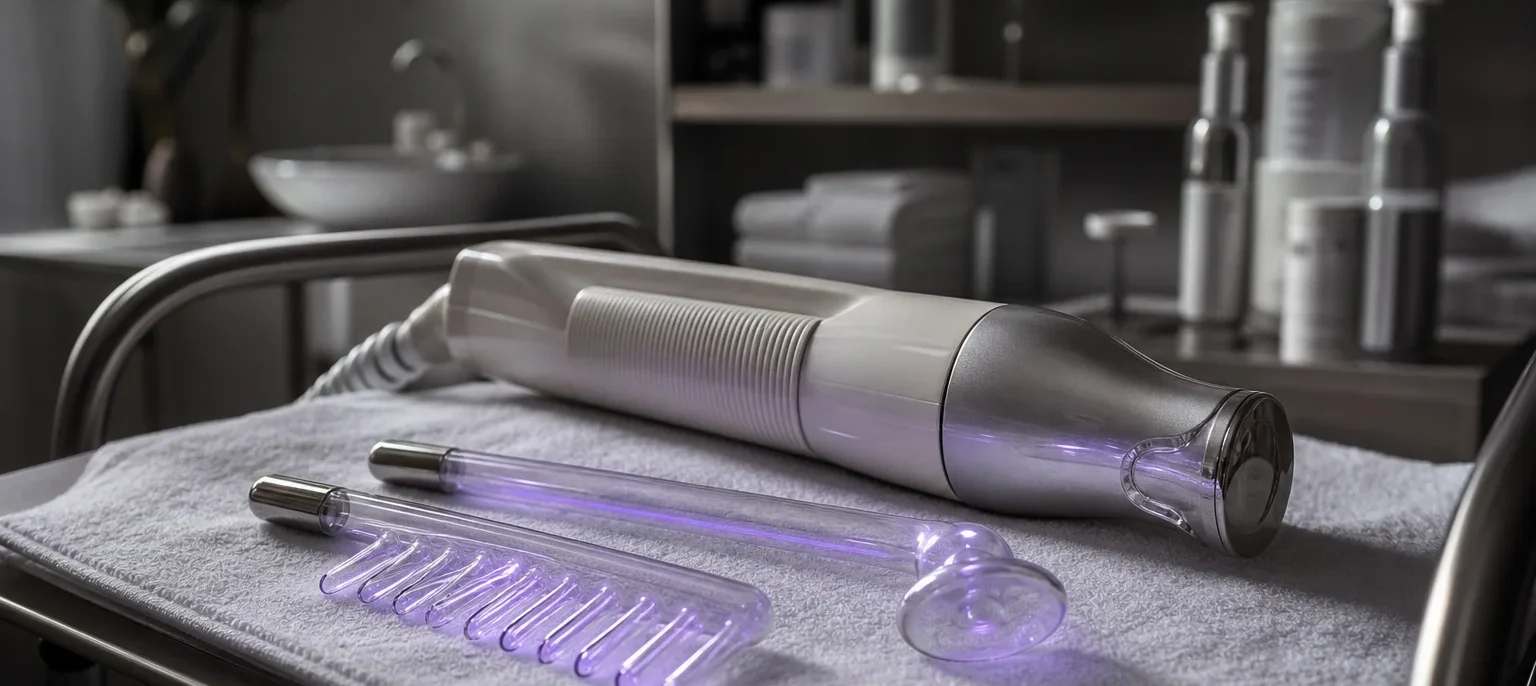
The device generates a high-frequency alternating current — in the range of hundreds of kilohertz — at high voltage and very low intensity. The current passes through a glass electrode filled with rarefied gas (neon or argon), which ionises and glows orange or violet.
On contact with the skin, or a few millimetres from it, three main effects occur:
- Ozone formation in the air between electrode and skin, with an antiseptic action;
- Micro-sparks when the electrode is lifted slightly, which intensify the effect;
- Mild superficial warmth and a tingling sensation.
What is high frequency scalp treatment used for?
| Indication | What to expect | Level of support |
|---|---|---|
| Oily scalp | Antiseptic action, a clean feeling | Consistent with the mechanism; few clinical studies |
| Flaking and dandruff | Antiseptic support in the protocol | Complementary to treatment shampoo |
| After deep-cleansing procedures | Final antiseptic effect | Traditional use in aesthetics |
| Scalp stimulation | A feeling of stimulation and warmth | Subjective effect; no proof of growth |
| Hair loss | An adjunct, never the main treatment | Insufficient evidence for regrowth |
In practice, high frequency is an adjunct: it complements cleansing, exfoliation and actives, but it does not replace investigating the cause of hair loss or medical treatment. If the scalp is oily or flaky, also review the difference between dandruff and seborrheic dermatitis.
Types of electrodes and techniques
Comb (rake) electrode
It has glass "teeth" that pass between the hairs and reach the scalp. It is the most used in hair therapy.
Mushroom electrode
A rounded surface, used on areas with less hair or on specific regions such as the front hairline and thinner areas.
Direct technique
The electrode glides in contact with the scalp in continuous movements. Lifting it slightly produces sparks, which increase the antiseptic effect — but also the discomfort.
Indirect technique (saturation)
The client holds an electrode while the professional massages the scalp by hand. It is less used in hair therapy and requires even more attention to safety.
How do you apply it? Step by step
- History and contraindication check — always before the first session and whenever the client’s health changes;
- Clean, dry scalp, with no flammable products (alcohol lotions, sprays);
- Remove metal accessories from both client and professional;
- Choose and clean the electrode;
- Start on low intensity and increase gradually, asking the client how it feels;
- Keep the electrode moving, never stopping on one spot;
- Typical time: 5 to 10 minutes, according to the protocol and the manufacturer’s manual;
- Switch off before lifting the electrode from the skin, to avoid a strong spark;
- Record on the form the time, intensity, electrode and the client’s reaction.
Session frequency depends on the protocol — usually 1 to 2 times a week in intensive phases, spaced out for maintenance.
A sample protocol for an oily scalp
A sample structure, to be adapted to each client’s assessment:
| Step | What to do | Approximate time |
|---|---|---|
| 1. Assessment | History, trichoscopy, standardised photos | 20 to 30 minutes |
| 2. Cleansing | Shampoo suited to the scalp, fingertip massage | 10 minutes |
| 3. Exfoliation (if indicated) | Gentle exfoliant, no excessive friction | 5 to 10 minutes |
| 4. Root drying | Hairdryer on low to medium heat | 5 minutes |
| 5. High frequency | Comb electrode, continuous movements | 5 to 10 minutes |
| 6. Final active | Sebum-regulating lotion (no alcohol before the device) | 5 minutes |
| 7. Guidance | Home washing routine and products | 5 minutes |
In the intensive phase it is common to schedule weekly sessions for 4 to 8 weeks and reassess with trichoscopy at the end of that period — in other words, after about 2 months. Maintenance can then be every 15 days or every 30 days, depending on how the scalp responds.
High frequency, LED and steam: what is the difference?
- High frequency: antiseptic action and superficial stimulation;
- LED and low-level laser: photobiomodulation, with more studies as an adjunct for hair loss;
- Steam: softens residue and prepares the skin for cleansing.
Each device has a function. Stacking them all in one session does not improve the result — what counts is the right indication.
Contraindications
The contraindications most often cited in aesthetics and hair therapy:
- pregnancy;
- pacemakers or other implanted electronic devices;
- epilepsy;
- cancer under treatment or suspicious lesions in the area;
- open wounds, sores, infection or intense inflammation on the scalp;
- fever or acute illness;
- metal implants in the region;
- hypersensitivity to the current;
- recent use of flammable products on the scalp.
When in doubt, do not apply it and ask for medical clearance.
Biosafety and equipment care
- Clean the glass electrodes between clients with the product recommended by the manufacturer (usually 70% alcohol, with the device switched off and the electrode cool);
- Check the glass for cracks before every use — a cracked electrode must be discarded;
- Store electrodes in their own case;
- Use regulated equipment. In Brazil, devices for health and aesthetic use fall under Anvisa’s medical device rules; elsewhere, check your local regulator before buying.
How do you present high frequency to clients?
Honesty protects your reputation. Some phrases that work:
- "High frequency has an antiseptic action and complements the cleansing of your scalp."
- "It is part of the protocol, together with cleansing and actives — it does not solve things on its own."
- "For hair loss, we need to understand the cause; if needed, I will refer you to a dermatologist."
Avoid: "it makes hair grow", "it cures dandruff", "it ends baldness".
Common mistakes
- Using it on a scalp with alcohol lotion;
- Leaving the electrode still on one spot;
- Not checking contraindications;
- Promising hair growth;
- Using a cracked electrode;
- Starting on high intensity.
Frequently asked questions
There is no good evidence that high frequency on its own makes hair grow. Its best-supported use is the antiseptic effect and superficial stimulation of the scalp, as part of protocols for oiliness and flaking.
Usually 5 to 10 minutes, with the electrode kept moving. Time and intensity depend on the protocol, the client’s sensitivity and the manufacturer’s instructions.
The most commonly cited contraindications include pregnancy, pacemakers or implanted electronic devices, epilepsy, cancer under treatment, open wounds or infection in the area, fever and heightened sensitivity to the current.
It is not recommended. Flammable products, such as high-alcohol lotions, should not be on the scalp during application because of the risk of sparks. Apply alcohol-based actives afterwards if the protocol calls for them.
Protocols built on evidence, not fashion
High frequency is a useful tool when used within a well-designed protocol, with assessment, a clear indication and records. If you want to build protocols safely — knowing when to use each device and when to refer — the Practical Trichology e-book brings together assessment, disorders and protocols in 109 pages, drawing on ten years of teaching in the field.
I want the Practical Trichology e-book →
Not a professional and want a protocol for your own scalp? Discover the Hair & Scalp Therapy Consultation.
Nelma Faleiro holds a specialisation in Cosmetic Trichology (Faculdades Oswaldo Cruz) and degrees in Visagism and Hair Therapy Technology and in Aesthetics and Cosmetics from Anhembi Morumbi University, where she taught for 10 years. Educational content for professionals; always follow the manufacturer’s manual and the legal limits of your practice.