
Quick answer: menopause hair loss happens because lower oestrogen makes follicles more sensitive to androgens, which thins the hair, mainly on the crown and along the parting. But thyroid problems, low iron, stress and medication also cause shedding at this stage. The way forward is a medical diagnosis, a suitable scalp routine and a haircut that restores visual volume.
Many women come to me with the same sentence: "my hair has never been like this". The ponytail is thinner, the parting looks wider, the fringe no longer has the same body. Alongside hot flushes, poor sleep and mood changes, hair becomes one more source of insecurity.
Menopause hair loss has an explanation, and most of the time it can be managed. In this article I explain what happens to hair at this stage, what needs investigating, what helps in your routine and how the right cut changes the perception of volume.
Why does hair fall out and thin during menopause?
Oestrogen has a protective effect on hair: it helps keep hairs in the growth phase for longer. In perimenopause and menopause, this hormone drops. Androgens, which are still present, then have a proportionally greater effect.
In women with a genetic predisposition, this encourages female pattern hair loss, also called androgenetic alopecia in women. In it:
- hairs become finer with each cycle (miniaturisation);
- thinning is greatest on the crown and along the parting;
- the front hairline is usually preserved;
- the process is slow and progressive, over years.
The dermatology site DermNet describes this pattern well, including the classification doctors use.
It is not only hormones
Between the ages of 45 and 55, other causes of hair loss are also common:
- thyroid problems, especially hypothyroidism;
- iron deficiency, which can persist even after periods stop;
- stress and poor sleep, which can trigger telogen effluvium;
- new medication, such as some blood pressure drugs and antidepressants;
- restrictive diets and rapid weight loss.
Two causes often add up: temporary diffuse shedding reveals androgenetic thinning that was already starting. Understand how diffuse shedding works in telogen effluvium: how long it lasts.
Perimenopause: the first signs appear earlier
Hair changes often begin in perimenopause, years before the last period. At this stage, cycles become irregular and hormones fluctuate. The most common signs in the hair are:
- a ponytail with a smaller circumference;
- a centre parting that looks wider under strong light;
- finer, drier hair along the lengths;
- a change in texture, with waves appearing or disappearing;
- a scalp that is more sensitive or oilier than before.
Noticing early makes a difference. The sooner investigation starts, the better the chances of stabilising the thinning.
Menopause hair loss: what to investigate with your doctor
A dermatologist, often together with a gynaecologist, investigates and treats. The most common steps are:
- Clinical history: when shedding started, menstrual cycle, menopause symptoms, medication.
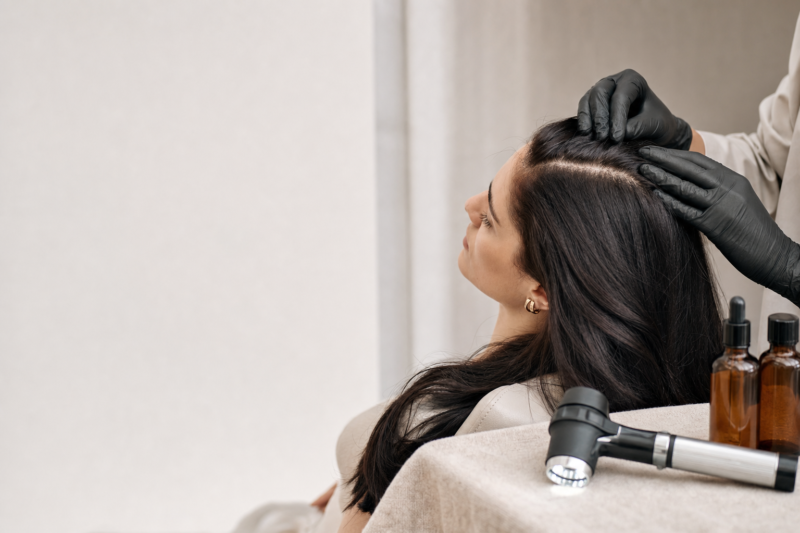
- Scalp examination with trichoscopy.
- Blood tests, depending on the case: full blood count, ferritin, thyroid function and others.
- Treatment discussion: topical treatments, oral medication or hormone replacement, always weighing risks and benefits.
Do not start supplements or medication on your own. Doses, indications and contraindications are a medical decision.
Signs that call for a prompt appointment
- smooth bald patches;
- a receding hairline and eyebrows, with shiny skin;
- intense itching, pain or burning on the scalp;
- very heavy, sudden shedding;
- more facial hair together with thinning on the crown.
How hair and scalp therapy helps
Hair therapy does not treat the hormonal cause. It works as support alongside medical treatment and for scalp comfort:
- assessment and follow-up with standardised photos every 60 to 90 days;
- suitable cleansing, because oiliness and sensitivity also change at this stage;
- supportive cosmetic actives, such as caffeine and peptides, as helpers;
- scalp massage to stimulate local circulation;
- routine guidance: heat, chemical services, hairstyles and products.
The scalp tends to become drier and more sensitive during menopause. Harsh shampoos and frequent exfoliation can make the discomfort worse.
A routine that helps hair at this stage
Scalp
- wash as often as your scalp needs, with a gentle shampoo;
- avoid very hot water;
- massage with your fingertips for 2 to 3 minutes while washing;
- use tonics only if they fit with your medical treatment.
Lengths
- a light conditioner or mask, so it does not weigh hair down;
- heat protectant whenever you use a dryer or straightener;
- fewer harsh chemical services, especially bleaching and relaxers;
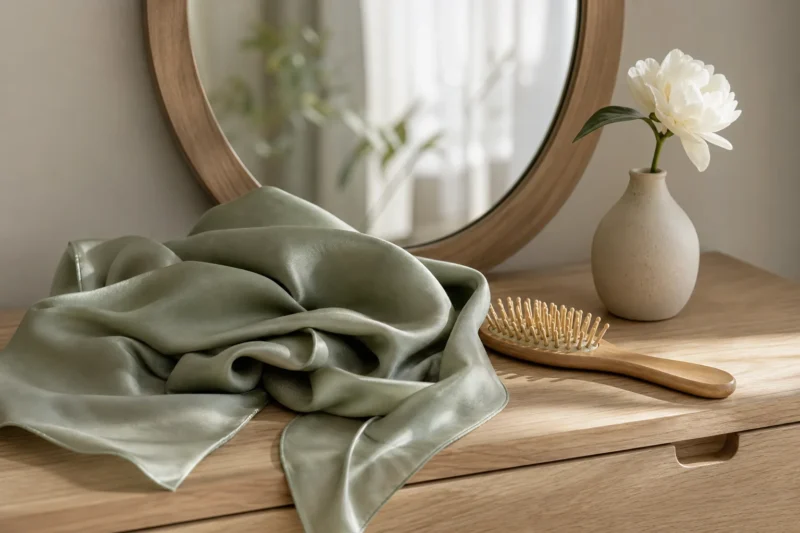
- fabric scrunchies and hairstyles without tension.
Lifestyle
- protein at every meal;
- sleep and stress management, with whatever support is available;
- regular exercise, which helps overall well-being at this stage.
Cut and colour: the volume you can get back today
While medical treatment works, which takes months, cut and colour restore visual volume immediately.
| Tool | What to do | Why |
|---|---|---|
| Length | Between chin and shoulders | Less weight, more body at the roots |
| Base | Blunt or slightly rounded | Full ends look denser |
| Layers | Few, strategic ones on top | Too many layers thin the ends |
| Parting | Off-centre or zigzag | Disguises the thinner area |
| Fringe | Light, curtain or side | Covers the hairline without weight |
| Colour | Soft tones, no strong root contrast | Less contrast between hair and scalp on top |
Grey hair can be a great choice too. Going grey reduces the contrast between hair and scalp, which can make the parting less visible.
For haircut ideas that flatter the features at this stage, see also women’s haircuts 2026.
Styling tricks
- dry the roots first, with your head upside down;
- use a light volumising mousse or spray at the roots;
- avoid heavy oils on the crown;
- switch your parting from time to time.
How to track progress at home
Our perception of volume is deceptive, especially on anxious days. Three simple habits help you track things objectively:
- A monthly photo of your parting, always in the same light, at the same distance and with hair washed on the same day of the week.
- Measure your ponytail with a tape measure every 3 months.
- Keep a short diary: new medication, stressful periods, changes in routine.
Take this record to your appointments. It helps the doctor and the therapist understand what is changing and how fast.
Myths about hair and menopause
"It is normal, there is nothing to be done." Myth. It is common, but it can be investigated and treated, and the sooner the better.
"Cutting it short makes hair thicker." Myth. A haircut does not change hair diameter, but it can greatly increase the perception of volume.
"Biotin fixes it." It only helps people with a deficiency, which is rare. In excess, it can distort some blood tests, including thyroid tests.
"HRT always brings hair back." Not necessarily. The response is individual, and the decision depends on many other health factors.
Frequently asked questions
The drop in oestrogen at menopause can encourage hair thinning, mainly on the crown and parting, in women who are predisposed. But thyroid, iron, stress and medication also play a part and should be investigated.
It depends on the cause. Shedding from a deficiency or stress can improve once the cause is treated. Androgenetic thinning is progressive and can be stabilised with medical treatment, with varying response.
The decision about hormone replacement therapy is medical and weighs overall risks and benefits, not just hair. Some women notice improvement, others do not. Talk to your gynaecologist and dermatologist together.
Cuts between chin and shoulder length, with a blunt base and few layers, usually give more visual volume. An off-centre parting and texture on top help disguise the thinner area.
Complete care: scalp and image
Menopause calls for care on two fronts: scalp health, followed with clear criteria, and an image that restores your confidence now, without waiting months.
In the Hair & Scalp Therapy Consultation, I carry out a consultation, trichoscopy and a support protocol compatible with your medical treatment, with photo follow-up and referral when needed.
And if you want a cut and colour that bring back volume and suit this new stage, the Visagism Consultation analyses face, texture and lifestyle to recommend the best choice.
Nelma Faleiro holds a postgraduate specialisation in Cosmetic Trichology (Faculdades Oswaldo Cruz) and a degree in Visagism and Hair Therapy from Universidade Anhembi Morumbi, where she lectured for 10 years. Educational content: it does not replace medical advice.