Quick answer: a monochrome outfit is a look built with a single colour from head to toe, in identical or close shades. It works because it creates a continuous vertical line that lengthens the body and communicates elegance. The secret to avoiding the uniform effect is varying texture and lightness: knit with silk, leather with wool, a lighter shade near the face.
Few fashion choices deliver as much with as little as the monochrome outfit. It lengthens the silhouette, simplifies combinations and conveys intention. At the same time, it is easy to get wrong: the same colour in identical fabrics with no contrast turns into a work uniform rather than a considered look.
In this guide you will see how to build one, which colours work, how to make all black look sophisticated and the most common mistakes.
What is a monochrome outfit and why does it work?
A monochrome outfit uses a single colour family across all the main pieces. It works for two visual reasons:
- A continuous vertical line. When there is no colour break at the waist or hips, the eye travels from top to bottom without stopping. The silhouette looks longer and slimmer.
- Unity. A single colour conveys coherence and intention. It is the same reading visagism makes when it talks about harmony: few, well-chosen elements communicate more.
In colour theory, every colour has three dimensions — hue (the colour itself), value (light or dark) and chroma (saturation). The Munsell colour system organises these three variables and helps explain why an outfit with the same hue but different values is still monochrome.
How do you build a monochrome outfit in 4 steps?
- Choose the base colour. Start with a colour you already own in several pieces: black, navy, beige, grey, white or camel are the easiest.
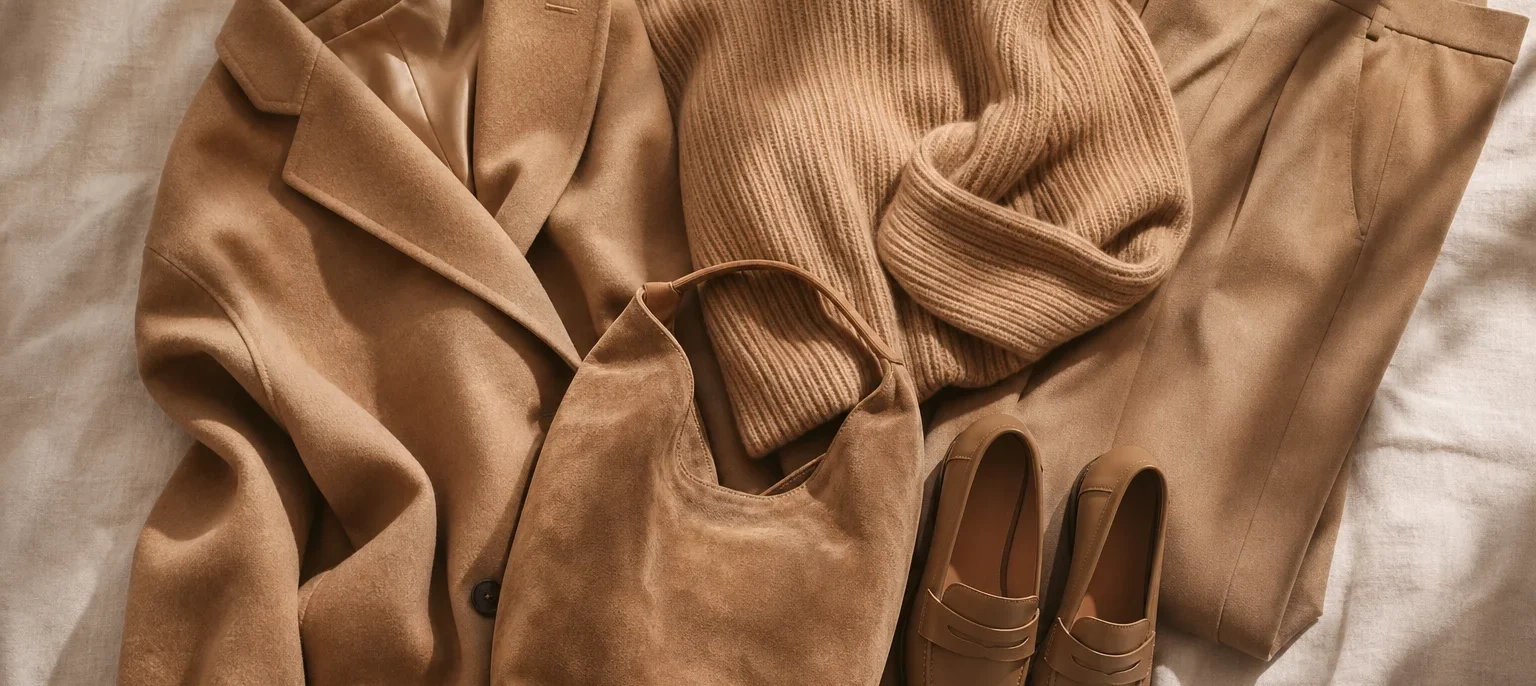
- Vary the lightness. Combine two or three shades of the same colour — for example sand, camel and cognac. The variation adds depth.
- Mix textures. Knit with satin, leather with wool, linen with cotton. This is the step that most separates an elegant look from a uniform.
- Set the point of light. Place the lightest shade or the shiniest texture near your face. The eye goes where there is more light.
Where accessories come in
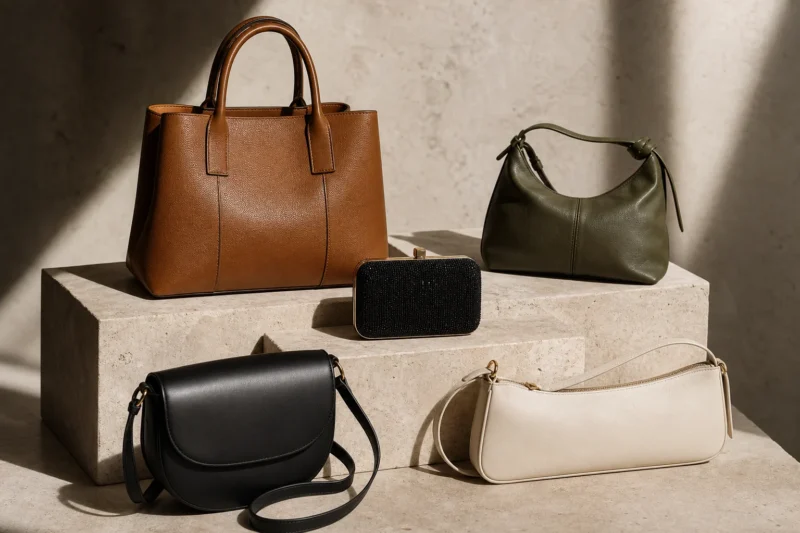
Bags, shoes and belts can follow the same colour or become the single point of contrast. A bag in a close shade keeps the unity; a bag in an opposite colour becomes the highlight of the look. See how to choose the piece by occasion and proportion in types of bags and when to use them.
Which colours work best in a monochrome outfit?
| Colour | Effect | Best occasion | Tip |
|---|---|---|---|
| Black | Sophistication, authority | Evening, work, events | Vary texture so it does not look flat |
| White/off-white | Lightness, freshness | Summer, daytime, day events | Watch for sheerness |
| Beige/camel | Discreet elegance | Work, travel | Pairs well with gold metals |
| Grey | Neutrality, modernity | Work | Mix marl and solid grey |
| Navy | Confidence, seriousness | Meetings, interviews | A softer alternative to black |
| Burgundy | Intensity, maturity | Autumn, evening | Looks rich in velvet and wool |
| Olive green | Nature, versatility | Casual, travel | Good with brown leather |
| Bright colours | Energy, boldness | Events, parties | Start with plain pieces |
The colour closest to your face also interacts with your skin. If a beige "washes out" your face, try a warmer camel or a lighter shade in the shirt. The contrast rule is the same one I use to choose hair colour.
How do you wear all black without looking dull?
All black is the most worn monochrome look and the one most at risk of looking flat. Three adjustments solve it:
- Different textures: leather, knit, silk, black denim and tailoring all have different sheens.
- Points of skin: a neckline, rolled cuffs or a bare ankle break up the dark mass.
- Metal and make-up: a gold earring, a watch or a bold lipstick become the focal point.
Another resource is length: a long black coat over black trousers and top creates layers that add movement, especially when the fabrics have different weights.
Avoid black pieces with different levels of fading in the same outfit. A washed-out black next to a new black looks like a mistake, not an intention.
Common monochrome outfit mistakes
- Everything in the same fabric. Trousers, top and blazer in identical jersey look like pyjamas or a uniform.
- Shades that "almost" match. Two beiges with different undertones (one pinkish, one yellowish) clash. They should be either clearly different or identical.
- Too much volume. A single colour in loose pieces from head to toe can swallow the silhouette. Mark one point: waist, shoulder or ankle.
- Ignoring proportion. If you want to look longer, keep the shoes in the same colour family too.
- A colour that does not flatter your face. If the chosen colour makes your skin look grey, wear it from the waist down and put a friendlier shade near your face.
How do you adapt monochrome to each occasion?
Work
Grey or navy tailoring, a shirt in the same shade and closed shoes. It conveys focus and credibility. For a 10-hour day away from home, choose fabrics that do not crease, such as tropical wool and structured knits.
Weekend
Jeans, a T-shirt and a jacket in shades of blue, with white trainers to let it breathe. This is the easiest monochrome look to start with, because almost everyone already owns the pieces.
Evening
Black or burgundy with a luxurious texture (satin, velvet) and a metallic accessory. Here the sheen of the fabric replaces colour variation.
Summer
White and off-white in linen and cotton, with camel sandals. On days above 30 degrees, natural fabrics keep the look light and comfortable.
How to start without buying anything
A good strategy is to start with 2 pieces of the same colour and build up. In 2 or 3 weeks you will notice which combinations repeat and can build a capsule around them. Photograph the looks that worked: in 1 month you will have a personal catalogue of ready-made combinations.
Monochrome and personal style
Monochrome does not belong to a single style. The minimalist wears black and white; the classic, beige and navy; the romantic, pale pink; the creative, an intense green from head to toe. What changes is the colour, the texture and the accessory — and that depends on who you are. If you have not yet defined your dominant style, start with fashion styles: which one is yours.
Hair and make-up complete the reading. A beige monochrome outfit gains strength with polished hair and glowing skin; all black with textured hair looks more urban.
Frequently asked questions
It is an outfit built with a single colour, in the same or close shades, from head to toe. Variation comes from lightness (lighter or darker), fabric texture and accessories.
Yes. Without colour breaks at the waist or hips, the eye travels along the body without interruption, creating a continuous vertical line. That is why it is a common trick for people who want to look taller.
You can. Shoes or a bag in a different neutral do not break the effect, as long as most of the outfit stays in the same colour family. Shoes in the same shade as the trousers reinforce the lengthening effect even more.
In strict monochrome, the colour is practically identical across all pieces. In tone on tone, the colour is the same but the shades vary from lighter to darker. In practice, the two terms are used almost as synonyms.
Find your colours
A monochrome outfit looks even better when the base colour was chosen for you: for the contrast of your skin, eyes and hair, and for the image you want to project. In the Visagism Consultation, I analyse your face, colouring and style and recommend the colours and combinations that flatter you, with the reason behind each choice.
I want to discover my colours →
An image professional? The Visagism & Personal Image Course goes deeper into the language of colour, line and texture applied to client work.
Nelma Faleiro holds a degree in Visagism and Hair Therapy Technology from Anhembi Morumbi University, where she taught for 10 years, and received the SINVISA 2025 Trophy at the 3rd International Visagism Seminar.