Quick answer: the fashion styles most used in image consulting are classic, elegant, minimalist, romantic, boho, rock, sporty and creative. Each one is a set of lines, colours, textures and pieces that communicates values — tradition, softness, freedom, attitude. Almost nobody is a single style: you usually have one dominant style and one or two that show up in the details.
In a consultation, I ask early on: "what words would you like people to use to describe you?". The answer often reveals more than the wardrobe does. Fashion styles are not costumes you put on to look like someone else; they are a visual vocabulary that translates values, tastes and the way you live.
Here you will meet the main styles, what each one communicates and how to discover — and mix — your own with coherence.
What are fashion styles?
A fashion style is a recurring pattern of choices that forms a recognisable image: type of line (straight or curved), colour palette, textures, cuts and accessories. Fashion changes every season; style is what remains when the trends move on.
Visagism works with the idea that every visual element has a language. Straight lines convey firmness and objectivity; curves, softness and warmth; diagonals, dynamism. Styles are combinations of these languages. It is the same logic I explain in what is visagism and how it works, applied to clothes.
What are the main fashion styles?
| Style | Key pieces | Colours | What it communicates |
|---|---|---|---|
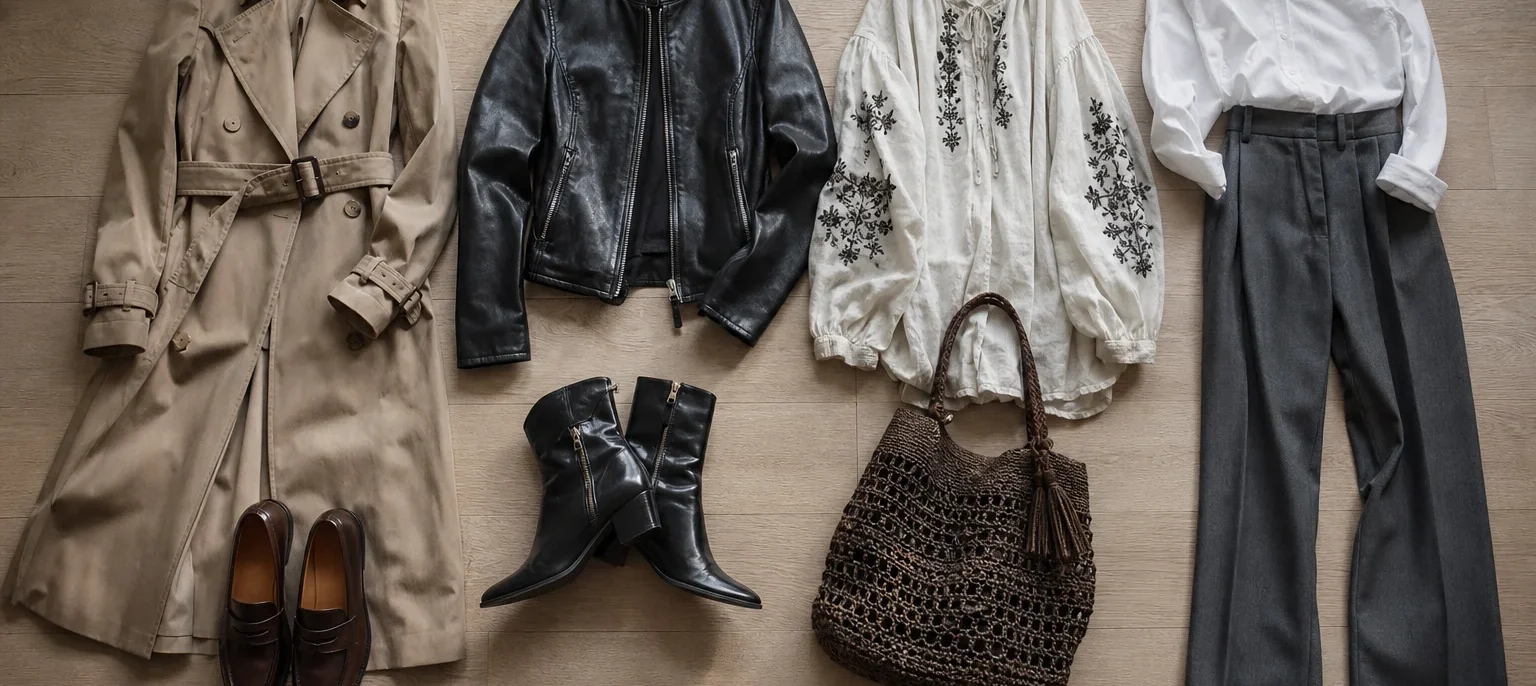
| Classic | Shirt, blazer, trench coat, loafers | Neutrals: navy, beige, grey, white | Tradition, reliability |
| Elegant | Impeccable tailoring, silk, delicate jewellery | Sophisticated neutrals, tone on tone | Refinement, care |
| Minimalist | Few pieces, clean cuts, no prints | Black, white, grey, off-white | Clarity, focus |
| Romantic | Ruffles, bows, lace, flowing skirts | Light and pinkish tones | Delicacy, affection |
| Boho | Peasant blouses, fringe, embroidery, natural fabrics | Earth tones, ethnic prints | Freedom, nature |
| Rock | Leather jacket, dark denim, combat boots, metal | Black, grey, burgundy | Attitude, independence |
| Sporty | Trainers, sweatshirts, technical fabrics | Varied, neutral bases | Practicality, energy |
| Creative | Mixed prints, designer pieces | No rules | Originality |
Classic and elegant
They look alike but are not the same. Classic seeks what lasts for decades; elegant adds care for finish, drape and fine materials. A beige trench coat is classic; the same trench in immaculate tropical wool, with a silk scarf, is elegant.
Minimalist
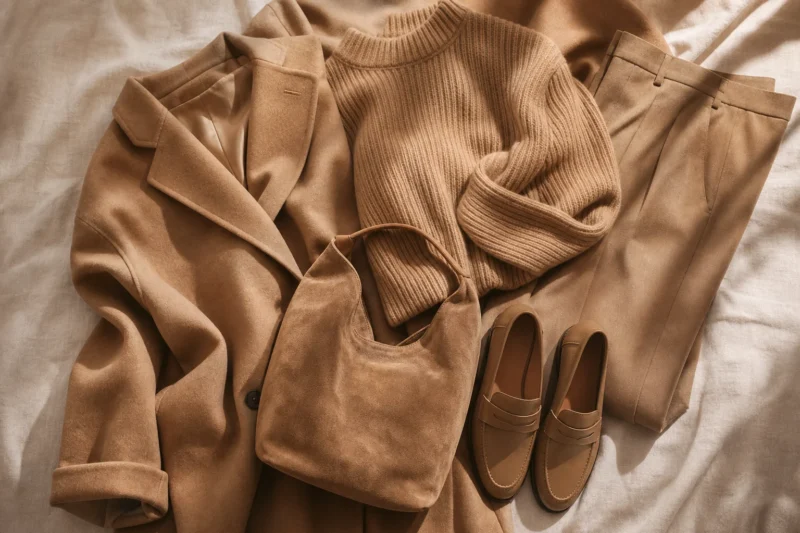
Fewer pieces, more precision. The minimalist picks a few items with excellent cuts and makes everything work together. The risk is monotony — which is solved with texture, as I show in the guide to the monochrome outfit.
Romantic
Curved lines, light fabrics and delicate details. It works very well for people who want to look approachable and warm. In business settings, a single romantic piece (a pussy-bow blouse, for example) softens tailoring without removing its seriousness.
Boho
Heir to the hippie movement of the 1960s and 1970s, boho mixes natural fabrics, embroidery, fringe and layering. It communicates freedom and a connection with nature. Straw or raw-leather bags and handmade accessories complete the look.
Rock
Leather, dark denim, metal and boots. It conveys independence and attitude. Even people who are not "rock" can use a leather jacket to give firmness to a romantic dress.
Sporty and creative
Sporty prioritises comfort and movement, and has grown with athleisure. Creative breaks the rules: it mixes prints, colours and eras on purpose. It is the style that most depends on self-knowledge so it does not look random.
To see how these styles developed over history, the fashion collection of the Victoria and Albert Museum is a rich, free source.
How do you discover your style in 5 steps?
- Look at what you wear most. Pick the 10 pieces that leave your wardrobe every week. They tell your real style, not the desired one.
- Look at what you never wear. Forgotten pieces are usually purchases for "the person I wanted to be". Note what they have in common.
- Choose three words. How do you want to be perceived? "Reliable, light, creative" leads to different choices than "firm, modern, discreet".
- Check it against your routine. A style that does not fit your life — work, climate, commute, children — will not last. Someone who walks 3 km a day does not live in stilettos.
- Build a mood board. Save 20 to 30 images of looks that attract you and look for the pattern: lines, colours, textures. That is where the dominant style appears.
Dominant and secondary styles
In practice, around 70% of the wardrobe tends to follow the dominant style; the rest comes from the secondary ones, in the details. A classic person with a rock touch can wear neutral tailoring with ankle boots and a belt with a metal buckle.
How long does it take to find your style?
It is not a one-day decision. A realistic path:
- First 2 weeks: watch what you actually wear and note how you felt in each look.
- Up to 1 month: build the mood board and choose your three words.
- From 3 to 6 months: make targeted purchases, test combinations and let go of what does not work with the rest.
During this period, avoid big impulse purchases. Each new piece should go with at least three you already own.
How do you mix fashion styles with coherence?
Mixing is what makes an image personal rather than a uniform. Some practical rules:
- One contrasting piece per outfit. A leather jacket over a floral dress; trainers with a suit; a boho blouse with tailored trousers.
- Keep a common base. A colour palette or fabric that stitches the different styles together.
- Watch the proportion. If the look is romantic, the rock element should be a single touch — the reverse creates noise.
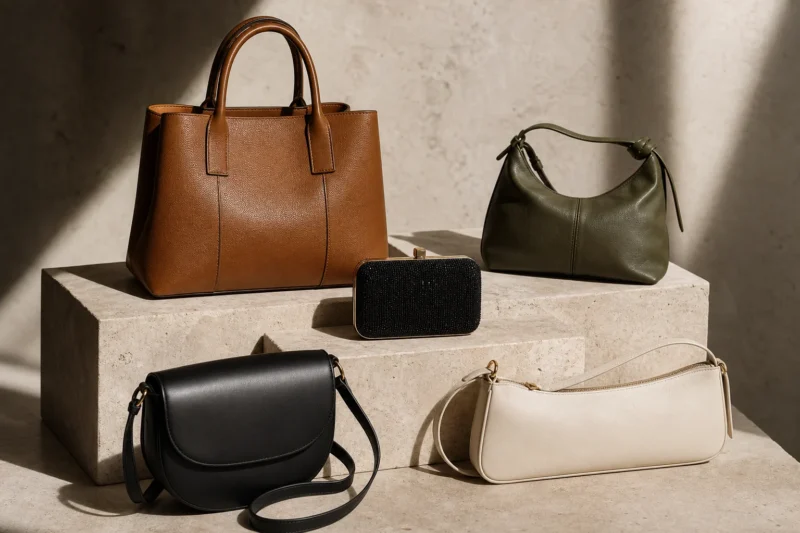
- Accessories build the bridge. Bags, shoes and costume jewellery are the cheapest way to test a secondary style. See how a bag changes the reading of an outfit in types of bags and when to use them.
Hair and make-up have a style too
A common mistake is changing the wardrobe and forgetting the face. Hair frames the style:
- Classic/elegant: cuts with a defined line, a polished blow-dry, a low bun.
- Minimalist: a blunt cut, little styling, skin-focused make-up.
- Romantic: soft waves, curtain bangs, rosy tones.
- Boho: natural textures, loose braids, glowing skin.
- Rock: choppy layers, a strong fringe, a smoky eye.
When clothes and hair tell the same story, the image gains strength without effort.
Does style change over time?
It does, and it is healthy that it does. Career changes, motherhood, moving city and growing older call for adjustments. What rarely changes are the underlying values — which is why style evolves but seldom turns inside out. Reviewing your wardrobe every 1 or 2 years helps you notice these shifts before your image looks dated.
Frequently asked questions
There is no official number. Image consultants usually work with seven core styles — classic, elegant, minimalist, romantic, boho, rock and sporty, with variations such as creative and dramatic. Almost everyone is a blend of two or three.
Yes, and that is the most common case. There is usually a dominant style, which shows up in most of the wardrobe, and one or two secondary styles that appear in the details: an accessory, a texture, a pair of shoes.
Look at the pieces you wear most and why, the images you save, the words you would like people to use to describe you and your real routine. The meeting point of values, lifestyle and what makes you feel good is your style.
Style relates to personality and values; the body influences cuts, lengths and proportions. You can express any style on any body by adjusting the cut of the pieces.
Discover the style that expresses you
If you feel your wardrobe has lots of clothes and little identity, the Visagism Consultation starts right there: a conversation about values and routine, a reading of your face and style, and direction on hair, colours and key pieces that work together — with the reason behind each choice.
Are you a beauty professional who wants to add style reading to your service? The Visagism & Personal Image Course teaches you to translate personality into visual language.
Nelma Faleiro holds a degree in Visagism and Hair Therapy Technology from Anhembi Morumbi University, where she taught for 10 years, and received the SINVISA 2025 Trophy at the 3rd International Visagism Seminar.