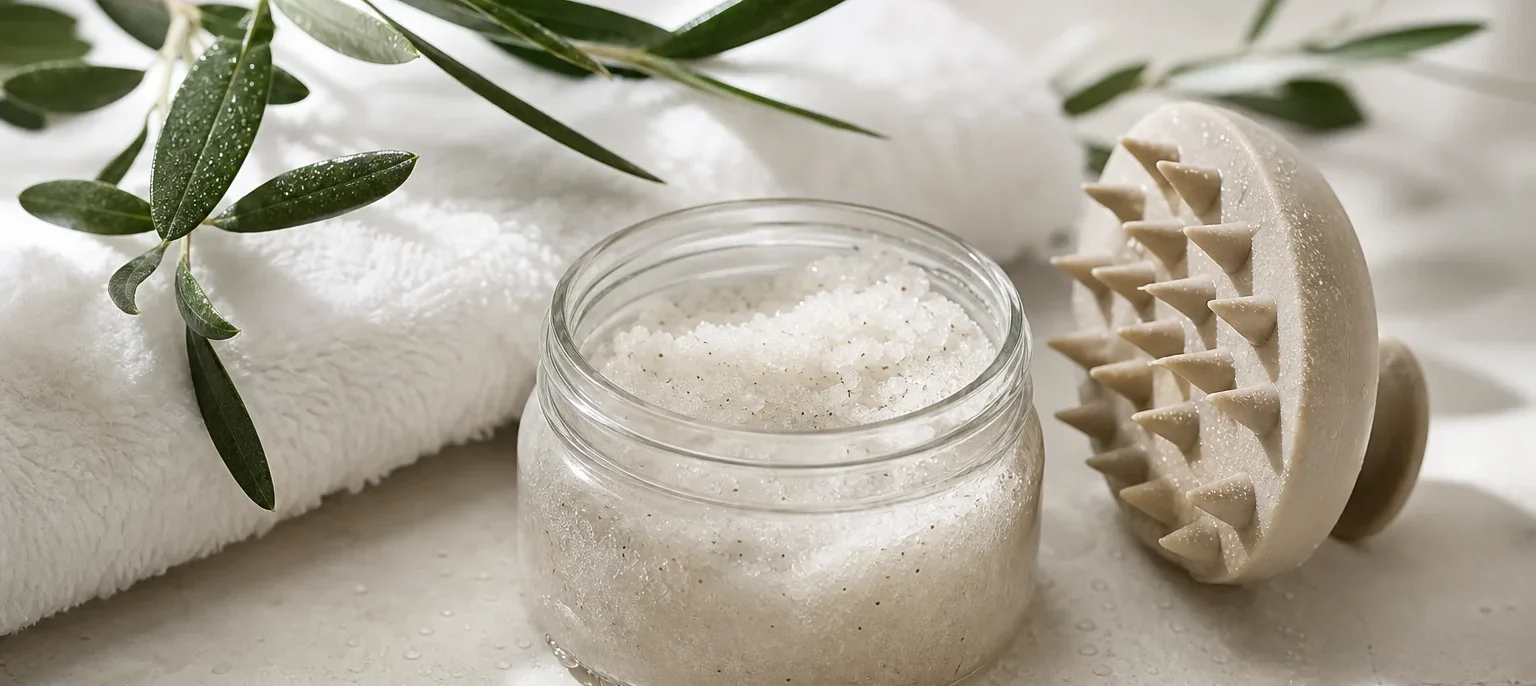
Quick answer: scalp exfoliation removes built-up sebum, dead cells and product residue. It can be physical (granules and massage) or chemical (acids such as salicylic acid). For most people, once every 1 to 4 weeks is enough. Overdoing it inflames the scalp and worsens oiliness. Do not do it on sores, psoriasis or dermatitis during a flare-up.
The scalp is skin, and skin builds up. Sebum, shedding cells, pollution, pomades, oils and dry shampoo residue form a layer that can leave the roots heavy, smelly, itchy and greasy-looking. Exfoliation has become a trend under names like "scalp detox" and "scalp scrub". It can help a lot, but it can also backfire if done without criteria.
In this article I explain what scalp exfoliation is, the types, the right frequency, a step by step and when it should be avoided.
What is scalp exfoliation?
It is the controlled removal of dead cells and build-up from the surface of the scalp. The goals are to:
- unclog the follicle openings;
- reduce the feeling of heavy roots;
- improve the action of the shampoo and tonics applied afterwards;
- reduce stuck-on flaking in people with build-up.
Exfoliation is not a hair loss treatment. It is a hygiene step and a way of preparing the skin.
Physical versus chemical exfoliation
| Type | How it works | Pros | Precautions |
|---|---|---|---|
| Physical | Fine granules, silicone brushes, massage | Instant feeling of cleanliness | Coarse granules and too much force irritate |
| Chemical | Acids (salicylic, glycolic, lactic) or enzymes | Even action, no friction | May sting; needs the right time and concentration |
| Combined | Chemical base with gentle massage | Good for stuck-on build-up | Higher risk of irritation on sensitive scalps |
Salicylic acid is one of the most widely used actives, because it is oil-soluble and works well on oily skin, helping to loosen scales. The dermatology site DermNet summarises its uses and precautions.
Who scalp exfoliation is for
- an oily scalp with heavy-feeling roots;
- product build-up from frequent dry shampoo, pomades and styling products;
- mild stuck-on flaking, without significant inflammation;
- people who wear protective styles for weeks and need a deeper cleanse afterwards;
- as a preparation step in scalp therapy protocols.
When not to do it
- sores, cuts or lesions on the scalp;
- psoriasis or seborrhoeic dermatitis in a flare-up, with redness and burning;
- a sensitive scalp that stings easily;
- recent chemical services (colour, bleach, relaxer) in the past few days;
- sunburn on the area;
- heavy undiagnosed shedding: understand the cause first.
If flaking comes with redness, intense itching or plaques, see the difference between these conditions in dandruff or seborrhoeic dermatitis.
Frequency: the most common mistake is overdoing it
| Scalp type | Suggested frequency |
|---|---|
| Very oily, with build-up | once a week |
| Oily to normal | every 2 weeks |
| Normal to dry | every 3 to 4 weeks |
| Sensitive | only with professional advice, or avoid |
Over-exfoliating strips the skin’s natural protection. The scalp may react with more oil (a rebound effect), stinging, itching and fine flaking. If that happens, space it out.
Step by step: physical exfoliation at home
- Wet your hair and scalp thoroughly with lukewarm water.
- Divide your hair into 4 to 6 sections.
- Apply a small amount of scrub directly to the scalp, between sections.
- Massage with your fingertips in gentle circles for 2 to 3 minutes. Never use your nails.
- Rinse well.
- Wash with a shampoo suited to your scalp.
- Condition only the lengths.
- Dry the roots with warm or cool air.
Chemical exfoliation at home
- follow the contact time on the label exactly;
- apply to a dry or damp scalp, as instructed;
- do not combine with other acids on the same day;
- if it stings beyond a slight tingle, rinse immediately.
Home recipes: sugar, salt, bicarbonate and vinegar
Home recipes are popular, but they need care:
- Sugar and salt: the crystals can be large and irregular, scratching the skin. Salt may also sting in tiny cuts. If you use them, choose very fine grains and light pressure.
- Bicarbonate of soda: it is alkaline. The scalp has a slightly acidic pH, and frequent use can upset the barrier, lift the hair cuticle and cause dryness.
- Undiluted vinegar: very acidic and irritating. Do not apply it neat to the skin.
- Coffee grounds: coarse and hard to rinse out, and they can get trapped between hairs.
Formulated products have controlled particle size, adjusted pH and safety testing. In general, they are a more predictable choice.
Special situations
Coily and curly hair
The scalp needs cleansing like any other, but the lengths tend to be drier. Apply the scrub only at the roots, section by section, and protect the lengths with conditioner beforehand if needed. Avoid rubbing the hair itself.
After braids and protective styles
When you take out braids worn for weeks, it is common to find build-up at the roots. First detangle patiently with conditioner; then, if there is no tenderness, do a gentle exfoliation. If your edges are sore or have bumps, wait and observe.
Chemically treated hair
Wait at least a few days after colouring, bleaching or relaxing. The skin is more sensitive, and acids can alter the colour or irritate.
Scalp detox: what is marketing
Labels promise to "detoxify", "oxygenate" and "unclog" the follicle. In practice:
- the scalp does not accumulate toxins that need eliminating;
- "oxygenating the follicle" is not an effect a cosmetic can measurably deliver at home;
- the real benefit is removing build-up and preparing the skin.
That is already a lot. There is no need to promise more.
Be wary, too, of products promising results for hair loss or growth after "a single application". Exfoliation improves the feeling of cleanliness straight away, but any change in the hair cycle takes months and depends on the cause of the shedding.
In-salon exfoliation
In scalp therapy, exfoliation is a preparation step in the protocol, usually before actives are applied. The professional chooses the type, concentration and time based on the assessment and watches the skin’s reaction. See how this fits into the plan in hair therapy protocol.
Signs exfoliation is working
- roots stay lighter for longer after washing;
- less itching and less odour;
- fewer stuck-on flakes on trichoscopy;
- a scalp without redness.
Signs you need to stop or space it out
- stinging that lasts after rinsing;
- redness and tenderness when combing;
- more oiliness in the following days;
- new fine flaking.
Frequently asked questions
For most people, once every 1 to 4 weeks is enough. An oily scalp with build-up may benefit from shorter intervals; a sensitive scalp needs longer intervals or no exfoliation at all.
There is no evidence that exfoliation alone makes hair grow. It helps keep the scalp clean and balanced, which is a good environment for hair, but it does not treat hair loss.
People with sores, psoriasis or dermatitis in a flare-up, a very sensitive scalp, recent procedures, recent chemical services or sunburn on the area should avoid it or seek professional advice.
Physical exfoliation uses granules and massage; chemical exfoliation uses acids such as salicylic acid to dissolve build-up. For an oily scalp with stuck-on flakes, chemical is usually more even; for sensitive scalps, both need caution.
Scalp exfoliation with clear criteria
Scalp exfoliation is a useful tool when there is build-up, and it only works well with a frequency and intensity suited to your skin. The key is to watch how your scalp responds and adjust.
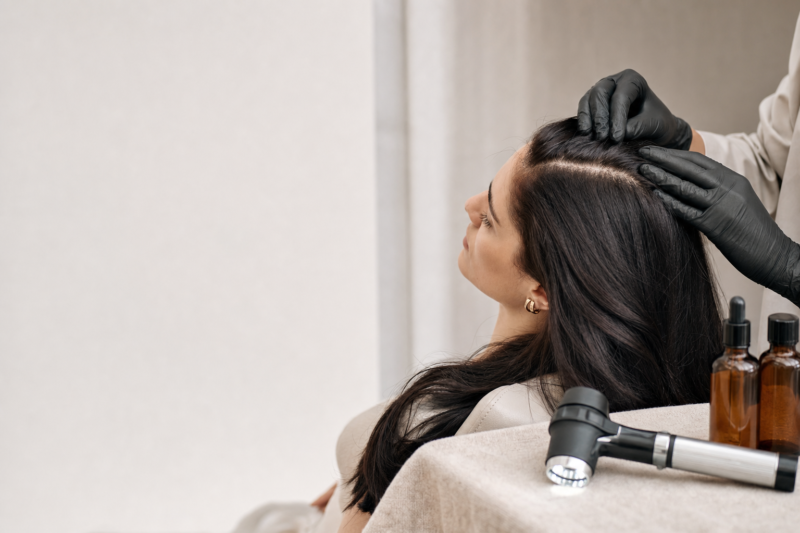
In the Hair & Scalp Therapy Consultation, I assess the scalp with trichoscopy, identify build-up, sensitivity or inflammation and recommend the type of exfoliation, its frequency and your routine products.
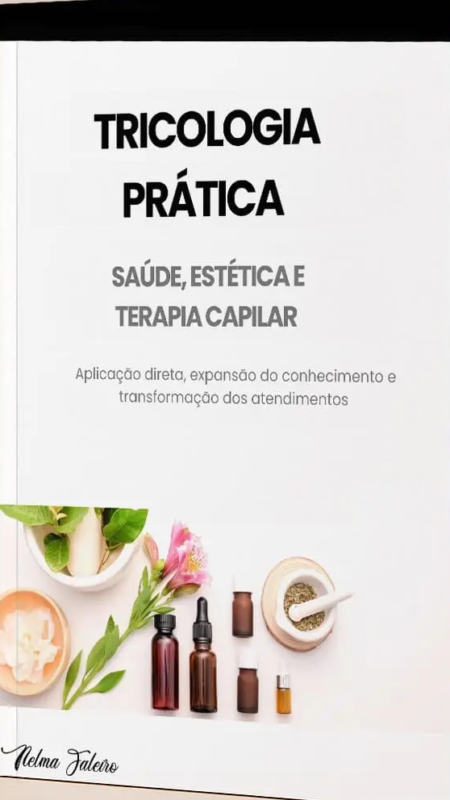
Beauty professional? The Practical Trichology e-book covers assessment, scalp disorders and protocols in 109 pages, with criteria for exfoliation and choosing actives.
Nelma Faleiro holds a postgraduate specialisation in Cosmetic Trichology (Faculdades Oswaldo Cruz) and a degree in Visagism and Hair Therapy from Universidade Anhembi Morumbi, where she lectured for 10 years. Educational content: it does not replace medical advice.