Quick answer: scalp psoriasis is a chronic inflammatory condition that forms red, well-defined plaques with thick, silvery scales, often itchy. It is not contagious and not a hygiene problem. Treatment is medical, with a dermatologist. A care routine helps: wash gently, do not pick off the scales, avoid heat and chemical services during flare-ups.
People with scalp psoriasis know the sequence: itching, flakes falling on the shoulders, plaques that sometimes appear on the forehead or behind the ears, and the embarrassment of thinking others will see it as "dirt". It is not. And with the right treatment, long periods of control are possible.
In this article I explain what scalp psoriasis is, how to tell it apart from dandruff and seborrhoeic dermatitis, what tends to trigger flare-ups and a care routine that supports medical treatment.
What is psoriasis?
Psoriasis is a chronic inflammatory condition linked to the immune system. In it, skin cells renew far too quickly. Instead of taking about a month, the cycle happens in a few days. The build-up of cells forms thick plaques with scales.
Key points:
- it is not contagious;
- it has a genetic component;
- it moves through phases of improvement and flare-up;
- it can affect skin, nails and joints;
- the scalp is one of the most commonly affected areas, involved at some point in a large share of people with psoriasis.
The dermatology site DermNet has a thorough review of scalp psoriasis.
Symptoms of scalp psoriasis
- red or pink plaques, well defined;
- silvery or whitish scales, thick and adherent;
- itching, sometimes intense;
- burning or a tight feeling in the skin;
- plaques extending beyond the hairline, onto the forehead, nape and behind the ears;
- in some cases, slight bleeding when scales are removed.
Lesions may be small and isolated or cover much of the scalp.
Psoriasis, dandruff or seborrhoeic dermatitis?
| Feature | Dandruff | Seborrhoeic dermatitis | Scalp psoriasis |
|---|---|---|---|
| Scales | Fine, loose, white | Yellowish, greasy | Silvery, thick, adherent |
| Redness | Minimal | Present, diffuse | Well-defined plaques |
| Borders | Diffuse | Diffuse | Sharp |
| Beyond the scalp | Rare | Brows, nose, ears | Elbows, knees, nails, hairline |
| Treatment | Usually cosmetic | Medical | Medical |
These conditions can overlap, and sometimes only a dermatologist can tell. For the differences between dandruff and dermatitis, see dandruff or seborrhoeic dermatitis.
What tends to make psoriasis worse (triggers)
- emotional stress;
- infections, such as tonsillitis;
- cold, dry weather;
- skin trauma: scratching, picking scales, combing hard (new lesions can appear where the skin was injured);
- alcohol and smoking;
- some medicines, which only a doctor can assess;
- harsh products: chemical services, strong fragrances and alcohol on the scalp.
Identifying your triggers with a simple diary helps at appointments. Not every trigger applies to everyone: the same situation that sets off a flare in one person may not affect another. That is why individual observation is worth more than generic lists found online, and why your own notes are so valuable to your doctor.
Does psoriasis make hair fall out?
There may be temporary shedding, for three reasons:
- inflammation in the plaques;
- itching and friction;
- forcibly removing the scales, which pulls hairs out with them.
In most cases hair grows back once psoriasis is controlled. If shedding is heavy or persistent, tell your dermatologist.
Treatment: the doctor’s role
Treatment is individual and set by a dermatologist. It may include:
- topical medicines as lotions, foams, shampoos or solutions;
- shampoos with specific actives to soften the scales;
- phototherapy, in some cases;
- systemic or biologic medicines, for extensive disease or joint involvement.
Do not use corticosteroids or other medicines on your own. Incorrect use can cause rebound flares and thinning of the skin.
The NHS psoriasis page explains the condition and its treatment options clearly.
A care routine that helps
A routine does not replace treatment, but it makes a difference to comfort and prevents flare-ups.
Washing
- lukewarm water, never very hot;
- a gentle shampoo on days without medication, or the prescribed shampoo as directed;
- massage with your fingertips, never your nails;
- rinse thoroughly, leaving no residue.
Scales
- do not pick the scales off;
- soften them with the product your doctor recommends before washing;
- use a wide-tooth comb gently.
Drying and hairstyles
- dry the roots with warm or cool air;
- avoid straighteners and very hot dryers over plaques;
- loose hairstyles, without tension.
Chemical services and colour
- no chemical services during flare-ups;
- outside flare-ups, only with medical approval and a patch test 48 hours before;
- choose professionals who understand your condition.
Lifestyle
- sleep, stress management and exercise;
- avoid smoking and excess alcohol;
- moisturise your body skin, especially in dry weather.
A trigger diary: a simple habit that helps
For 4 to 8 weeks, write a few lines about:
- how your scalp is (0 to 10 for itching and for flaking);
- poor nights’ sleep and very stressful days;
- weather changes, travel and swimming pools;
- new products used on hair and body;
- infections, colds and new medication.
When you compare the notes, patterns often appear. Some people notice a flare 2 to 3 weeks after an infection; others after stressful periods. Take the diary to your appointment: it helps the doctor adjust your treatment.
Questions to take to your dermatologist
- How long should I use each product, and how do I taper off?
- Can I use an ordinary shampoo on days without medication?
- Can I colour my hair? With what precautions?
- What should I do if a plaque bleeds or burns a lot?
- When should I come back if there is no improvement?
The emotional side
Visible psoriasis affects self-esteem. Avoiding dark clothes, giving up on the salon and hiding the scalp are common reactions. Talking about it with your doctor, your family and, if needed, a psychologist is part of care. Patient support groups also help people share experiences.
Where hair and scalp therapy fits in
Hair therapy does not treat psoriasis. A hair and scalp therapist can:
- recognise signs and refer you to a dermatologist;
- advise on a hygiene routine compatible with treatment;
- adapt procedures so they do not irritate the skin;
- follow the health of your hair during and after flare-ups.
Exfoliation, high frequency, irritating actives and vigorous massage are contraindicated over active plaques.
How to talk to your hairdresser
Many people avoid the salon out of embarrassment. Tell them beforehand: "I have psoriasis, it is not contagious, I need lukewarm water and gentle combing". A good professional will adapt the service.
Frequently asked questions
There may be temporary shedding, mainly from itching, removing the scales and inflammation. In most cases hair grows back once the condition is controlled with medical treatment.
Psoriasis forms red, well-defined plaques with thick, silvery scales that may extend beyond the hairline. Dandruff has fine, loose flakes without raised plaques. A dermatologist makes the diagnosis.
Psoriasis is a chronic condition with no definitive cure, but there are effective treatments to control it. Many people go through long periods with their skin under control.
Not during flare-ups, with active plaques, sores or burning. Outside flare-ups, only with your dermatologist’s approval and a prior patch test, because harsh products can irritate the skin and trigger new lesions.
Care with clear criteria and without guilt
Scalp psoriasis needs medical follow-up and a routine that respects the skin. With information, it is possible to reduce flare-ups, protect your hair and feel good about it again.
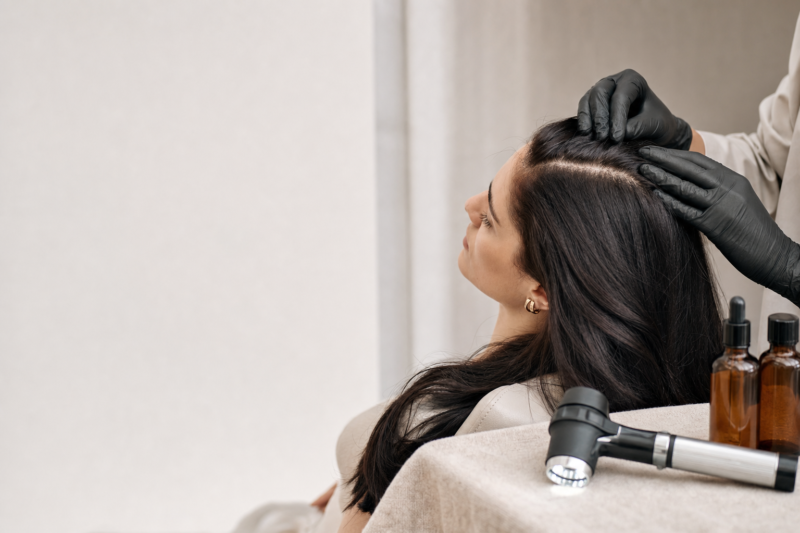
In the Hair & Scalp Therapy Consultation, I assess the scalp with trichoscopy, advise on a supportive routine compatible with your treatment and refer you to a dermatologist whenever needed.
Beauty professional? The Practical Trichology e-book helps you recognise the main scalp disorders and know when to refer.
Nelma Faleiro holds a postgraduate specialisation in Cosmetic Trichology (Faculdades Oswaldo Cruz) and a degree in Visagism and Hair Therapy from Universidade Anhembi Morumbi, where she lectured for 10 years. Educational content: it does not replace medical advice.