Quick answer: Beauty Fair 2026 took place in September in São Paulo and brought the usual: many brands, many launches and many promises. What is worth investing in is what solves a real client problem, has a clear technical data sheet, is properly registered and passes your own salon test. The rest is stand sparkle. Technique and consultation remain the best investment.
September is trade fair month, and Beauty Fair is one of the biggest showcases for the professional beauty market in Latin America. The organiser cites more than 2,000 brands and 200,000 visitors. With that volume, the feeling as you leave the hall is often the same: "do I need all this?".
You do not. In this article, instead of listing products, I do what I think is more useful: I organise the trend categories that usually appear at these fairs and show how to filter what is worth bringing into your salon after Beauty Fair 2026.
What is Beauty Fair?
Beauty Fair is an annual professional beauty trade fair held in São Paulo, Brazil, with areas for hair, aesthetics, business, perfumery, retail and packaging. It brings together exhibitors, congresses, classes and live demonstrations. In 2026, the congress programme was announced for 6 to 8 September.
Up-to-date information, including on the 2027 edition, is on the official Beauty Fair website.
The trend categories reaching salons
Without inventing launches, it is possible to identify broad movements that repeat across recent editions of industry fairs. Here is how to assess each one.
1. Scalp care ("skinification")
Serums, scrubs, tonics and routines inspired by skincare, now applied to the scalp.
- Worth it if: you are trained to assess the scalp and recommend with clear criteria.
- Be careful with: "hair growth" and "end of hair loss" claims on cosmetics.
- Technical reading: a consistent trend, because it answers a real client demand.
2. Bond building and repair
Products that claim to protect or rebuild internal bonds in the hair during chemical services and bleaching.
- Worth it if: you do a lot of bleaching and chemical work.
- Be careful with: comparing on marketing alone; ask for test data and do strand tests.
3. Straightening and volume reduction
Every year brings new "formaldehyde-free" and "organic" straightening promises.
- Worth it if: the product is registered and its ingredients are clear.
- Be careful with: smoke, strong smells and stinging eyes during application, which are warning signs. In Brazil, check registration with Anvisa.
4. Colour with less damage and more shine
Glossing, toners, low-ammonia colour and soft lighting techniques.
- Worth it if: your clients want longer gaps between appointments and healthy-looking hair.
- Technical reading: it fits the movement of clients who want fewer touch-ups.
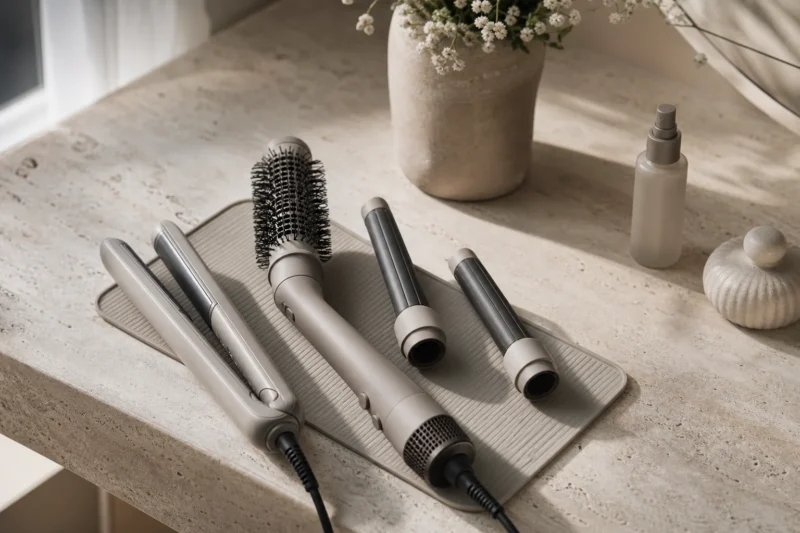
5. Equipment: dryers, brushes and light devices
Dryers with digital motors, hot air brushes, LED helmets and assessment devices.
- Worth it if: the equipment solves a real bottleneck (time, ergonomics, assessment).
- Be careful with: devices that promise automatic diagnosis or guaranteed results. See what the science says in laser hair growth and LED therapy.
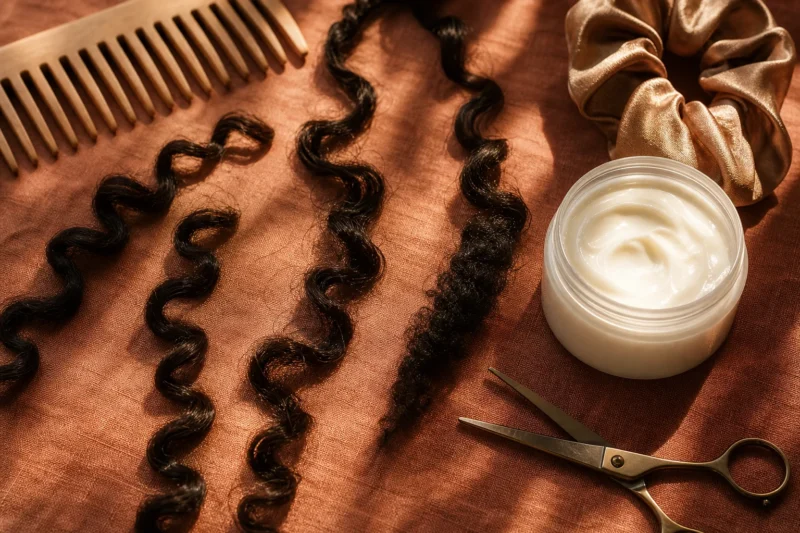
6. Shaped cuts and natural textures
Precision cuts, bobs, pixies and dry-cutting techniques for curly and coily hair.
- Worth it if: you want to raise the value of your cutting service.
- Technical reading: technique never goes out of fashion. It is the investment with the longest-lasting return.
A 5-question filter before you buy
| Question | If the answer is "no" |
|---|---|
| Does it solve a real problem for my clients? | It is a want, not a need |
| Does it have a clear data sheet, ingredients and instructions? | Ask before buying |
| Is it properly registered? | Do not use it |
| Has it passed a test on at least 3 hair types? | Test first |
| Can I price it and explain the benefit? | It will not sell |
This simple filter prevents most post-fair regrets.
How to test a new launch in the salon
- Choose 3 to 5 clients with different profiles (texture, chemical history, scalp).
- Explain it is a test and ask permission for photos.
- Record it on a client card: product, batch, amount, processing time and result.
- Review after 2 to 4 weeks, not just on the day.
- Compare with the product you already use.
If the new product does not clearly win, it does not need to go into stock.
Post-fair budget: how much to invest
A practical rule helps you protect your cash flow. Split your investment into three parts:
- training, which pays off in every appointment;
- restocking items that already sell well;
- testing new products, with a small, fixed amount.
Avoid buying expensive equipment on the impulse of a fair discount. Do the maths: how many appointments a month pay for the device? Over how many months? If the answer is more than 12 months without proven demand, wait.
How to present something new to clients
A launch only becomes a service when the client understands the benefit. Some guidance:
- Talk about the problem, not the product. "You mentioned your hair breaks after bleaching. I have a new step that helps with that."
- Show your own test. Before-and-after photos taken in your salon, with permission, are worth more than the brand’s leaflet.
- Be honest about limits. No product solves everything, and clients notice when a promise is exaggerated.
- Offer it as an option, not an obligation.
Service trends: what a salon can sell on top
More than products, recent fairs reinforce a trend towards consultative services:
- a visagism consultation before the cut;
- scalp assessment with a photo record;
- treatment protocols with scheduled reviews;
- maintenance packages with fixed appointments.
These services raise the average ticket without depending on stock. And they build loyalty, because clients can see there is a method.
Trends for 2027: what to watch
Some directions worth following in the coming months:
- the scalp as part of the routine, not just the lengths;
- less heat and fewer harsh chemicals, with more cutting and styling technique;
- natural hair celebrated, including curls, coils and grey;
- personalisation, with consultation and an explanation of every choice.
To see how this translates into cuts, read women’s haircuts 2026.
What stays after the fair
The fair ends, the bags empty and the samples run out. What stays is what you have built into the way you work. Choose one technique and one product category to explore in depth over the next 3 months. It is more productive than trying to follow everything.
Frequently asked questions
Beauty Fair takes place every September in São Paulo. In 2026, the congress programme was announced for 6 to 8 September. The organiser is already announcing the 2027 edition for 4 to 7 September at Expo Center Norte.
Only after testing. Ask for samples, check the product’s regulatory status, test on different hair types and record the results before buying in quantity.
Trends that solve a real client problem, such as time, practicality or hair health, usually last. Those that rely only on a visual effect for video tend to fade quickly.
Technique before product. A better haircut or consultation increases the value of your service more than a new item on the shelf.
Invest in technique after Beauty Fair 2026
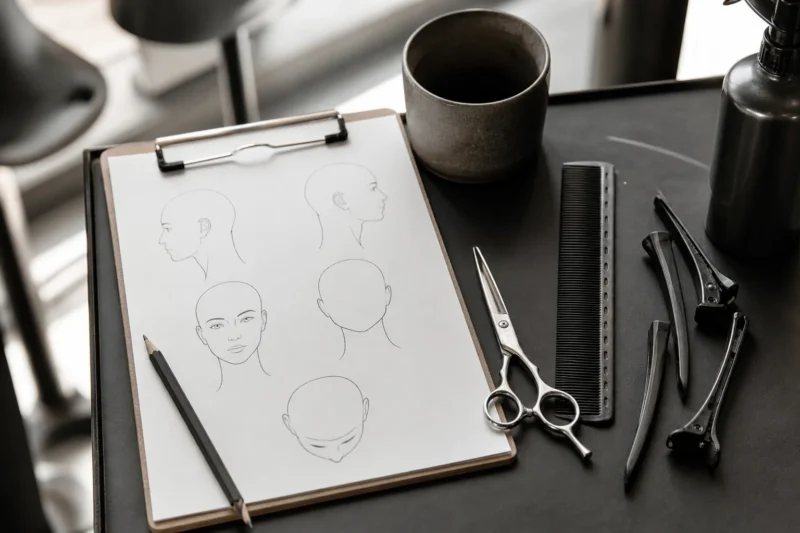
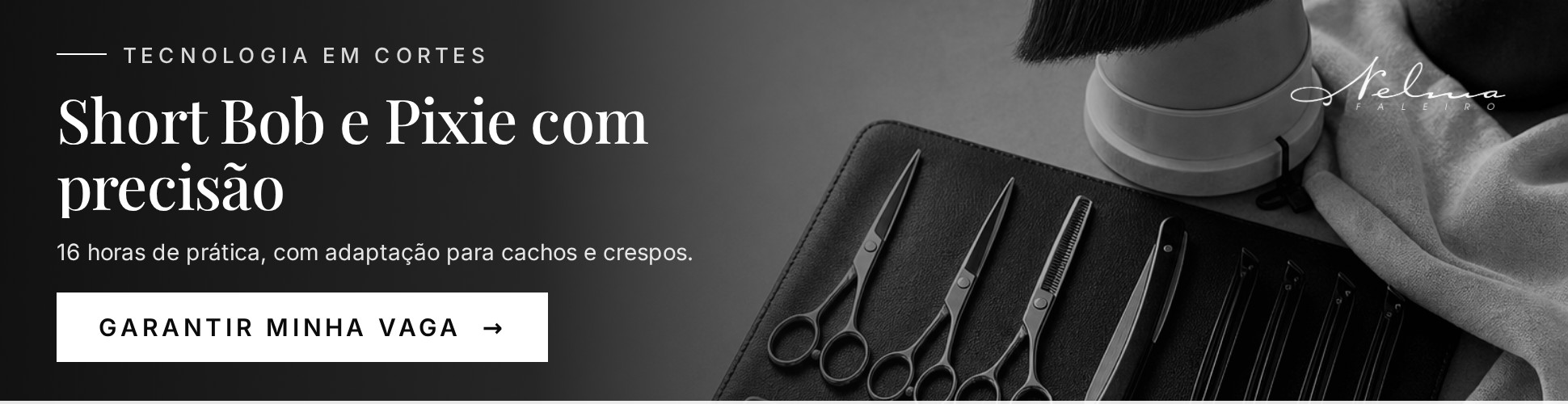
If the fair showed that the market values precise cuts adapted to each texture, the Cutting Technology Course offers 16 hours of practice with the short bob, the pixie and adaptation for wavy, curly and coily hair, with visagism applied to cutting.
See the Cutting Technology Course →
If your interest is the scalp and treatments, the Practical Trichology e-book organises assessment, scalp disorders and protocols in 109 pages, with criteria for choosing actives and equipment.
Nelma Faleiro holds a degree in Visagism and Hair Therapy from Universidade Anhembi Morumbi, where she lectured for 10 years, is a specialist in Cosmetic Trichology and received the SINVISA 2025 Award. This content is not sponsored by brands or event organisers.