Quick answer: celebrity haircuts 2026 revolve around precise bobs, textured pixies, shags with bangs, long layers with movement and celebrated natural textures. Each suits certain faces, hair types and routines. The celebrity photo is a starting point: bring it, but ask for your own version, considering face shape, hair texture and how much time you have to style.
Every week someone arrives at the salon with a photo of an actress or singer and asks for "this cut". It is natural: celebrities work as a shop window for trends. The problem is that the cut in the photo was designed for another face and texture, with professional styling, studio lighting and often extensions. Understanding celebrity haircuts 2026 through a technical lens helps you ask for your version — not someone else’s.
This article is a technical reading of popular cut types. I use public images only as visual reference. I do not comment on anyone’s body, personal life or real appearance, nor attribute choices to stylists or teams.
Why does the celebrity photo mislead?
- Production hair: professional styling, sometimes by more than one person;
- Extensions and wigs: volume and length may not be natural hair;
- Light and angle: photos are chosen from the best angle and light;
- Retouching: frizz, gaps and roots can be corrected digitally;
- A different face: the same cut changes completely on another face shape.
That does not mean the reference is useless. It means it needs to be translated.
Popular cut types and a technical reading of each
| Cut | Lines and effect | Best for | Upkeep |
|---|---|---|---|
| Precise bob (blunt, chin-length) | A strong horizontal line, firmness | Oval and long faces; straight to wavy hair | Every 5 to 6 weeks |
| Long bob (lob) | A line below the chin, lengthening | Almost every face | Every 6 to 8 weeks |
| Textured pixie | Exposed face, boldness | Oval faces, defined features, long neck | Every 4 to 6 weeks |
| Shag with bangs | Choppy layers, movement, attitude | Wavy and curly hair | Every 6 to 8 weeks |
| Long layers (butterfly) | Volume around the face, lightness | Medium to thick hair, round and square faces | Every 8 to 10 weeks |
| Natural textures in the spotlight | Authenticity, natural volume | Curly and coily hair | Depends on the shape |
See the year’s trends in detail in women’s haircuts 2026 and bob variations in types of bob haircut.
The precise bob
The sharp blunt bob often appears on red carpets because it is a statement: a firm line, a polished finish. In visual language, it communicates confidence and modernity. It works best on straight or wavy hair with medium to high density. On round faces, a chin-length finish tends to add roundness — there, the lob is safer.
The textured pixie
It exposes the face and neck and depends on features you like to show. It needs frequent trims and some styling. On fine hair, texture gives a sense of volume.
The shag with bangs
A descendant of the 70s, it suits hair with natural movement. It conveys ease and personality. On fine, straight hair, it can look thin if the layers are too short.
Long layers
They keep length and create volume around the face. They are versatile and work well for people who do not want a drastic change. They need a blow-dry or styler to look like the photo.
Natural textures: the fastest-growing reference
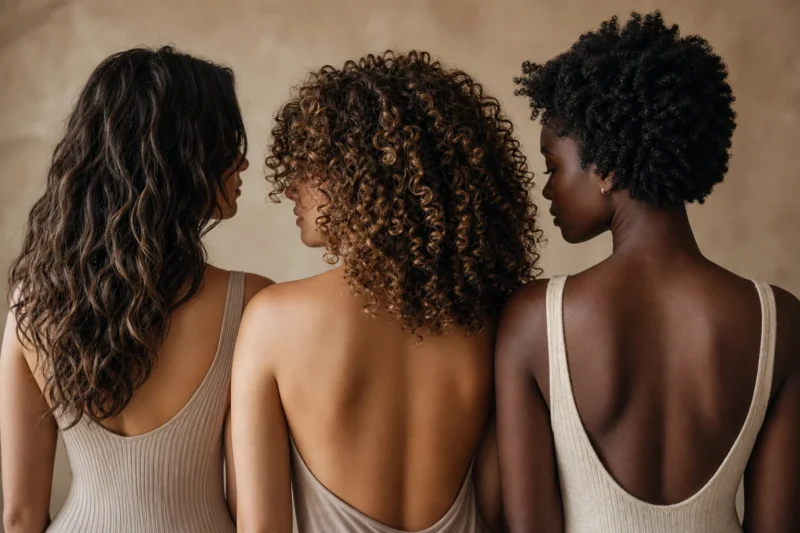
A strong movement in recent years is the celebration of natural texture on red carpets and in campaigns: defined curls, voluminous coils, waves without a blow-dry. For curly and coily hair, this has widened the range of references a lot. Some technical points:
- the cut should be done dry, respecting each curl’s natural shape;
- the shape can be rounded, elongated or asymmetric, depending on the face;
- the styling in photos often involves defining section by section, which takes time at home;
- curl shrinkage changes apparent length by several centimetres.
If you are moving away from straightening to wear your natural texture, see the guide to transitioning to natural hair.
Where to find reliable references
Fashion magazines publish beauty galleries of each season’s most talked-about cuts; Vogue’s hair coverage is a good source. Prefer moving images, such as backstage videos, and photos from different angles, which show the cut more honestly than a single posed photo.
How do you adapt the reference to your face?
- Find your face shape — see the step by step in how to find your face shape;
- Look at the celebrity’s texture and compare it with yours: if hers is thick and straight and yours is fine and wavy, the cut will behave differently;
- Notice where the cut ends and what that does to her face;
- Think about your routine: how much time do you have to style?
- Bring more than one photo, from different angles, plus photos of "ordinary" people with the same cut;
- Talk about bangs, which change everything — see bangs for your face shape.
How do you ask for it at the salon?
- "I want the line of this bob, but ending a little below the chin because my face is round."
- "I love the movement of these layers, but I don’t blow-dry every day."
- "I want the texture of this shag without losing too much length."
Phrases like these help your stylist understand what you want from the reference — the line, the volume, the movement — and adapt it to you.
Common mistakes
- Asking for exactly the same cut, without considering texture and face;
- Forgetting that the volume in the photo may be extensions;
- Choosing a cut that needs a daily blow-dry for a routine with no time;
- Changing drastically on the eve of an important event;
- Ignoring upkeep: a pixie without trims loses its shape within weeks;
- Changing cut with every new photo, without giving hair time to grow and settle.
One change at a time
Big changes need patience. Cut and colour on the same day can be too much. Start with the cut. Wait 2 to 3 weeks. Then consider colour. That way you understand what each choice did to your face. And if something does not please you, it is easier to adjust. Photograph the result at home, in natural light. The salon photo, with a professional blow-dry, does not always show everyday reality.
Frequently asked questions
You can use it as a reference, but your stylist needs to adapt it to your face shape, texture and routine. The photo shows a result with professional styling, lighting and often extensions or wigs.
Cuts that create vertical or diagonal lines and end below the chin, such as a long bob with a side parting or long layers with side-swept bangs. Blunt chin-length bobs tend to make the face look rounder.
Not always the way it looks. Many photos involve extensions, wigs, professional styling and retouching. That is why everyday results differ, even with the same cut.
No. It is a technical reading of popular cut types, using public images only as visual reference. We do not comment on anyone’s body, personal life or real appearance.

The celebrity is the reference, you are the project
A public image is inspiration, but your ideal cut starts from your face, texture, routine and what you want to communicate. In the Visagism Consultation, I analyse these elements and recommend which version of the trend makes sense for you — including whether the photo you saved is the way to go — with the reason behind each choice.
A hairdresser who wants to master bobs, pixies and layers adapted to every face and texture? The Cutting Technology Course offers 16 hours of practice with visagism applied to cutting.
Nelma Faleiro holds a degree in Visagism and Hair Therapy Technology from Anhembi Morumbi University, where she taught for 10 years, and received the SINVISA 2025 Trophy at the 3rd International Visagism Seminar. Technical, opinion-based reading; public images used only as reference.