Quick answer: personal colour analysis looks at which colours harmonise with your skin, eyes and hair, assessing temperature, depth and intensity. Visagism looks at shapes, lines, proportions and personality to define cut, colour, make-up and accessories. One does not replace the other. If your question is about haircut and image, start with visagism; if it is about clothing colours, start with colour analysis.
"I had my colours done and I still don’t know which haircut to get." It is one of the sentences I hear most often. It is not the palette’s fault. Personal colour analysis answers one question, and visagism answers another. Once you understand the difference, investing in your image becomes much smarter.
In this article I explain what each analysis assesses, what it delivers, where the two meet and which one makes more sense to start with in your case.
What is personal colour analysis?
Personal colour analysis looks at how colours behave near your face. Some colours brighten the skin, soften dark circles and bring out the eyes. Others make the skin look grey, emphasise lines or wash out your expression.
The analysis considers three main properties of colour, the same ones used in systems such as Munsell:
| Property | Question | Example |
|---|---|---|
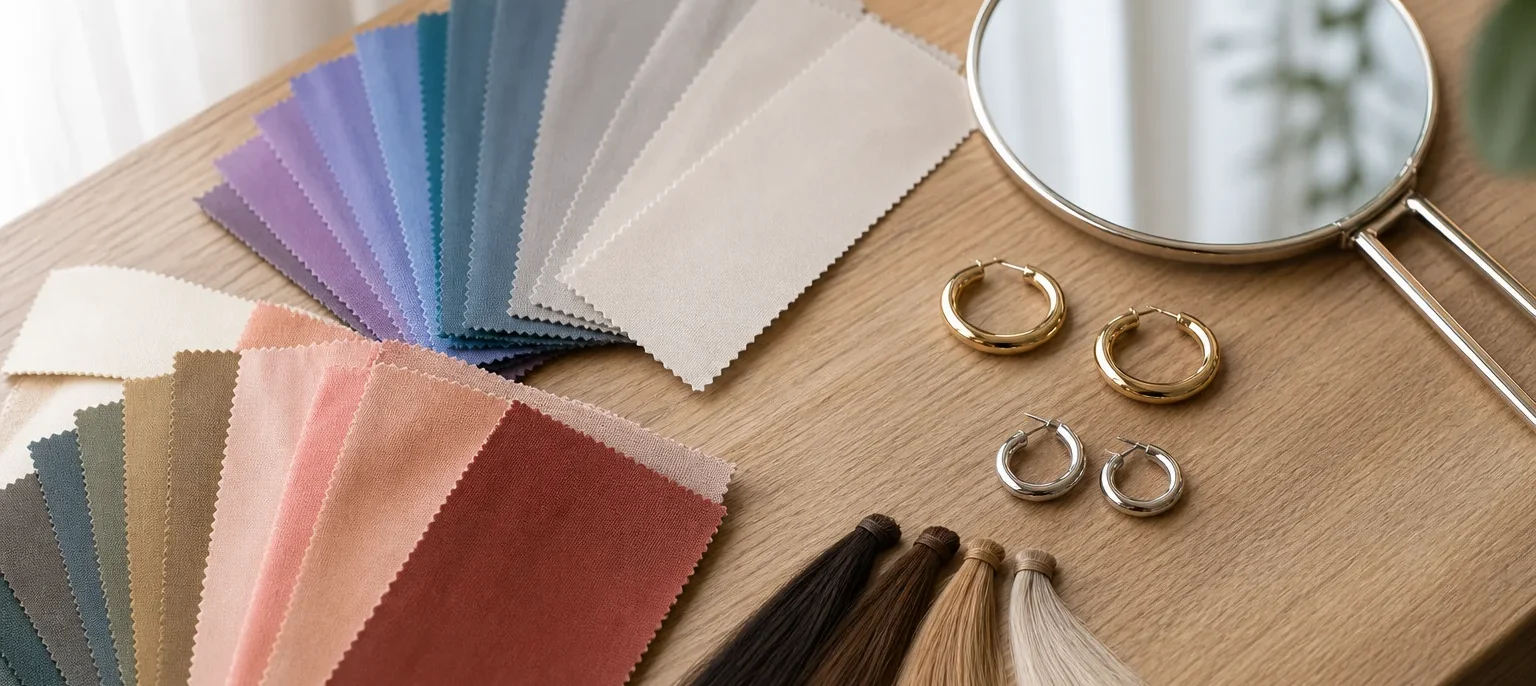
| Temperature (hue) | Do warm or cool colours suit you? | Gold vs silver |
| Depth (value) | Light or dark colours? | Beige vs chocolate |
| Intensity (chroma) | Bright or soft colours? | Pure red vs dusty rose |
Combining these answers produces a palette, often organised into seasons (spring, summer, autumn and winter) and their subdivisions. The test uses coloured fabrics held near the face, in natural or controlled light. A session usually takes 1 to 2 hours.
What personal colour analysis delivers
- your colour palette, with the best colours and those that need care;
- the metals that suit you (gold, silver, rose gold);
- foundation, lipstick, blush and eyeshadow shades;
- direction for hair colour: warmer or cooler, lighter or darker.
What is visagism?
Visagism is the art of creating a personal image that expresses who a person is. The word comes from the French visage (face). In Brazil, the method was systematised by Philip Hallawell, who relates lines, shapes and colours to temperament and emotion. I explain the basics in what visagism is and how it works.
A visagist analyses:
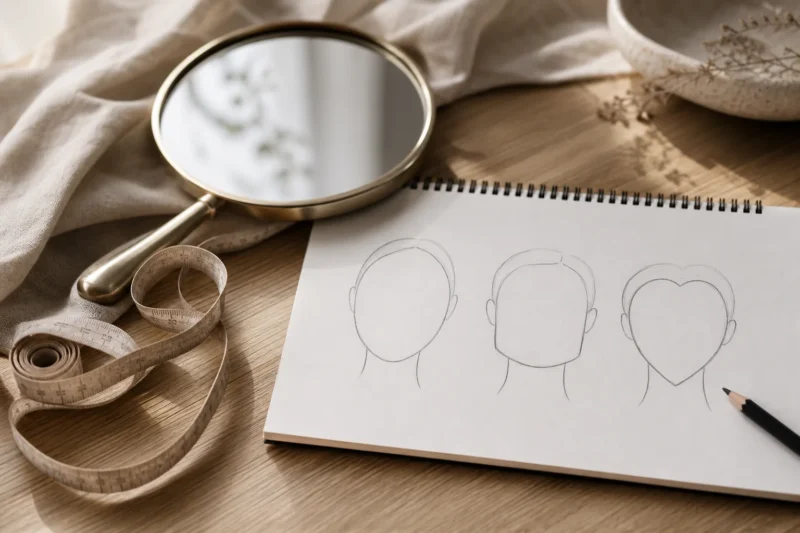
- face shape and the proportions of the facial thirds;
- dominant lines, straight or curved, in the features;
- temperament and personality, through conversation and observation;
- lifestyle, profession and routine;
- hair texture, density and behaviour.
What visagism delivers
- the recommended cut and length, with the reasons;
- placement of fringe, parting and volume;
- where to put light and shadow when colouring hair;
- brow shape and make-up lines;
- glasses, earrings and accessories that reinforce or soften lines;
- consistency between your image and the message you want to send.
Personal colour analysis vs visagism: the difference in a table
| Personal colour analysis | Visagism | |
|---|---|---|
| Central question | Which colours flatter me? | Which image represents me? |
| What it assesses | Skin, eyes, hair and colour | Shapes, lines, proportions and personality |
| Main deliverable | Colour palette | Cut, colour, make-up and accessories with reasons |
| Tools | Fabrics, light, comparison | Measurements, photos, conversation, drawing |
| Solves well | Clothes, make-up, metals | Haircut, fringe, brows, professional image |
| Does not solve alone | Cut and shape | A full clothing palette |
Colour analysis looks at colour. Visagism looks at shape and message, and uses colour as one of its tools.
Where do the two meet?
The strongest meeting point is hair colour. Colour analysis tells you whether a golden or an ashy brown suits you better. Visagism decides where that colour goes: face-framing highlights to brighten the cheekbones, a darker root for depth, more or less contrast depending on personality.
Make-up is another meeting point. Colour analysis defines the shades. Visagism defines the lines: a straighter or more arched brow, an elongated or rounded liner, light contour or none at all.
A practical example: two clients share the same deep autumn palette. One is a lawyer with angular features who wants to convey firmness. The other is a nursery teacher with rounded features who wants to look approachable. The palette is the same. The cut, the contrast and the make-up are not.
Which comes first: personal colour analysis or visagism?
It depends on your main question.
Start with visagism if:
- you do not know which haircut to choose or often regret your salon visits;
- you want to change your image because of work, age or a new stage of life;
- you want to understand your fringe, brows or glasses;
- you feel your appearance does not match who you are.
Start with personal colour analysis if:
- your questions are almost all about clothes and shopping;
- you are already happy with your haircut;
- you want to organise your wardrobe by colour.
In my practice, the Visagism Consultation already includes a colour reading applied to hair and make-up. That settles most image questions in a single appointment. A full colour analysis with a fabric palette can come later, if your wardrobe becomes the priority.
Common mistakes with colour palettes
- Treating the palette as a list of bans. A colour that is "out" can be worn away from the face, in trousers and shoes.
- Ignoring personality. A discreet person may feel in costume in a very bright palette, even if it "suits" her.
- Having the analysis with hair dyed far from its natural colour. The frame changes the reading.
- Forgetting the light. Warm shop lighting or phone filters distort perception.
- Thinking your season decides your haircut. It does not: shape and lines belong to visagism.
What about colour analysis apps?
Apps can be a fun starting point, but the camera, the light and the screen change skin colour a great deal. Use them as a game, not as the basis for changing your hair colour. If an app and a professional disagree, trust the analysis done in good natural light, with fabrics held against your bare face.
How to prepare for either analysis
- go with no make-up or very little;
- avoid self-tanner in the 7 days before;
- bring photos of looks and haircuts you loved and regretted;
- think about what you want to communicate at work and in your personal life;
- if possible, have your hair close to its natural colour or the one you plan to keep.
To arrive with a good sense of your face shape, try how to find your face shape first.
Frequently asked questions
No. Personal colour analysis looks at how colours interact with your skin, eyes and hair. Visagism looks at shapes, lines, proportions and personality to define cut, colour, make-up and accessories. They complement each other.
If your main question is about haircut, shape or the image you project, start with visagism. If it is about clothes and make-up colours, start with colour analysis. A full visagism consultation usually includes a colour reading.
Your colouring is fairly stable, but changes in hair colour, a tan and grey hair can adjust the reading. A review makes sense when your hair colour changes a lot.
Very much. It shows the temperature, depth and intensity of the colours that suit you. Visagism complements it by deciding where to place light and shadow in the hair in relation to your face shape.
A consistent image, with the reason behind every choice
Colour and shape work together. When the cut, the hair colour, the make-up and the accessories tell the same story, the image looks natural and you stop relying on trial and error.
In the Visagism Consultation, I analyse your face, features, personality and routine and define cut, colour, make-up and accessories, including a colour reading applied to hair and make-up. I see clients in person and online.
I want my Visagism Consultation →
Are you a beauty professional who wants to bring shape and colour together in your work? The Visagism & Personal Image Course teaches face reading, visual language and consultancy applied to cut and colour.
Nelma Faleiro holds a degree in Visagism and Hair Therapy from Universidade Anhembi Morumbi, where she lectured for 10 years, and received the SINVISA 2025 Award.