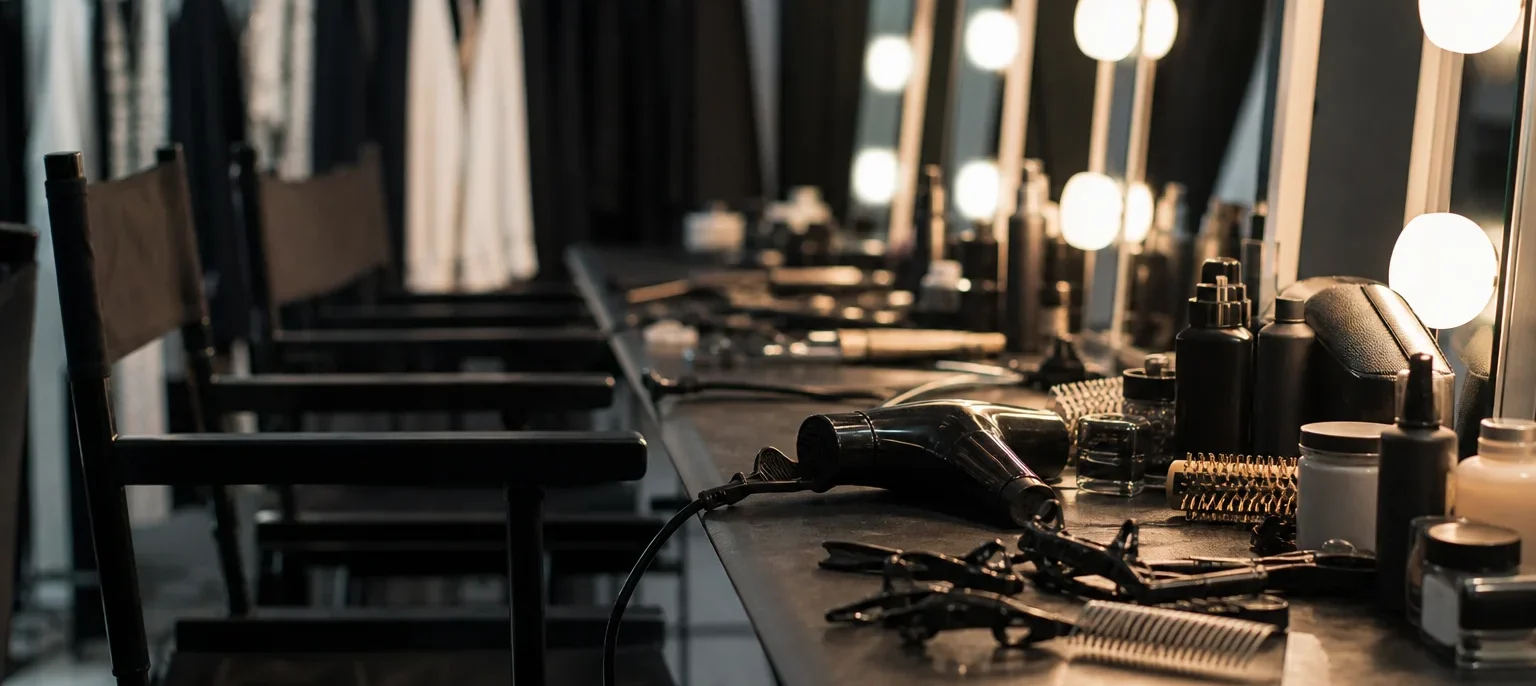
Quick answer: SPFW, Brazil’s main fashion week, shows hair and make-up serving each collection’s message. To read it technically, look at four points: texture (sleek, wet, natural, sculpted), finish (polished or undone), proportion (volume, length, line) and message. For the salon, the rule is to translate the concept, not copy the look. The readings here are hypotheses, not brands’ intentions.
At every edition of SPFW — São Paulo Fashion Week — clients arrive at the salon with runway photos. It is not always possible (or desirable) to reproduce that wet-look hair, that sculpted bun or that graphic make-up. But there is almost always an idea that can be translated into real life.
This article is a technical reading guide. I do not attribute intentions to brands or cite backstage details. I show how to look at runway beauty, which elements to observe and how to turn them into practical suggestions in the salon.
Why is runway beauty different?
On the runway, hair and make-up do not serve to "beautify" the model in the usual sense. They serve the collection: they reinforce an atmosphere, an era, an idea. That is why show beauty tends to be:
- standardised, with the same look on every model so the clothes are the focus;
- exaggerated, to be read from a distance and in photos;
- conceptual, sometimes closer to art than to everyday life.
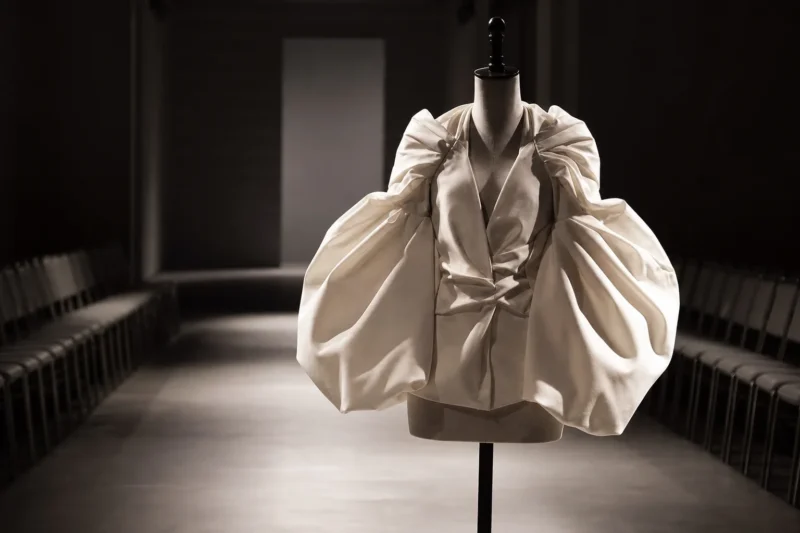
Understanding this prevents frustration on both sides of the chair: the look was designed for a scene lasting a few minutes, under strong light, not for a working week. See this logic applied to clothes in extravagant runway clothes: what are they for.
How do you read runway hair? 4 questions
1. What is the texture?
| Texture | Possible visual reading | Everyday version |
|---|---|---|
| Wet look | Freshness, modernity, sensuality | Gel or cream at the roots only, lengths loose |
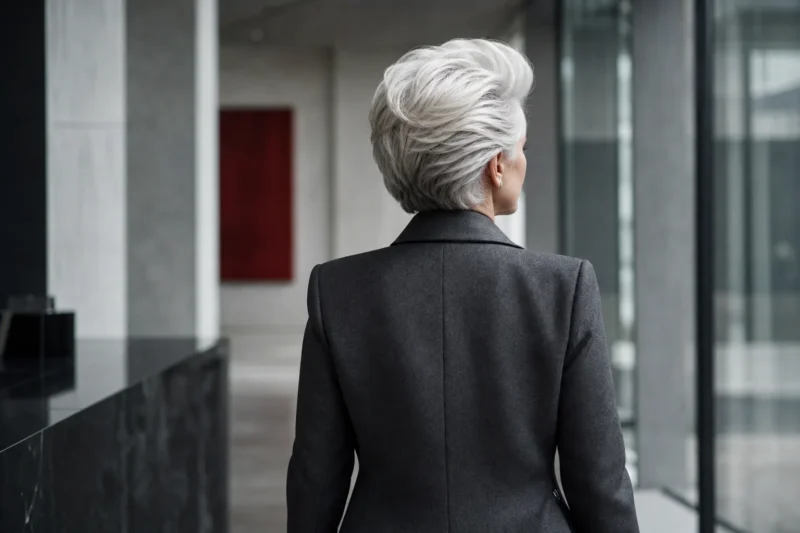
| Sleek and polished | Precision, minimalism, elegance | A smooth, glossy blow-out with a sharp parting |
| Natural texture (defined waves and curls) | Authenticity, freedom | Styling that enhances curls without stretching them |
| Undone (intentionally messy) | Spontaneity, youth | Texture spray and loose waves |
| Sculpted | Art, theatricality | One detail: a quiff, a sculptural braid |
2. What is the finish?
Polished (aligned strands, shine) or undone (loose strands, visible texture)? Finish changes the message more than the cut: the same bun, polished, is formal; undone, it is relaxed.
3. What is the proportion?
Where is the volume? Where is the line? A low, sleek bun lengthens the neck; high, side volume widens the silhouette. This is the same reading visagism applies to the face — see what is visagism and how it works.
4. What is the message?
A possible reading of what the whole communicates: strength, delicacy, rebellion, nostalgia, futurism. This is where you decide whether the idea suits the client — not by the photo, but by the message.
How do you read runway make-up?
The same principles apply to make-up:
- Skin: natural and luminous, matte and even, or wet-look shine;
- Eyes: graphic (strong lines), smoky, coloured or bare;
- Lips: bold and intense or almost invisible;
- Brows: natural, brushed up, bleached or defined.
In general, the runway picks one focal point. That is a good lesson for everyday wear: highlight eyes or lips, not both at once. When a client brings a photo with a bold lip, the translation might be the same shade in a sheer balm; with a graphic eye, a thin line in the same colour.
From SPFW to the salon: how to translate
- Identify the concept: "what is this beauty look saying?"
- Choose one element: texture, colour, finish or a detail;
- Adapt it to the client’s face and hair;
- Adapt it to her routine: how much time does she have for styling?
- Test a reduced version, such as an event hairstyle, before changing cut or colour.
Translation examples
- Full wet look → wet-effect roots and loose lengths, for a party;
- Sculptural bun → a polished low bun with one loose strand, for a wedding;
- Coloured graphic eye → a fine coloured liner, with the rest of the make-up neutral;
- "No-make-up" skin → well-prepped skin, spot concealer and brushed-up brows.
How long does a runway trend take to reach the salon?
There is no rule, but runway ideas commonly appear in editorials and social media in the weeks after the show and reach client requests within 3 to 6 months. Some last for years; others vanish in a season. For professionals, this has two practical consequences:
- it is worth studying the collections right after the event, to be ready when clients ask;
- it is not worth investing in expensive courses or products for a trend that has not yet shown staying power.
Signs a trend will last
- it appears across several brands and fashion weeks, not just one show;
- it has versions that adapt easily to different faces, textures and routines;
- it connects to wider behaviour changes, such as the move towards natural hair or fewer chemical treatments.
What professionals can do after each edition
- Pick 5 to 10 beauty images that stood out;
- Classify each by texture, finish, proportion and message;
- Create a wearable version of each idea and test it on a model or yourself;
- Photograph and share the adapted version, explaining the translation;
- Offer the version as an event hairstyle before suggesting a change of cut.
Trend versus personal style
The runway shows possibilities. Personal style decides which of them make sense. A client with a classic style may adopt the sleek polished look; a boho one, natural texture; a creative one, the sculptural detail. If you do not yet know yours, see fashion styles: which one is yours.
Where to follow it
The schedule and shows for each edition are on the official SPFW website (in Portuguese). For beauty coverage, specialist fashion media publish backstage galleries. Always remember: the photo shows a result under show lighting and conditions.
Common mistakes when taking the runway to the salon
- Trying to reproduce the whole look;
- Ignoring face shape and hair texture;
- Choosing a look that needs 1 hour of styling for a 10-minute routine;
- Doing a runway colour that needs a touch-up every 3 weeks on someone who visits the salon every 3 months;
- Copying colour without assessing skin undertone and upkeep;
- Forgetting that the runway uses lighting, cameras and retouching that daily life does not.
Frequently asked questions
São Paulo Fashion Week is Brazil’s main fashion week, where brands and designers present their collections in runway shows. Beyond the clothes, hair and make-up help build each collection’s message.
They do, but almost always adapted. The runway exaggerates to communicate an idea; in the salon, that idea is translated into wearable versions — a texture, a finish or a colour, not the complete look.
Look at the concept, not the finished look: is it texture, colour, proportion or finish? Then consider your face shape, hair type, routine and what you want to communicate.
No. It is a technical reading of runway hair and beauty. We do not attribute intentions to brands or their teams; interpretations are hypotheses about visual language.
Which version of the runway is yours?
If you saw something at SPFW and want a version that works for your face and routine, the Visagism Consultation analyses your face, your hair and what you want to communicate and shows how to bring the trend to you, with the reason behind each choice.
I want my version of the trend →
A beauty professional who wants to learn to read and translate trends for clients? The Visagism & Personal Image Course teaches visual language applied to cut, colour and consultation.
Nelma Faleiro holds a degree in Visagism and Hair Therapy Technology from Anhembi Morumbi University, where she taught for 10 years, and received the SINVISA 2025 Trophy at the 3rd International Visagism Seminar. Technical, opinion-based reading; it does not represent brands or the event’s organisers.