
Quick answer: temperaments in visagism are four profiles — choleric, sanguine, melancholic and phlegmatic — used as a starting point for translating personality into image. Broadly, the choleric is expressed through straight lines and angles; the sanguine through diagonals and movement; the melancholic through delicate verticals; the phlegmatic through curves and horizontals. Almost every client combines two. It is a language tool, not a psychological diagnosis.
In visagism training, temperaments are often the topic that fascinates students most — and the one most often misapplied. Used carefully, they help turn the client interview into concrete choices of cut, colour and accessories. Used as labels, they become stereotypes. This guide explains how to apply temperaments in visagism during a consultation and where the method’s limits lie.
Where do the temperaments come from?
The idea of four temperaments comes from ancient medicine, associated with Hippocrates and Galen, who linked personality to bodily "humours". Modern medicine abandoned that biological explanation, but the four profiles lived on as a symbolic language for describing behaviour.
The artist Philip Hallawell, author of the first books on visagism, incorporated this language into his method, linking personality, visual language and personal image. A profile of the author and his work — including Visagismo Integrado (2010) and Visagismo: harmonia e estética (2018) — is available on the PUCRS Online blog (in Portuguese).
The four temperaments applied to image
The table below summarises a common visagism reading. It is not a fixed rule, but a vocabulary to guide choices.
| Temperament | Behavioural traits | Lines and shapes | Visual feeling | In hair |
|---|---|---|---|---|
| Choleric | Leadership, determination, objectivity | Straight lines, angles, strong contrast | Strength, power | Geometric cuts, defined outlines, colour contrast |
| Sanguine | Extroversion, enthusiasm, sociability | Diagonals, dynamic lines, asymmetry | Joy, movement | Choppy layers, asymmetry, highlights, texture |
| Melancholic | Sensitivity, depth, perfectionism | Delicate verticals, fine lines, symmetry | Elegance, refinement | Sleek long hair, precise cuts, immaculate finish |
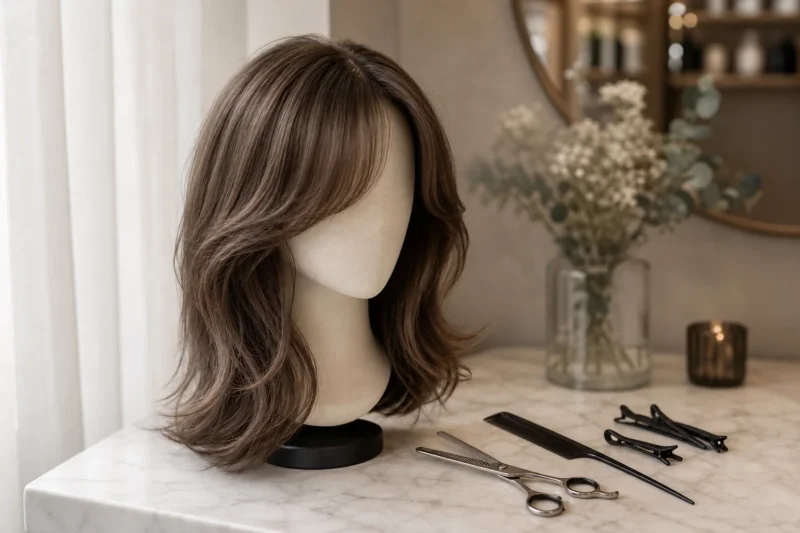
| Phlegmatic | Calm, diplomacy, constancy | Curves, horizontals, rounded shapes | Serenity, warmth | Soft waves, rounded layers, natural colours |
Choleric
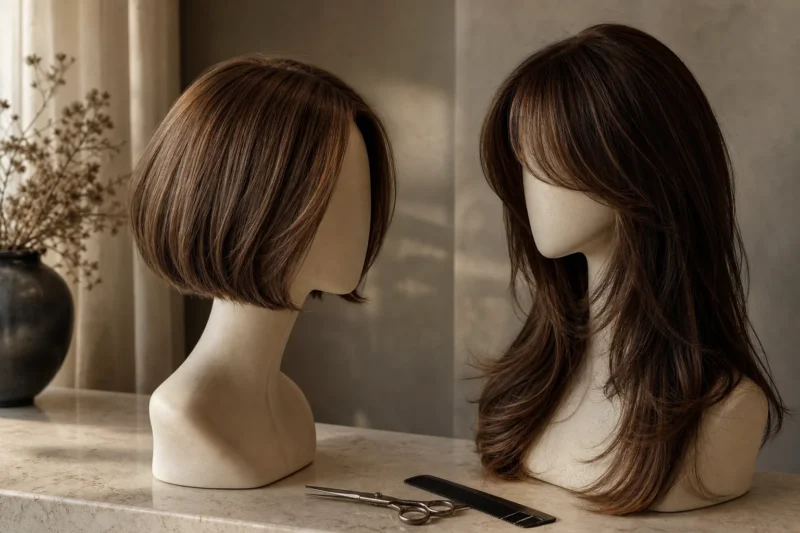
The profile of someone who takes charge. In image terms, it calls for firm lines and presence: a blunt bob, a precisely outlined pixie, contrasting colours. The risk is harshness — a touch of curve keeps the image from looking aggressive.
Sanguine
Communicative, spontaneous, fond of novelty. Diagonal lines, asymmetry and texture express that movement. The risk is dispersion: too many elements at once weaken the message.
Melancholic
Sensitive, detail-oriented, reserved. Verticals, symmetry and a refined finish suit this profile. The risk is distance — the image can look cold or unapproachable.
Phlegmatic
Calm, conciliatory, stable. Soft curves, rounded shapes and natural colours express warmth. The risk is a lack of presence — a point of definition (a stronger line, an accessory) keeps the image from "disappearing".
How do you identify temperament in the interview?
The reading comes mainly from conversation, not appearance. Some useful questions:
- "How would you describe yourself in three words?"
- "How would you like people to see you at work? And outside work?"
- "What do you do when you have a problem to solve?"
- "What kind of environment makes you comfortable?"
- "Which clothes and accessories would you never wear? Why?"
Also notice the pace of speech, gestures, the choices the person already makes and the images they bring as references. Record everything on the consultation form.
Predominant and secondary temperament
In practice, almost every client combines two temperaments. An executive may be choleric at work and phlegmatic at home. A useful reading identifies:
- the predominant one, which guides the base of the cut and colour;
- the secondary one, which appears in the details: fringe, texture, accessory, make-up.
From reading to proposal: practical examples
- Choleric with a sanguine trait: an asymmetric bob with a defined outline and a diagonal streak of colour.
- Melancholic with a phlegmatic trait: sleek long hair with soft waves at the ends and a luminous natural colour.
- Sanguine with a phlegmatic trait: a shag with rounded layers and curtain bangs.
- Phlegmatic with a choleric trait (men’s): a classic cut with defined sides and a top with slight movement.
In every case, face shape and hair texture are still taken into account. See the basis of face reading in what is visagism and how it works and how visual language communicates in seriousness, credibility or lightness.
Temperaments, colour and make-up
The same logic applies to hair colour and make-up, always adjusted to the client’s personal colouring:
- Choleric: high contrast between hair and skin, intense and defined colours, a strong liner;
- Sanguine: luminous highlights, vibrant colour in strategic spots, a noticeable blush;
- Melancholic: sophisticated, even tones, medium contrast, flawless skin and discreet make-up;
- Phlegmatic: natural, soft colours, low contrast, pink or peach tones.
Colour must also respect realistic upkeep: an intense colour that needs a touch-up every 3 weeks does not suit a phlegmatic client who only visits the salon every 3 months.
How much time should you set aside for this reading?
In a full consultation, the interview behind the temperament reading usually takes 30 to 45 minutes. It should not be rushed: it is where the image keywords come from. A possible structure:
- 10 minutes of open conversation about routine, work and life stage;
- 15 minutes of targeted questions about how the person sees themselves and wants to be seen;
- 10 minutes analysing the references they brought;
- 5 to 10 minutes to give back the reading in plain language and check that it makes sense to them.
That last step is essential: if the client does not recognise themselves in the reading, the proposal will not hold up after 2 or 3 weeks.
The limits of the method
Being honest about limits is part of professional ethics:
- It is not personality science. The four temperaments are a symbolic model; they do not have the validation of models used in modern psychology. Use them as a language, not a diagnosis.
- It is not a label. Telling a client "you are choleric" can sound like judgement. Talk instead about "traits" and "what you want to express".
- Context changes everything. The same person may want to communicate different things at different stages of life.
- Appearance does not define temperament. Facial features do not "reveal" personality; the reading comes from conversation.
- Culture matters. The feeling a line or colour conveys varies between cultures and groups.
Common beginner mistakes
- Classifying the client by appearance before the interview;
- Applying the table as a fixed recipe;
- Ignoring the secondary temperament;
- Forgetting routine, texture and face shape;
- Using technical vocabulary with the client instead of translating it.
Frequently asked questions
They are four personality profiles inherited from classical tradition — choleric, sanguine, melancholic and phlegmatic — used in visagism as a starting point for translating personality into lines, shapes, colours and textures.
No. In practice, most people combine two predominant temperaments, sometimes three. The reading looks for the balance between them and what the person wants to express in each context.
No. The four temperaments are an ancient symbolic model, useful as a language for image. They are not a psychological diagnostic tool and do not replace assessments from scientific psychology.
Mainly through the interview: how the person describes themselves, how they would like to be seen, how they react to challenges, the pace of their speech and the choices they already make. Looking only at physical appearance leads to mistakes.
Method, repertoire and ethics
Temperaments are one of visagism’s richest tools when they are part of a complete method: interview, face reading, visual language, proposal and execution. In the Visagism & Personal Image Course, you learn to conduct the interview, identify predominant and secondary temperaments and turn that reading into cut, colour and consultation — with clear ethical limits.
Want to experience it as a client? Discover the Visagism Consultation.
Nelma Faleiro holds a degree in Visagism and Hair Therapy Technology from Anhembi Morumbi University, where she taught for 10 years, and received the SINVISA 2025 Trophy at the 3rd International Visagism Seminar for "education, ethics and intention through Visagism".