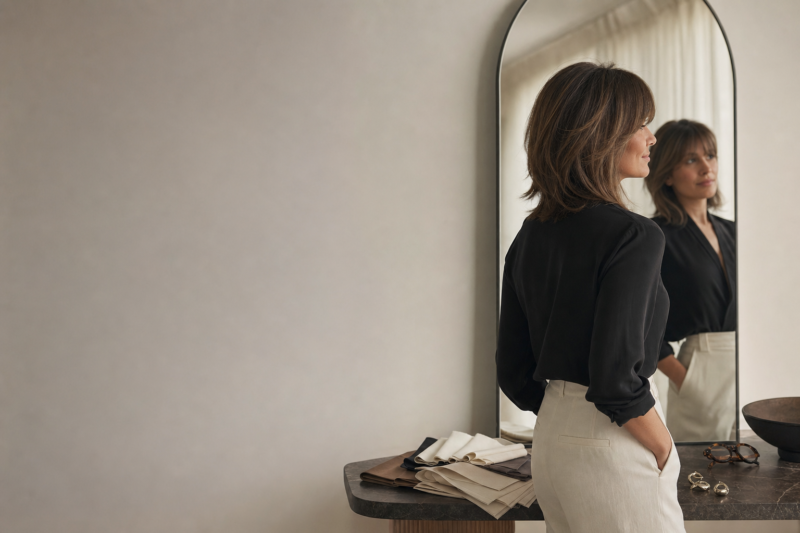
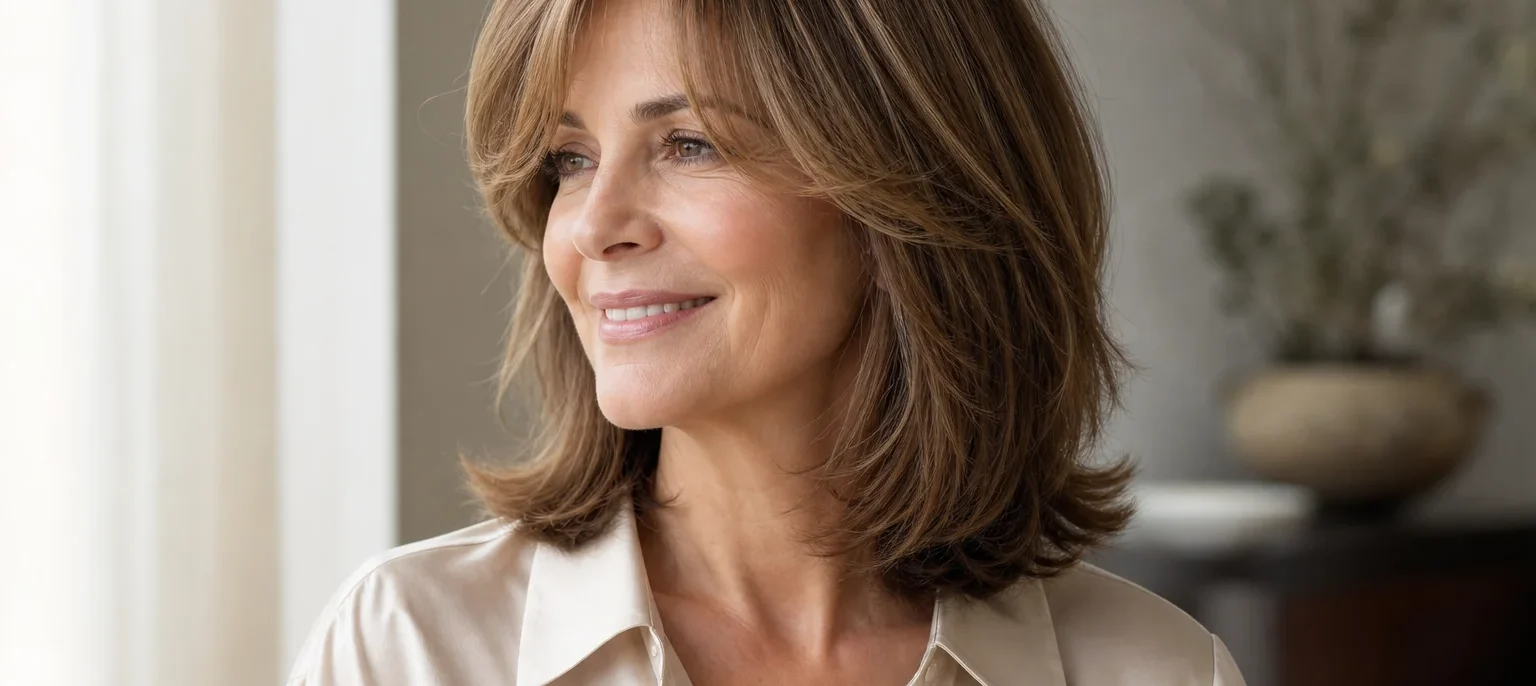
Quick answer: haircuts that make you look younger are those that bring back movement, root volume and light to the face. The choices that work best after 40 are soft layers around the face, a light fringe, a length between chin and collarbone and full ends. It is not about going short by rule: it is about removing weight, creating upward lines and keeping shape.
"After 40, you have to go short." I have heard that sentence all my life, and it is still wrong. Length alone does not make anyone look younger or older. What changes the perception of age is the design: where the lines point, where the volume sits, how much light the hair brings to the face.
In this article I explain why the face changes over time, what makes a haircut look younger and 10 visagism choices that soften features after 40, 50 and beyond.
What changes in the face and hair with age
Understanding the changes helps you choose a cut with clear criteria:
- the face loses volume in some areas, such as the cheekbones and temples, and gains visual weight in the lower third;
- features drop slightly, and downward lines become more visible;
- contrast decreases: skin, brows and hair become closer in tone;
- hair becomes finer and may lose density, especially on top;
- texture changes, with drier hair or waves that were not there before.
Haircuts that make you look younger work against these changes: they lift the lines, restore volume where it is missing and brighten.
The visagism principle: upward lines and lightness
In visagism, lines that point upwards convey energy and vitality. Lines that point downwards convey tiredness and weight. This principle, which I explain in what visagism is and how it works, underpins everything that follows.
| Ages | Looks younger |
|---|---|
| Downward lines, heavy ends "pulling" the face | Layers rising towards the cheekbones |
| Volume concentrated at the base | Volume at the roots and on top |
| Flat hair with no movement | Waves, texture and lightness |
| Flat, dark colour | Soft tones and light near the face |
| Thin ends | Full ends |
10 haircuts that make you look younger
1. Face-framing layers
Layers starting at cheekbone or chin level create upward diagonal lines. They "lift" the face without needing exaggerated volume.
2. Curtain fringe
It opens in the centre and falls in a curve, framing the eyes. It softens forehead lines and draws the eye upwards. See the logic for other shapes in haircuts for oval faces.
3. Long bob with movement
Between chin and collarbone, with soft waves. It removes weight from the lengths and keeps the femininity many women do not want to lose with a short cut.
4. Bob with a full base
For hair that has thinned, a blunter, fuller base restores visual density. Avoid too many layers at the ends.
5. Textured pixie
If you like short hair, a pixie with texture on top and a side fringe creates volume and lightness. The secret is not letting it become rigid or flat.
6. Soft shag
Disconnected layers and a light fringe, with natural movement. It conveys ease and youthfulness without looking forced.
7. Medium length with a side parting
A side parting creates a diagonal and adds volume on top. A rigid centre parting on fine hair can flatten and highlight thinning.
8. Long hair with long layers
If you love long hair, you do not need to give it up. Long layers and healthy ends avoid the "curtain" effect that pulls the face down.
9. Curls with shape
Mature curly and wavy hair benefits greatly from a dry cut that distributes volume and avoids the triangle. Well-shaped curl volume is naturally youthful.
10. Grey with a precise cut
Embracing grey with a well-defined cut can be the most modern choice. What ages is grey without a cut; grey with shape looks like a style decision.
Colour and styling: what the cut cannot do alone
- Colour: tones one or two shades lighter near the face bring light. Very dark, flat shades harden, because they increase contrast with skin that has become lighter.
- Root volume: drying the roots first, with your head upside down, makes a big difference.
- Shine: conditioned, smooth hair reflects light. Dull hair ages.
- Light styling: avoid heavy pomades and overly rigid blow-dries.
Brows, make-up and glasses: allies of the cut
Hair works together with the other elements of the face. A few simple adjustments boost the effect of the cut:
- Brows: over time they tend to thin and lose their tail. Lightly filling the end, with an upward stroke, opens up the eyes.
- Blush: applied high on the cheekbones and swept towards the temples, it repeats the upward line of the cut.
- Light base: thick layers settle into expression lines. Prepped skin and a thin product work better.
- Lipstick: shades with a little colour brighten more than very washed-out nudes.
- Glasses: frames with a slightly lifted top line, in tortoiseshell or soft metal, work well with layers and a fringe.
When cut, colour, brows and make-up point in the same direction, the result looks natural rather than "done". That combination is what brings a sense of freshness.
What tends to age
- Long, heavy, unlayered hair on fine hair.
- A rigid short cut, with flat sides and a flat top.
- Very dark or overly uniform colour.
- Thin, dry ends.
- A heavy, blunt fringe covering the brows.
- The same haircut as 20 years ago, never updated.
One change at a time
If your current cut is far from what you want, you do not have to change everything at once. Many clients feel more confident making the transition over two or three visits: length first, then the fringe, then the colour. That way you get used to each step and can adjust anything you did not like.
Maintenance after 40
- a cut every 6 to 10 weeks, depending on length;
- weekly conditioning, because hair tends to become drier;
- heat protectant, always (the American Academy of Dermatology has good everyday hair care tips);
- attention to the scalp: thinning and shedding deserve an assessment.
If you notice your hair getting thinner, understand the causes in menopause hair loss.
How to talk to your hairdresser
- "I want to remove weight without losing length."
- "I want volume on top and lightness around my face."
- "My hair has become finer: how can I keep the ends full?"
- "Which fringe suits my forehead?"
Frequently asked questions
Cuts with movement, soft layers around the face, a light fringe and a length between chin and collarbone usually look younger. What matters most is bringing back lightness, root volume and light to the face.
It can, if it has shape, texture and volume on top. A rigid short cut with no movement can age you. There is no age rule for length.
Light fringes, such as curtain and side fringes, soften the forehead and draw the eye to the eyes. Very heavy, blunt fringes can harden the expression.
Not necessarily. Long, healthy hair with layers and movement can be very flattering. What ages is heavy long hair, thin at the ends and shapeless, pulling the face downwards.
Looking younger is a matter of design
Haircuts that make you look younger do not erase age, and they do not need to. They give the face back the lightness, movement and light that make you recognise yourself in the mirror. The right choice depends on your face shape, texture, colour and the message you want to convey at this stage.
In the Visagism Consultation, I analyse your face, features, hair and lifestyle and recommend cut, fringe, colour and styling, with the reason for each choice.
Are you a hairdresser with many mature clients? The Cutting Technology Course teaches the short bob, the pixie and adaptation for different textures, with visagism applied to cutting.
Nelma Faleiro holds a degree in Visagism and Hair Therapy from Universidade Anhembi Morumbi, where she lectured for 10 years, and received the SINVISA 2025 Award.