
Quick answer: to understand how to become a trichologist or hair therapist, think in four stages: scientific grounding (follicle anatomy, the hair cycle, cosmetic science and scalp disorders), supervised practice, clarity about legal limits — a non-medical trichologist does not diagnose disease or prescribe medication — and a business plan with a well-defined assessment, protocol and price. It is not a weekend-course career.
In ten years of university teaching, I saw many students come to hair therapy for the same reason: salon clients asking for help with shedding, oiliness and dandruff, and the feeling of not having answers. Wanting to help is the start. Knowing how to become a trichologist responsibly is what separates people who build a career from those who sell miracle tonics.
This guide covers training, regulation, scope of practice and your first steps in the market. The legal examples are Brazilian; always check the rules in your own country.
What does a trichologist do?
A trichologist or hair therapist assesses the scalp and hair and applies cosmetic procedures to improve the health of that area. Day to day, they:
- take a detailed history, covering health, habits and care routine;
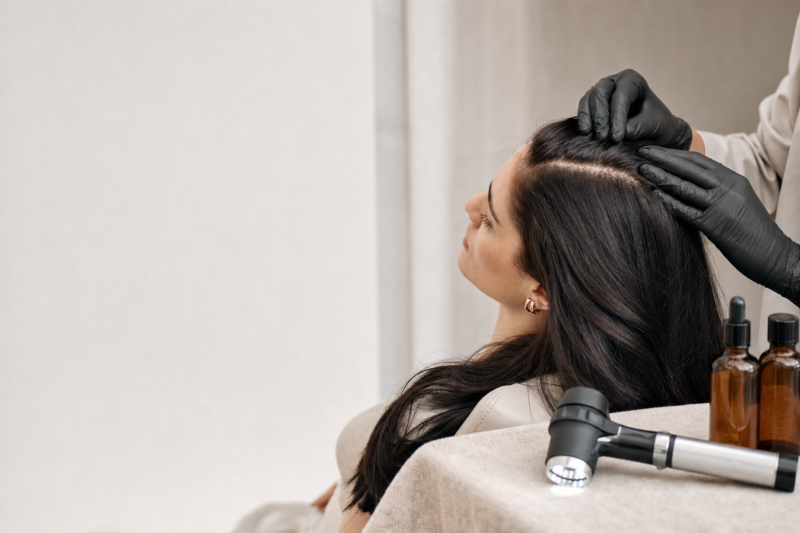
- examine scalp and hair, often with trichoscopy;
- build protocols with cleansing, exfoliation, cosmetic actives and equipment;
- advise on home care;
- track progress with standardised photos;
- refer to a doctor when they spot signs of disease.
To see what the service looks like from the client’s side, read scalp therapy: what it is and what it costs.
What training do you need?
In Brazil there is currently no degree called "hair therapy" required by law. The most common routes are:
| Route | Typical length | Strengths | Watch out |
|---|---|---|---|
| Degree in Aesthetics and Cosmetics | 2 to 4 years | Broad grounding in anatomy, physiology and cosmetic science | Trichology is often a single module |
| Specialisation in Trichology | At least 360 hours | Depth on scalp and hair | Check for supervised practice |
| Short hair-therapy courses | From 20 to 200 hours | Quick entry, practical focus | Very uneven quality |
| International training | Varies | Standards set by professional bodies | Cost and adapting to local reality |
Internationally, organisations such as the International Association of Trichologists set training standards for the field. My recommendation: a broad scientific base (degree or specialisation) plus practical courses and continuous updating.
What to study
Whatever the format, a good programme covers:
- Anatomy and physiology of the scalp and hair follicle;
- The hair cycle — anagen, catagen and telogen phases — and what disrupts it;
- Common disorders: seborrheic dermatitis, oiliness, telogen effluvium, androgenetic alopecia, scarring alopecias (to recognise and refer);
- Cosmetic science: actives, formulations, reading labels, interactions;
- Equipment: high frequency, LED, steam, microcurrent — indications and contraindications;
- Biosafety: cleaning instruments, disposal, preventing contamination;
- Consultation and records: intake form, consent form, standardised photos. A full template is in trichology consultation form.
What does the law say?
This is the point that raises the most questions — and that best protects the professional when properly understood. In Brazil:
- Law 13,643/2018 regulates the professions of aesthetician, cosmetologist and aesthetics technician and defines their duties.
- Law 12,842/2013, known as the Medical Act Law, reserves for doctors, among other activities, the diagnosis of disease and therapeutic prescription.
In practice, a non-medical trichologist does not diagnose disease, order tests, prescribe medication or perform invasive procedures reserved for medicine. They work with assessment and cosmetic procedures — and gain credibility precisely by knowing where their field ends.
Phrases a hair therapist should not use
- "You have androgenetic alopecia." (diagnosis)
- "Take this medicine." (prescription)
- "My protocol will make your hair grow back." (promise of results)
Replace them with: "The signs I observed deserve a dermatologist’s assessment" and "We will track progress with photos every 30 days".
What equipment do you need to start?
You do not need a full clinic in the first month. A realistic starter set-up:
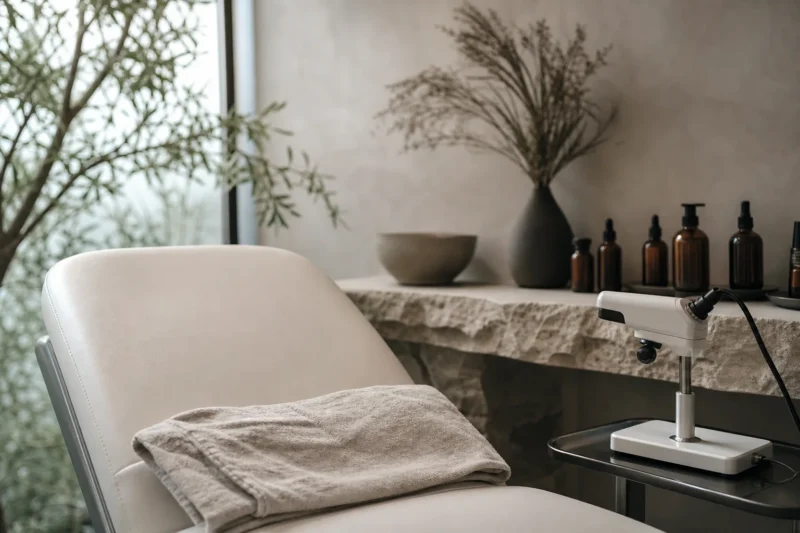
- A trichoscope or hair microcamera with good lighting — the tool that adds most to an assessment;
- A comfortable backwash basin with hot water;
- High frequency, if your protocol calls for it;
- Biosafety supplies: gloves, 70% alcohol, sterilisation pouches;
- A camera or phone on a stand for standardised photos;
- An intake form and consent form.
LED, low-level laser and other devices can come later, once you have demand and specific training.
Where can a trichologist work?
The market is broader than a private practice. The most common formats:
- Inside a salon: a dedicated room for assessments and protocols, serving clients who already trust the space. It is the fastest way to build flow.
- A private practice or studio: more autonomy and positioning as a specialist, with higher fixed costs.
- Multidisciplinary clinics: alongside dermatologists, dietitians and aestheticians, which makes referrals easier in both directions.
- Home visits: these need portable kit and extra care with biosafety.
- Education and content: courses, talks and technical material, after years of practice.
Many professionals combine two formats, for example a salon during the week and a partner clinic on fixed days. What matters is that the space allows proper hygiene, privacy for the consultation and good light for trichoscopy and photos.
How do you build your first client base?
1. Define your entry service
The hair assessment is the front door: history, trichoscopy, explanation of findings and a protocol proposal. It should have its own price, not be "free to sell a package".
2. Price by cost, not by competitors
Add up supplies, time, room rent, equipment depreciation, taxes and your technical hourly rate. Only then compare with the market.
3. Start with your own network
Salon clients, referrals from hairdressers and partnerships with dermatologists and dietitians are the most effective channels at the start. A well-made referral to a doctor usually comes back as trust.
4. Document everything
Standardised photos before each session, updated forms and a record of what was done. This protects you and shows the client real progress.
5. Create educational content
Explain what dandruff is, what shedding is, when to see a doctor. Responsible content attracts the right clients.
How long until you feel confident?
More than the certificate, what counts is the number of cases you follow. A reasonable goal: in the first 6 to 12 months, work with supervision or mentoring, discuss cases and review photos with someone more experienced. That is when you learn to recognise patterns and, above all, warning signs.
Common beginner mistakes
- Promising hair regrowth;
- Selling packages without an assessment;
- Using equipment without knowing the contraindications;
- Treating shedding without investigating the cause with a doctor;
- Copying a competitor’s price without calculating your own costs.
Frequently asked questions
In Brazil there is no legal requirement for a specific degree to work in cosmetic hair therapy, and rules vary by country. Even so, solid training — a degree in aesthetics, a specialisation in trichology or long courses with supervised practice — is what provides technical confidence and credibility.
Not in the non-medical role. Diagnosing disease and prescribing medication are medical acts. A trichologist or hair therapist assesses the scalp and hair, performs cosmetic procedures, advises on care and refers to a doctor when there are signs of disease.
The terms overlap. Trichology is the study of hair and scalp; trichologist usually describes someone with specific training in that field. In Brazil, both work in the cosmetic field, without medical diagnosis.
It depends on the route. Introductory courses take from weeks to a few months; trichology specialisations in Brazil usually run to at least 360 hours. Confidence with clients comes from months of supervised practice and continuous study.

Start with a solid technical base
If you want to enter hair therapy safely — or organise what you already know — the Practical Trichology e-book brings together, in 109 pages, assessment, the main scalp disorders and evidence-based protocol building, written by someone who taught the field for ten years. Instant download and a 7-day guarantee.
I want the Practical Trichology e-book →
And if you want to add image reading to your hair service, the Visagism & Personal Image Course expands what you offer: from hair health to choosing cut and colour.
Nelma Faleiro holds a specialisation in Cosmetic Trichology (Faculdades Oswaldo Cruz) and degrees in Visagism and Hair Therapy Technology and in Aesthetics and Cosmetics from Anhembi Morumbi University, where she taught for 10 years. Educational content; always respect the legal limits of your practice.