Quick answer: Odete Roitman, the villain of the Brazilian telenovela Vale Tudo, is a great example of visagism applied to characterisation. In a technical reading, the precisely outlined short hair, controlled make-up and straight-lined tailoring work together to communicate power, control and distance. Everything here is a hypothesis about visual language, not backstage information. The same concepts help anyone who wants to convey firmness at work.
Few characters in Brazilian television are as recognisable as Odete Roitman. Created for the 1988 Vale Tudo and played by Beatriz Segall, she returned in 2025 in TV Globo’s new version, played by Débora Bloch. Part of the villain’s strength lies in her image: before she speaks, the audience already knows who has walked into the scene.
This article is a technical visagism reading. I do not speak for the production, cite backstage details or attribute intentions to costume designers or hairdressers. I use the characterisation seen on screen as an example to explain concepts of line, contrast, proportion and temperament — and to show how to apply them in real life.
Who is Odete Roitman — and why does it matter for the look?
In visagism, image starts from personality. So before talking about hair, it is worth recalling the character. Odete is the matriarch of the Almeida Roitman Group, a businesswoman educated in Europe who looks down on her own country, controls her children’s lives and uses money and power to get what she wants. She is cold, strategic, elegant and cruel.
Translated into visual language, the keywords are: control, power, distance, sophistication and coldness. The visagism hypothesis is that every characterisation choice reinforces at least one of these words.
If you want to understand the basis of the method, start with what is visagism and how it works.
Hair: what does the short cut communicate?
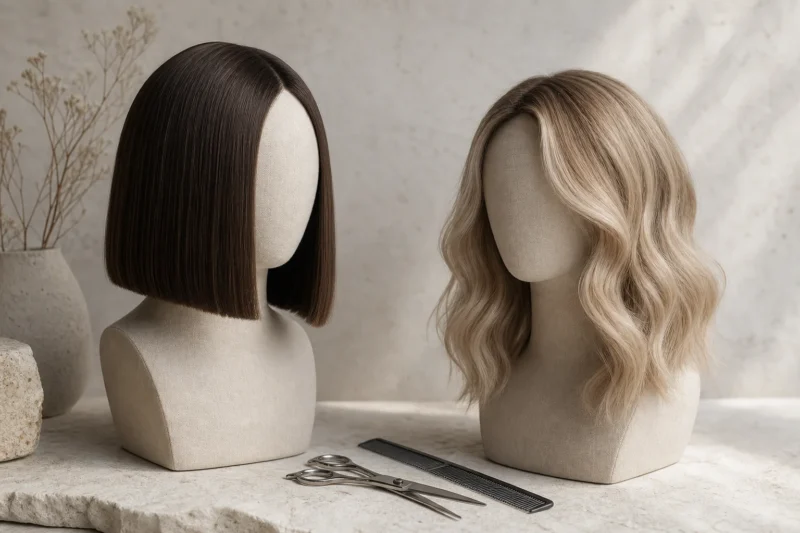
In the 2025 version, the character appears with short, always immaculate hair. In a technical reading, three elements stand out:
1. Short length
Short hair leaves the face, neck and expression fully exposed. There is nowhere to "hide". One possible reading is that this suits a character who does not need to please anyone: she shows herself completely and stares people down.
2. Defined outline and polished finish
Aligned strands, a shape that holds when she moves, not a hair out of place. In visagism, defined lines and a controlled finish communicate discipline and authority. The hypothesis is that "obedient" hair reflects a woman who controls everything around her.
3. Contained volume
Volume, where there is any, is structured — no loose waves or windswept curls. Structured volume conveys intention; loose volume conveys spontaneity. Odete, in this reading of the character, is not spontaneous.
| Element | Visagism reading | Keyword |
|---|---|---|
| Short length | Exposed face, confidence | Power |
| Precise outline | Discipline, rigour | Control |
| Polished finish | Total care for image | Sophistication |
| Structured volume | Intention, nothing left to chance | Control |
Make-up: control rather than excess
A soap-opera villain could wear heavy make-up. My reading of Odete goes the other way: the make-up looks controlled and refined, with even skin and an elegant finish. In visagism, there is a logic to this:
- Flawless skin communicates care and resources — the image of someone with time and money to maintain herself;
- Defined brows reinforce the expression and the direct gaze;
- Sober colours keep the distance: no very warm or playful tones that would bring her closer.
The hypothesis is that excess would weaken the character. Someone with real power does not need to shout — and the make-up follows that silence.
Wardrobe: tailoring as armour
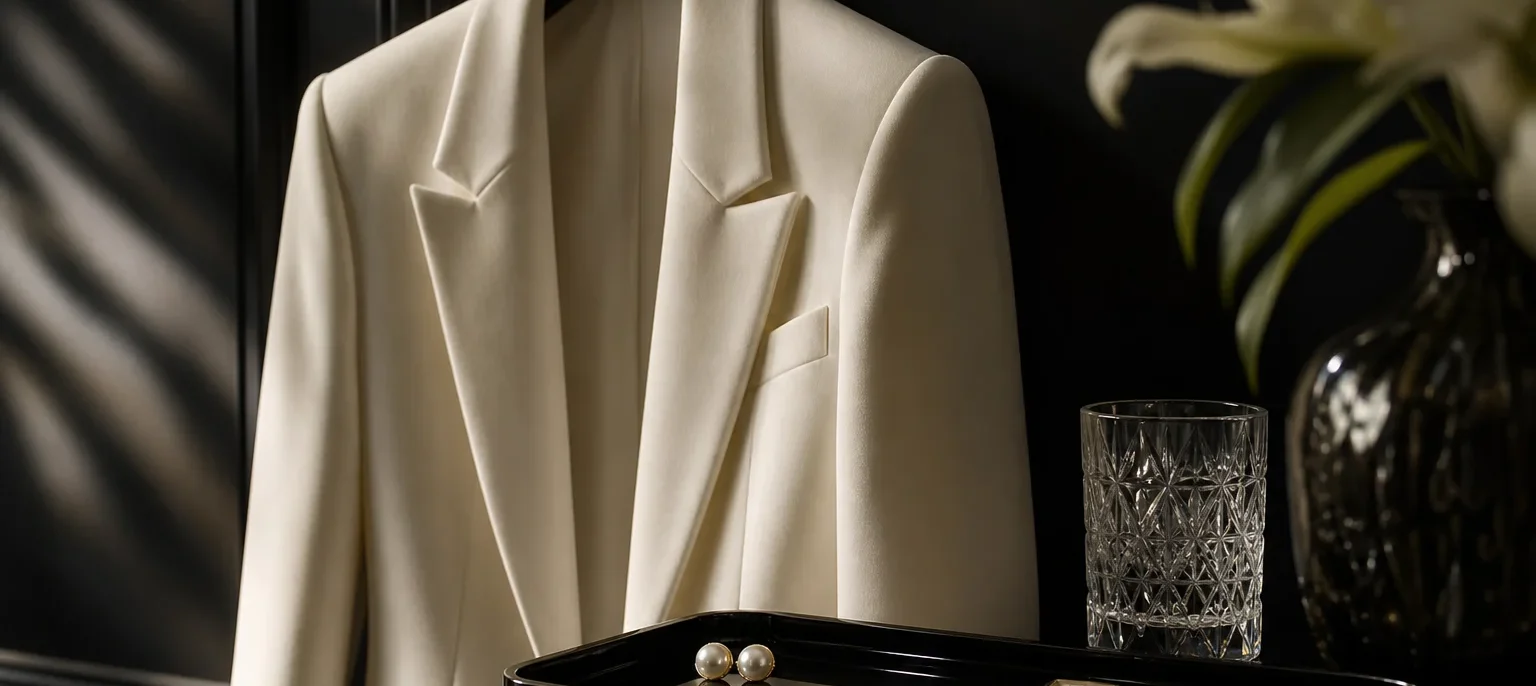
In the clothes, what we see is tailoring, structured pieces and discreet, sophisticated accessories. In visual language:
- Structured shoulders increase presence and convey firmness;
- Straight, vertical lines lengthen and communicate authority;
- Fine fabrics and a perfect drape signal status without a logo;
- A restrained palette — neutrals, deep tones — reinforces elegance and coldness;
- Classic accessories, few and well chosen, say "old money", not "new money".
One possible reading: the character, educated in Europe and convinced of her superiority, uses her wardrobe as armour made of refinement. Every piece reinforces the distance between her and everyone else.
The whole: coherence is what makes the image strong
What makes Odete Roitman’s image so striking is not a single element but the coherence between them. Hair, make-up and clothing follow the same logic — defined lines, control, few elements, sophistication. In visagism, that is what we look for with anyone: every element of the image telling the same story.
In the vocabulary of temperaments used in visagism, a reading of Odete sits close to a combination of choleric traits (authority, command) and melancholic traits (rigour, refinement, distance). Again, this is a hypothesis, not a definitive label.
How do you bring these concepts into real life?
Nobody wants to look like a villain. But the concepts behind the characterisation are very useful for anyone who needs to convey firmness, especially at work:
To convey authority without coldness
- A cut with a defined line, but with a soft curve at the ends or a side fringe;
- A careful finish — an up-to-date cut is worth more than any product;
- One structured piece (a blazer, a well-cut shirt) combined with a softer element (a fluid fabric, a warm colour near the face);
- Skin- and brow-focused make-up, with a lipstick that adds life.
Short hair: who does it suit?
Short cuts with a precise outline suit mainly oval faces, faces with well-defined features and long necks. On round faces, they work better with height on top and closer sides. Find your shape in how to find your face shape.
Upkeep is the critical point: a precisely outlined short cut usually needs a trim every 4 to 6 weeks to keep its shape. Without that, the message of control is lost.
What to avoid
- Copying the whole look without adapting it to your face and personality;
- Total rigidity: hair, clothes and make-up all in straight lines and cool colours can push people away;
- Too many accessories — the sophistication of the reference lies precisely in its restraint.
A character is an example, not a model
Reading a character is a way of learning visual language. The aim is never to copy, but to understand how shape, colour and texture communicate — so you can choose what you want to communicate. Here we discuss the character’s styling, not the actress’s personal appearance.
For official information about the telenovela, see the Vale Tudo page on gshow (in Portuguese).
Frequently asked questions
Because it is coherent. Hair, make-up and clothes seem to follow the same logic of control, precision and distance. In visagism, when every element speaks the same language, the message becomes strong and easy to recognise.
It can, depending on its shape. Short cuts with a defined outline and a polished finish tend to communicate objectivity and confidence. Textured, tousled short cuts communicate something else: lightness, boldness, ease.
Yes. Take the concept — defined lines, a careful finish, few elements — and balance it with curves, warmer colours near the face or a softer texture, according to your personality.
No. It is a technical visagism reading based on what appears on screen and on the character’s personality. The intentions mentioned are stated hypotheses, not behind-the-scenes information.
Discover what your image communicates
If you want to convey more firmness at work — or, on the contrary, soften an image that looks too harsh — the Visagism Consultation starts from your personality and your goals. I analyse your face, hair and style and recommend the cut, colour and accessories that communicate what you want, with the reason behind each choice. In person or online.
A beauty professional who wants to learn this kind of reading? The Visagism & Personal Image Course teaches visual language and temperaments applied to cut, colour and consultation.
Nelma Faleiro holds a degree in Visagism and Hair Therapy Technology from Anhembi Morumbi University, where she taught for 10 years, and received the SINVISA 2025 Trophy at the 3rd International Visagism Seminar. Technical, opinion-based reading; it does not represent the show’s production.