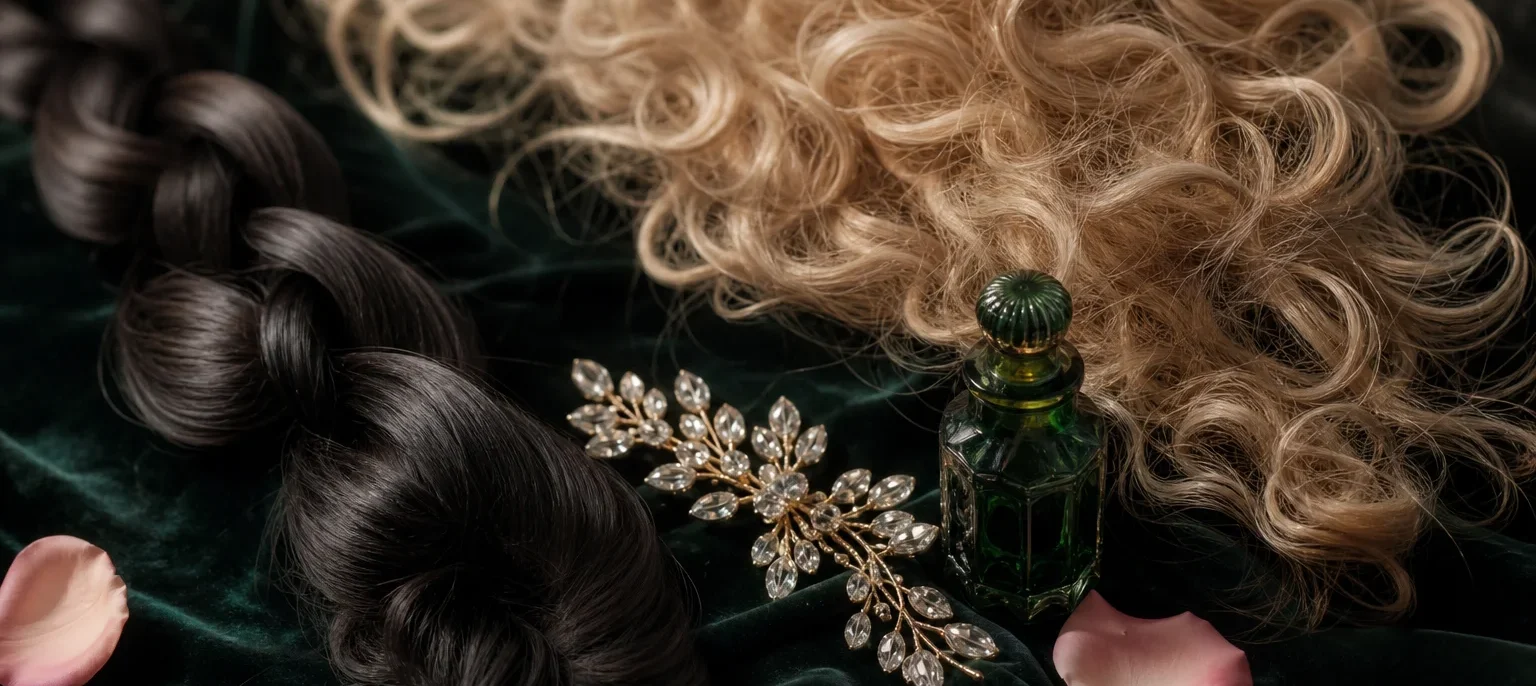
Quick answer: Glinda and Elphaba from Wicked work as a lesson in visual language. In a visagism reading, Glinda hair — curves, volume, light blonde, shine — communicates lightness and a wish to please; Elphaba’s — long, dark, with straight lines and braids — communicates strength and independence. The intentions here are reading hypotheses, not backstage facts. And the concepts work for anyone.
Few recent films have made visual language as obvious as Wicked. The second part, Wicked: For Good, continues the story of Elphaba and Glinda, played by Cynthia Erivo and Ariana Grande. Glinda hair and Elphaba’s look have become references — and they are great examples to explain how line, colour, contrast and texture tell a story before a single word is spoken.
This article is a technical visagism reading. I do not speak for the production, cite backstage details or attribute intentions to costume designers, hairdressers or make-up artists. I use the characters as examples to explain concepts — and to show how to apply them in real life. I discuss the characterisation, not the actresses’ personal appearance.
Why are Glinda and Elphaba a visagism lesson?
Because they are opposites in almost everything — and the characterisation seems to follow that opposition. In visagism, every visual element has a language:
| Element | Glinda (reading) | Elphaba (reading) |
|---|---|---|
| Dominant line | Curves | Straight and vertical |
| Volume | High, rounded | Contained, elongated |
| Hair colour | Light blonde | Black |
| Contrast with skin | Low | High |
| Texture | Waves and curls, shine | Straight strands, braids |
| Clothing palette | Pink, pastels, sparkle | Black, dark, matte tones |
| Feeling | Lightness, sociability, sweetness | Strength, introspection, independence |
If you want to understand the basis of this reading, see what is visagism and how it works and the guide to visual language: seriousness, credibility and lightness.
Glinda hair: curves, volume and light
Curved lines
Defined waves and curls create curved lines around the face. In visagism, curves communicate softness, warmth and friendliness. One possible reading: Glinda is the character who wants to be loved by everyone — and her hair "smiles" with her.
Volume on top and around the face
Rounded volume enlarges the face’s frame and draws attention. The hypothesis is that this suits a character who likes to be the centre of attention.
Light blonde and shine
Light colours reflect light. The luminous blonde, together with the sparkle of the costumes, reinforces the idea of "light" that the character represents in the story. Low contrast between hair and skin keeps the image harmonious and soft.
Accessories
Delicate, sparkling hair ornaments complete the reading: femininity, celebration, enchantment.
Elphaba’s hair: straight lines, verticals and contrast
Straight, vertical lines
Long dark hair, often worn in a braid, creates vertical lines. In visagism, verticals communicate strength, determination and elegance; straight lines, firmness. One possible reading: Elphaba is the character who will not bend — and her hair "stands tall" with her.
High contrast
The black hair against green skin creates the strongest contrast in the film. High contrast attracts attention and communicates presence and intensity. The hypothesis is that it reinforces the character’s situation: impossible to ignore, even when rejected.
Braids: control and discipline
A braid organises the hair and keeps it under control. In a visagism reading, this suits a serious, studious, focused character. When the hair appears looser, the feeling changes — the hypothesis is that this accompanies moments of freedom or transformation for the character.
Make-up: luminous pink versus intense green
In make-up, the logic repeats:
- Glinda: luminous skin, rosy blush, shine on the eyes and lips. Everything reflects light and draws people in.
- Elphaba: green skin is the central element; defined eyes and brows reinforce the intense gaze and firm expression.
For make-up lovers, the practical lesson is that light draws people in and shadow holds them back. Shine and light colours in the centre of the face convey friendliness; deep tones and defined contours convey strength.
Costume: pink versus black
Glinda’s costumes favour rounded volumes, shimmering fabrics and pink in many intensities. Elphaba’s use vertical lines, dark tones and elongated silhouettes, with the pointed hat as a signature. Again: curves and light on one side, straight lines and shadow on the other.
The hypothesis is that, over the story, the growing closeness between the two characters can also be seen in visual details — but that is an interpretation each viewer may read differently.
How do you bring Glinda and Elphaba into real life?
Nobody needs to leave home in hot pink or with green skin. What counts is the concept.
If you want to convey lightness and friendliness (Glinda language)
- Soft waves or defined curls, with balanced volume;
- Light shades or luminous highlights near the face;
- Rosy blush and highlighter on the high points;
- A delicate hair accessory: a clip, headband or bow.
If you want to convey strength and focus (Elphaba language)
- Sleek hair, straight or in a neat braid;
- Marked contrast: a hair colour that stands out from your skin, if it suits your colouring;
- Defined brows and a softly smoked eye;
- Clothes with vertical lines, such as tailored trousers and a long coat.
Mixing the two
Most of us have a bit of each. A braid with loose strands around the face mixes control and softness; sleek dark hair with rosy blush balances strength and friendliness. That is what visagism looks for: the combination that expresses your personality.
How do you create Glinda hair at home?
For an event or a themed party, a simple step by step:
- Wash and blow-dry with volume at the roots, using a round brush or diffuser;
- Divide into sections of about 3 cm and curl with a 25 to 32 mm curling iron, always with heat protectant;
- Let each curl cool while pinned for a few minutes;
- Release and open the curls with your fingers, without a comb, to form voluminous waves;
- Finish with shine spray and a delicate ornament.
The whole process takes around 30 to 40 minutes for medium-length hair. For everyday wear, a lighter version — waves only at the ends — already gives the reading of softness.
Wicked-inspired make-up in 10 minutes
For a themed party or a cinema trip with friends:
- Glinda version: glowing skin, shimmery pink shadow, rosy blush on the apples and gloss. Time: about 10 minutes.
- Elphaba version: even skin, blended green shadow or green liner, defined brows and a dark lipstick. Time: about 10 minutes.
If you have not mastered the basics yet, start with the 10-minute makeup routine for beginners.
For official information about the film, see the official Wicked website.
Frequently asked questions
In a visagism reading, Glinda is built with curves, volume, light colours and shine — the language of lightness and sociability. Elphaba appears with straight, vertical lines, dark colours and high contrast — the language of strength, introspection and independence.
Defined waves or curls with volume on top, made with a curling iron or rollers, finished with shine. For everyday wear, a more restrained version works: loose waves and a delicate hair accessory.
A long, tight, neat braid starting at the nape or the crown. To make it look more polished day to day, smooth the hair first with a blow-dry and use a little styling product to prevent frizz.
No. It is a technical visagism reading based on what appears on screen and on the characters’ personalities. The intentions mentioned are stated hypotheses, not behind-the-scenes information.
What is your visual language?
Do you feel more Glinda, more Elphaba or a mix of both? In the Visagism Consultation, I analyse your face, hair, personality and routine and recommend the cut, colour and accessories that communicate who you are — with the reason behind each choice. In person or online.
I want to discover my visual language →
Want to learn both looks (and your everyday one) with your own hands? The Self-Makeup Class is a 3-hour hands-on session covering skin prep, smoky eye and highlighter.
Nelma Faleiro holds a degree in Visagism and Hair Therapy Technology from Anhembi Morumbi University, where she taught for 10 years, and received the SINVISA 2025 Trophy at the 3rd International Visagism Seminar. Technical, opinion-based reading; it does not represent the film’s production.